Ethiopia’s Red Sea Role: The Missing Link in Regional Stability - ENA English


Ethiopia’s Red Sea Role: The Missing Link in Regional Stability
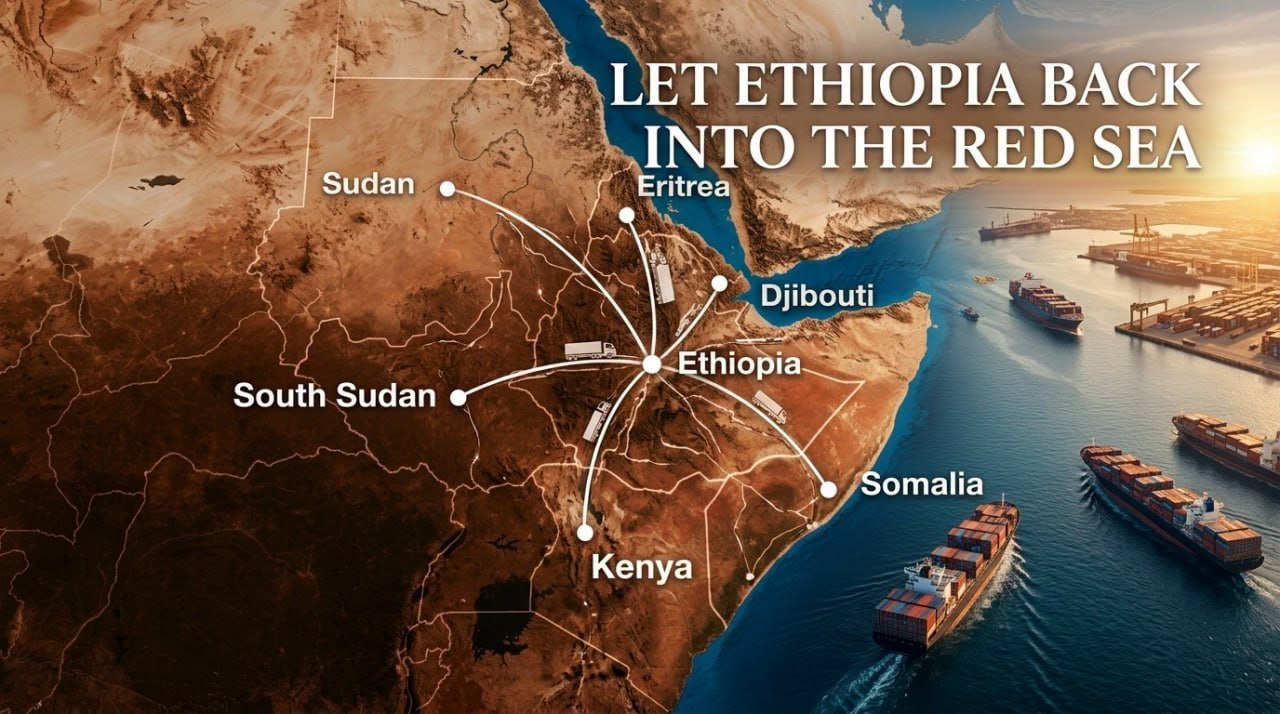
Why There Can Be No Lasting Red Sea Stability Without Ethiopia
By Yordanos D.
Sept. 22, 2026 (ENA)
The Red Sea is no longer merely a maritime corridor. It has become one of the world’s most exposed geopolitical fault lines—and the latest crisis around the Bab el-Mandeb Strait is making one reality increasingly difficult to ignore: the security of the Red Sea cannot be separated from the security of the Horn of Africa, and the security of the Horn cannot be meaningfully addressed while Ethiopia remains on the margins of maritime decision-making.
On September 15, 2026, UN Assistant Secretary-General Khaled Khiari told the Security Council that the situation around the Bab el-Mandeb Strait had become increasingly volatile as fighting intensified along Yemen’s western coast and Houthi forces advanced toward the strategic waterway. He called for restraint, dialogue and the restoration and respect of navigational rights and freedoms under international law.
The warning was not about Yemen alone.
The Bab el-Mandeb is the narrow maritime gateway connecting the Red Sea to the Gulf of Aden and the wider Indian Ocean. Any sustained disruption there can ripple through shipping, insurance, energy markets, food supplies and global supply chains. The consequences do not stop at the shores of Yemen or the countries bordering the Red Sea. They can reach factories in Asia, markets in Europe and consumers thousands of kilometres away.
And sitting directly across the African side of this strategic equation is Ethiopia.
For more than three decades, Ethiopia has been landlocked following Eritrea’s independence in 1993. Yet geography has never made Ethiopia separate from the Red Sea. Quite the opposite: Ethiopia’s history, economy, security and diplomacy have remained deeply intertwined with the maritime corridor.
Today, the dependence is brutally practical. Ethiopia’s international trade relies heavily on the Djibouti corridor, meaning that instability affecting Red Sea shipping, ports, insurance or maritime routes can quickly become an economic concern inside Ethiopia. Ethiopia’s own Institute of Foreign Affairs has described this exposure as a strategic vulnerability arising from the country’s dependence on a maritime corridor whose security is largely shaped beyond its direct institutional control.
That reality should change the way the world understands Ethiopia’s maritime aspirations.
Ethiopia’s pursuit of reliable access to the sea is too often reduced to a territorial or political dispute. That is an incomplete reading of the issue. At its core, Ethiopia is confronting a structural problem: a major African economy and one of the continent’s most populous states is deeply dependent on a maritime system in which it has limited direct access and limited influence over the security architecture.
That is not simply an Ethiopian problem.
It is a regional problem.
It is also becoming a global problem.
The Red Sea Cannot Be Secured From Offshore
The latest crisis around Bab el-Mandeb exposes the weakness of treating Red Sea security as a matter primarily for naval powers operating from outside the region.
Warships can protect vessels. Military deployments can deter attacks. International missions can escort commercial shipping. But no naval fleet, however powerful, can by itself resolve the political, economic and institutional vulnerabilities that make the Red Sea susceptible to recurring instability.
The UN itself has emphasized that protecting freedom of navigation must go together with preventing further escalation in Yemen and pursuing a political solution.
That means maritime security cannot be divorced from regional diplomacy.
And regional diplomacy cannot be divorced from the countries whose economies and security are directly exposed to the Red Sea.
Ethiopia is one of those countries.
Indeed, the regional stakes are now being recognized institutionally. On September 15, the IGAD Council of Ministers identified the safety and freedom of navigation in the Red Sea and Gulf of Aden as core regional peace, security and development priorities. It directed the IGAD Secretariat to strengthen regional maritime governance, cooperation and coordination in response to changing geopolitical and security dynamics.
That decision carries an important message: Red Sea security is no longer a distant maritime issue. It is a Horn of Africa security issue.
And if it is a Horn issue, Ethiopia cannot be treated as an afterthought.
Ethiopia Is Not Asking to Be a Spectator
Ethiopia’s argument for maritime access should therefore be understood against this wider strategic background.
A country of Ethiopia’s economic and demographic weight cannot indefinitely remain almost entirely dependent on a single external maritime corridor while the security of that corridor is vulnerable to conflicts, geopolitical rivalries and disruptions beyond its control.
That does not mean that Ethiopia is entitled to disregard the sovereignty of coastal states.
Quite the contrary.
The strongest case for Ethiopia’s maritime future is one based on negotiation, mutual benefit, international law and respect for the sovereignty of neighboring countries.
Ethiopian has repeatedly framed maritime access in precisely these terms. Recent discussions have linked access to the sea with economic development, national security, regional integration and diplomatic cooperation, while emphasizing peaceful dialogue and mutually beneficial arrangements.
This distinction matters.
Ethiopia does not need confrontation to establish a maritime role. It needs a sustainable arrangement that aligns Ethiopian economic interests with the interests of coastal states.
Such an arrangement could transform maritime access from a source of regional anxiety into an engine of regional interdependence.
From Landlocked Vulnerability to Regional Stakeholder
There is another dimension that deserves far greater international attention.
If Ethiopia secures reliable sea access through a negotiated arrangement, it would not simply gain another route for imports and exports. It would acquire a stronger economic and institutional stake in the security of the maritime corridor itself.
That could change the strategic equation.
A country whose trade, infrastructure and economic future are directly connected to a maritime corridor has powerful reasons to protect that corridor.
Ethiopia could contribute to maritime information-sharing, port security, search and rescue, emergency preparedness, anti-trafficking efforts, customs cooperation and the prevention of organized maritime crime.
The foundations for such engagement are already emerging. In August 2026, the International Maritime Organization supported a workshop in Addis Ababa aimed at developing a roadmap for a National Maritime Information Sharing Centre, designed to strengthen coordination among Ethiopia’s maritime institutions and contribute to regional maritime security under the Djibouti Code of Conduct/Jeddah Amendment.
This is important because maritime security is not synonymous with military power.
It is also about information. It is about institutions.
It is about ports, customs, coast guards, shipping authorities, intelligence services, emergency response and civilian maritime governance.
In other words, Ethiopia can become part of the solution without turning the Red Sea into another theatre of military competition.
Addis Ababa Has Something Others Cannot Easily Replicate
Ethiopia also possesses a diplomatic asset that should not be underestimated: Addis Ababa.
The Ethiopian capital hosts the African Union and remains one of the continent’s principal diplomatic centers. Ethiopia is a member of IGAD and has decades of experience in African peace and security initiatives.
This gives Ethiopia potential diplomatic channels extending beyond the immediate Red Sea littoral.
The country maintains relationships across Africa, the Gulf and the broader Middle East. Its diplomatic position can therefore provide opportunities for dialogue among actors whose interests frequently collide.
This does not mean Ethiopia should become a party to every conflict surrounding the Red Sea.
It means Ethiopia has an interest—and potentially a role—in defending principles that should concern every maritime state: freedom of navigation, protection of civilian shipping, respect for sovereignty, adherence to international law and peaceful settlement of disputes.
The Dangerous Illusion of a Red Sea Without Ethiopia
There is a persistent strategic contradiction in the way the region is sometimes approached.
External powers recognize the enormous importance of the Red Sea. Naval forces are deployed. Military bases expand. International missions patrol the waters. Governments warn about threats to shipping.
Yet the countries whose economies and security are most directly tied to the Horn of Africa are not always placed at the center of the security conversation.
That approach is unsustainable.
The Red Sea cannot be permanently stabilized by looking only northward toward the Middle East or outward toward global powers.
Its African dimension is equally fundamental.
The security problems on one side of Bab el-Mandeb inevitably interact with those on the other. Conflict in Yemen, instability in Sudan, terrorism, trafficking, piracy, arms smuggling and organized crime can reinforce one another across maritime and land borders.
Recent UN discussions have explicitly linked the instability around Bab el-Mandeb to wider threats affecting international shipping and the Horn of Africa.
The lesson is straightforward: the Red Sea is one security space, even when political borders divide it.
Connectivity Can Become a Peace Strategy
Ethiopia’s maritime ambitions should therefore be connected to a broader regional economic vision.
Ports should not merely be places where ships load and unload.
They can become gateways connecting inland economies with coastal markets.
Roads, railways, logistics centers, digital customs systems and trade corridors can turn maritime access into regional economic integration.
For Ethiopia, diversification of maritime routes would not necessarily mean abandoning its existing economic relationship with Djibouti. It could complement it.
More routes can mean greater resilience. More partnerships can mean greater economic interdependence.
And greater interdependence can create additional incentives for governments to protect infrastructure, trade corridors and regional stability.
Connectivity cannot guarantee peace. But economic isolation rarely creates durable regional interdependence.
A more interconnected Horn of Africa would give countries more to lose from conflict—and more to gain from cooperation.
The Red Sea Needs African Ownership
The deeper question, therefore, is not whether Ethiopia should be allowed to have a role in the Red Sea.
The more consequential question is whether the region can realistically build lasting maritime stability while excluding one of Africa’s largest economies and most influential diplomatic centers from the strategic architecture surrounding that sea.
The answer is increasingly difficult to justify.
Ethiopia’s maritime aspirations should not be framed as a demand for confrontation with coastal states. They should be framed as part of a broader African agenda for connectivity, economic resilience and collective security.
That requires diplomacy, not brinkmanship what Ethiopia is practically pursuing. It requires negotiated arrangements, not unilateral action.
It requires regional institutions, not another contest among external powers.
And above all, it requires recognition that the security of the Red Sea is a shared responsibility.
A Strategic Opportunity Hidden Inside a Crisis
The present crisis around Bab el-Mandeb is a warning—but it is also an opportunity.
It demonstrates how quickly instability in a narrow waterway can become a global economic problem. It also demonstrates the limits of security arrangements that rely too heavily on military responses while neglecting regional institutions and political solutions.
For Ethiopia, the crisis underscores the cost of remaining economically exposed to a maritime system over which it has limited direct influence. But it also creates an opportunity to articulate a more ambitious vision.
Ethiopia can pursue maritime access while simultaneously strengthening regional maritime governance. It can deepen cooperation with coastal states while maintaining respect for their sovereignty.
It can work through IGAD, the African Union and the United Nations.
It can invest in maritime information systems, logistics, emergency response and security institutions.
And it can use its diplomatic position in Addis Ababa to promote dialogue rather than deepen confrontation.
The objective should be to institutionalize Ethiopia’s legitimate economic and security stake in the Red Sea through peaceful, lawful and mutually beneficial arrangements.
No Durable Red Sea Security Without Ethiopia
The future of the Red Sea will ultimately be decided not by geography alone, but by whether the states surrounding and depending on it can build a system capable of managing their shared vulnerabilities.
Ethiopia is too large to be economically detached from that system.
Too geographically connected to be strategically ignored.
Too diplomatically significant to be treated merely as an inland observer.
And too deeply exposed to Red Sea disruptions to remain permanently outside meaningful maritime security arrangements.
The current crisis has made one fact unmistakable: what happens around Bab el-Mandeb does not remain around Bab el-Mandeb.
It reaches the Horn of Africa.
It reaches Ethiopia.
It reaches global trade.
And if the region genuinely wants a durable Red Sea security architecture, Ethiopia cannot simply be a country affected by decisions made about the sea.
It must have a seat at the table where those decisions are shaped.
Because lasting stability will not come from securing the water while ignoring the land, nor from protecting shipping while overlooking the economies and societies that depend on it.
Thus, the Red Sea’s future is inseparable from the Horn of Africa’s future—and the Horn’s future cannot be designed without Ethiopia.


