Dialogue Only Way to Prevent Sudan’s Disintegration Risk, Says Getachew Reda - ENA English


Dialogue Only Way to Prevent Sudan’s Disintegration Risk, Says Getachew Reda
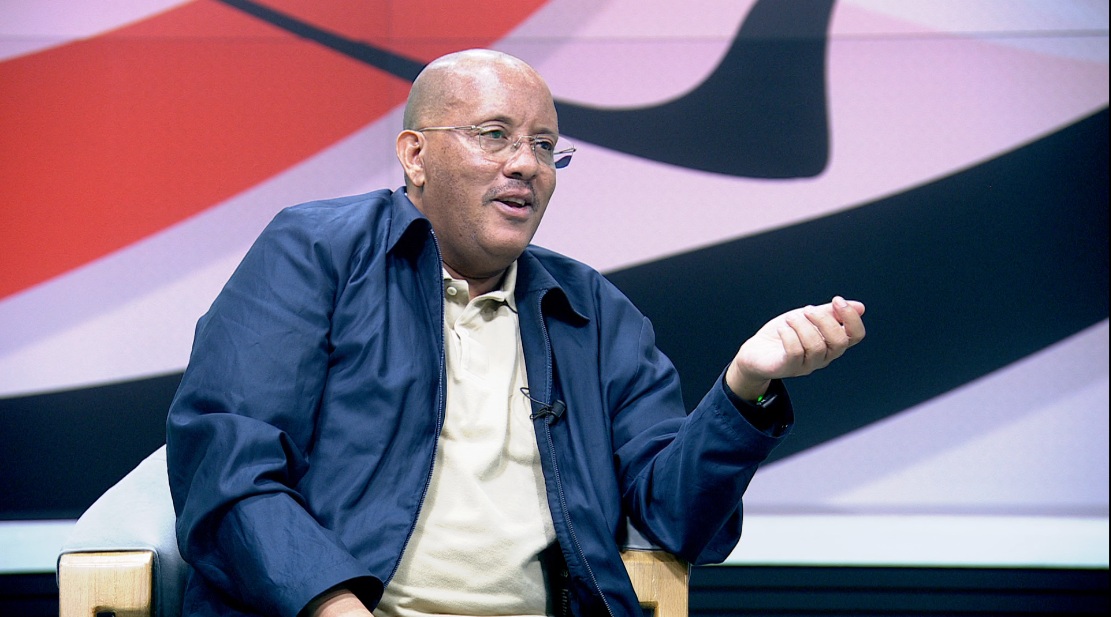
Addis Ababa, September 21, 2026 (ENA) —Sudan’s warring parties should acknowledge that neither can secure an outright military victory and give negotiations a chance to end the conflict, Getachew Reda, adviser to the Ethiopian Prime Minister on East African affairs, said.
Speaking to Pulse of Africa, Getachew said “Sudan deserves to be at peace,” warning that continued fighting is worsening displacement and humanitarian suffering.
The war, which erupted in April 2023 between Sudan’s army and the paramilitary Rapid Support Forces (RSF), has devastated the country, driving millions from their homes, disrupting basic services and deepening a humanitarian crisis.
The advisor said the best path forward would be for army chief Abdel Fattah al-Burhan and RSF commander Mohamed Hamdan Dagalo, widely known as Hemedti, to recognize that neither side was likely to achieve a decisive victory on the battlefield.
As a result, Getachew said, millions of people have been forced to flee their homes and leave Sudan, as the conflict continues to deepen the country’s fragmentation.
“Sudan has faced disintegration,” he said, pointing to the emergence of competing authorities and the division of control between the RSF and the Sudanese national army.
“The best scenario is going to be for the two sides to realize that they cannot win an outright victory and to give negotiation a chance,” he said.
Getachew said the conflict had also undermined what he described as a longstanding tradition of political accommodation in Sudan, where rival political figures had historically been able to coexist after changes of government.
“You remove him from power. He removes you from power. But still, killing has hardly been the characteristic of the political class in Sudan,” he said.
That tradition of political accommodation had been severely damaged by the current conflict, he said, describing the situation as “absolutely chaotic” and accusing both sides of contributing to the destruction of civilian areas and infrastructure.
The war has also produced one of the world’s largest displacement crises.
A UN report shows that since the conflict began, around 8.6 million people have been internally displaced, while about 19.5 million people are facing crisis levels of food insecurity.
For Ethiopia, which shares a long border with Sudan, the conflict has wider implications, Getachew said, citing the influx of Sudanese refugees and the potential for instability in Sudan to affect Ethiopia.
He warned that prolonged lawlessness could create opportunities for armed groups and other actors seeking to destabilize Ethiopia.
“The elements that are given assignments to destabilize Ethiopia consider the lawlessness in Sudan a very classic environment for them to operate,” he said.
Getachew also said Ethiopia should remain alert to the presence of what he described as anti-Ethiopian extremist elements within the broader Sudanese conflict.
Despite those security concerns, he said Ethiopia’s interest was in seeing Sudan move toward a negotiated political settlement rather than a military victory by either side.
He said any transition should ultimately be driven by civilians and smaller political forces, which he argued should come together to chart a future for Sudan.
“Unfortunately, reason seems to be missing in action when it comes to the bigger players in the Sudanese conflict,” Getachew said.
Since the war began in April 2023, IGAD, the African Union, the United Nations and other partners have pursued mediation efforts to end the conflict, but without a lasting breakthrough
The mediators continue to stress that a sustainable solution must be Sudanese-led and owned by the Sudanese people.
Despite these efforts, the war has continued and the humanitarian crisis has worsened.
Last week, UN Secretary-General António Guterres issued a “mea culpa” (admission of fault) over the international community’s inadequate response, calling for greater attention to the suffering caused by the war.


