Anticipated El Niño Threat Now a Question of Action, Not Prediction: IGAD - ENA English


Anticipated El Niño Threat Now a Question of Action, Not Prediction: IGAD
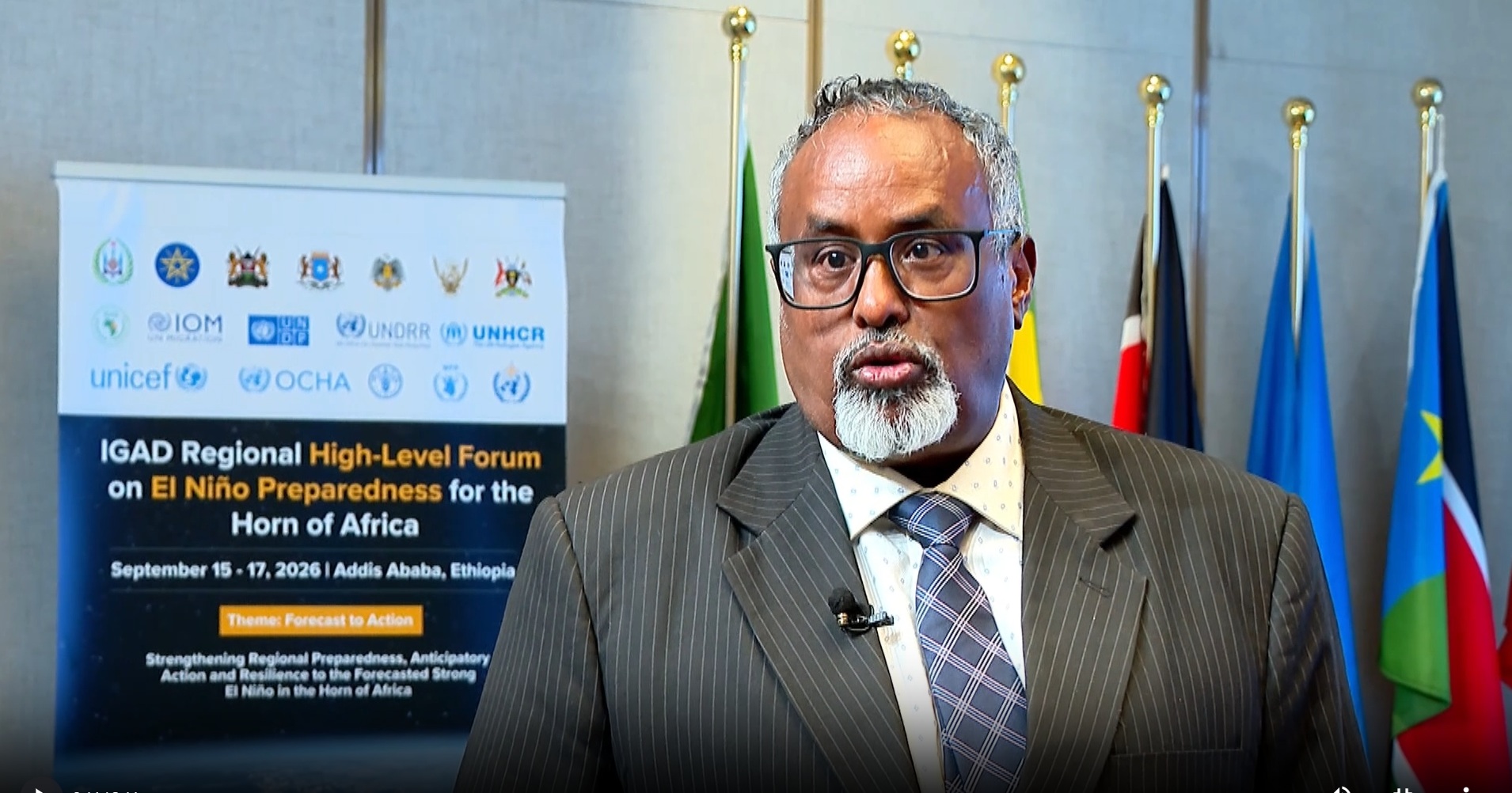
Addis Ababa, September 19, 2026 (ENA) — With forecasts pointing to an El Niño event in December, IGAD says the priority has shifted from prediction to preparedness.
El Niño is a climate phenomenon associated with unusual warming of Pacific Ocean waters.
Speaking to ENA on the sidelines of the IGAD Regional High-Level Forum on El Niño Preparedness for the Horn of Africa, held in Addis Ababa from September 15 to 17, 2026, IGAD Deputy Executive Secretary Mohamed Abdi Ware stressed the need for urgent action based on scientific forecasts.
“We are saying it's not a question of if, it's a question of ‘what do we do now?’” he said, underscoring the importance of timely preparedness.
He also expressed confidence in the accuracy of climate information provided by the IGAD Climate Prediction and Applications Centre (ICPAC), noting that the previous May forecast was “almost exactly as predicted.”
That confidence, he said, should encourage governments and other stakeholders to act early rather than wait for the impacts to unfold.
The consequences, he noted, extend far beyond climate statistics, affecting people, livelihoods and communities across the region.
Possible impacts include reduced grazing access for pastoral communities, livestock diseases, crops rotting in fields before harvest, damaged infrastructure and isolated communities.
“These are not just figures. These are real people and real communities that will be impacted by this phenomenon,” he said.
Presentations from IGAD member states showed that countries are already taking steps to prepare for the anticipated impacts, he said, adding that each state must tailor its measures to the specific risks it faces.
ICPAC’s regional climate outlook has forecast wetter-than-normal conditions across much of the Greater Horn of Africa during the October–December 2026 season, with excessive rainfall expected to heighten the risk of flooding, crop losses and damage to critical infrastructure.
The response will require financing to ensure that preparedness measures are implemented before the impacts materialize.
“These activities will need financing,” he said, calling on development partners and finance ministries in IGAD member states to work with national disaster risk management agencies to mobilize local resources.
Such resources would help countries take timely measures to protect vulnerable communities, he added.
“After all, it is our people that will be impacted,” he said.
Beyond preparedness, IGAD will continue facilitating knowledge and experience sharing among member states to strengthen climate-risk responses.
Countries with effective response measures can offer lessons for others in the region and help scale up successful approaches, he said.
Coordinated action among member states is essential, he added, because the anticipated impacts will affect countries and communities differently.
Reliable scientific forecasts, he said, give the region an opportunity to move from reacting after disasters strike to taking timely action based on early warning.
The immediate priority is to translate scientific information into practical preparedness measures capable of protecting people, livelihoods and communities from the anticipated El Niño impacts.


