Egypt’s Reckless Water Wastage and Destabilizing Agenda Are Self-Defeating: Getachew Reda - ENA English


Egypt’s Reckless Water Wastage and Destabilizing Agenda Are Self-Defeating: Getachew Reda
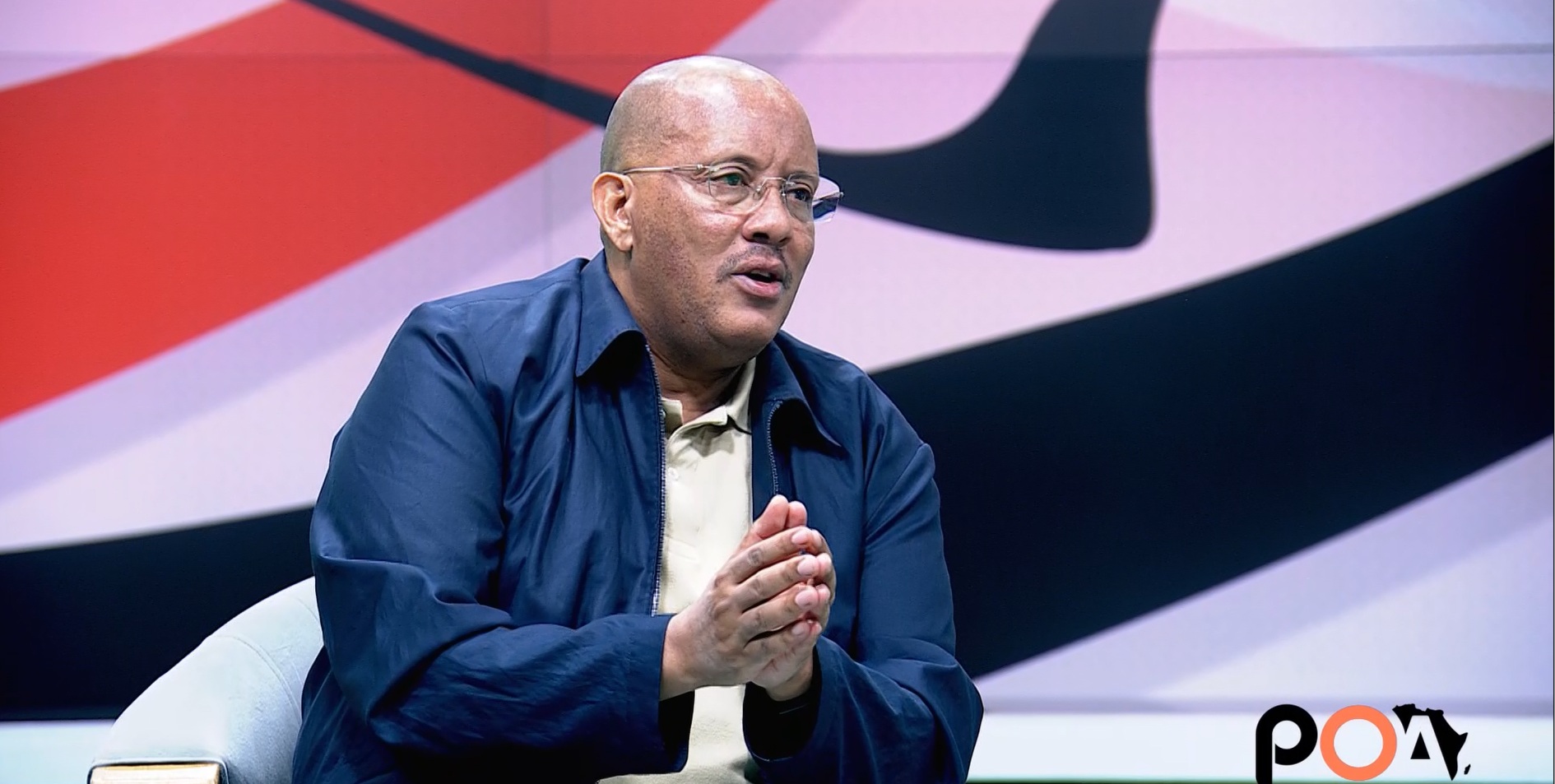
Addis Ababa, September 19, 2026 (ENA) — In a sharp assessment, Getachew Reda, Minister and Advisor to the Ethiopian Prime Minister on East African Affairs, described Egypt’s claim of exclusive control over the Nile as an outdated fantasy and condemned its regional interference as both counterproductive and dangerous.
In an exclusive interview with The Pulse of Africa, Getachew stated: “Egyptians are very good at creating an artificial reality.”
He described Egypt’s long-standing insistence that the Nile belongs to it alone — not as a shared resource among upstream and downstream countries, but as something it owns entirely.
He highlighted the audacity of this position, noting that one should not be surprised if an Egyptian claimed that Egypt itself is the source of the Nile.
Getachew argued that Egypt has shown a tremendous capacity to force science to fit its preferred narrative.
In politics, he said, this has produced a deep sense of entitlement that they call “historic rights,” to such an extent that it would be almost impossible for an Egyptian to believe there are people who happen to be the source of the Nile and who might have some use for it — whether for hydroelectric power, irrigation, or other purposes.
Invoking the ideas of Italian philosopher Antonio Gramsci, he argued that Egypt has developed cultural, social, and historical hegemony over how the Nile is perceived by Egyptians, which he attributed to what he described as a one-sided interpretation of the river’s significance.
As a result, any attempt by other riparian countries to use these water resources is deemed unacceptable.
The advisor explained that the Egyptian framing of “historic rights” is simply the idea that whoever used the water first must continue to use it indefinitely.
“Historic rights became obsolete because they are unacceptable,” he asserted, adding that the later concept of “water security” promoted in international circles is simply another name for the same outdated claim.
He rejected the notion that the Nile issue is an existential question for Egypt, arguing that Egyptian leaders securitize the matter precisely because they wish to preserve a monopoly.
“Egyptian politicians have a very complicated relationship with reality,” Getachew remarked.
The minister was blunt about Egypt’s water management.
Egypt has among the worst water-management practices, he argued, pointing to water-intensive projects such as the Toshka scheme, including golf courses and other developments in the desert, as examples of what he described as poor water management.
He further noted that annual evaporation from the Aswan High Dam far exceeds the amount of water stored in Ethiopia’s reservoirs.
Getachew stated that the Egyptian regime has systematically worked to destabilize Ethiopia — the source of the largest share of the Nile’s water — and Sudan, which holds significant irrigation potential.
Instability in Sudan, he argued, serves Egypt’s interests by preventing that country from fully utilizing the river. He cited what he called a clear double standard: while the Muslim Brotherhood is banned and suppressed in Egypt, Egyptian authorities have supported Brotherhood-linked elements in Sudan.
He characterized Egypt’s political maneuvering as short-sighted.
Getachew was unequivocal: the best option for Egypt is to abandon its failed strategy, come to terms with Ethiopia, and work toward regional stability. A stable Ethiopia and Sudan, he stressed, would never prejudice Egypt’s legitimate interests.
He argued that Ethiopia, as an upstream riparian, has every right to use its water resources, while noting: “The problem with Egypt is that it cannot come to terms with reality.”
“My advice is that the reality has changed and changed forever. Trying to impose their version of science, climate science, and hydrology on upstream countries is anachronistic and counterproductive. Their heavy involvement in destabilizing activities in the region is equally counterproductive — and potentially dangerous for themselves.”
Any genuine negotiation or mediation, he insisted, must bring both sides to the table and be rooted in reality and science, not politics. “Geography is stable. You cannot change geography,” Getachew stated.


