Egypt’s Stereotype of Nile Basin Countries More Harmful Than Effective: Senior Researcher - ENA English


Egypt’s Stereotype of Nile Basin Countries More Harmful Than Effective: Senior Researcher
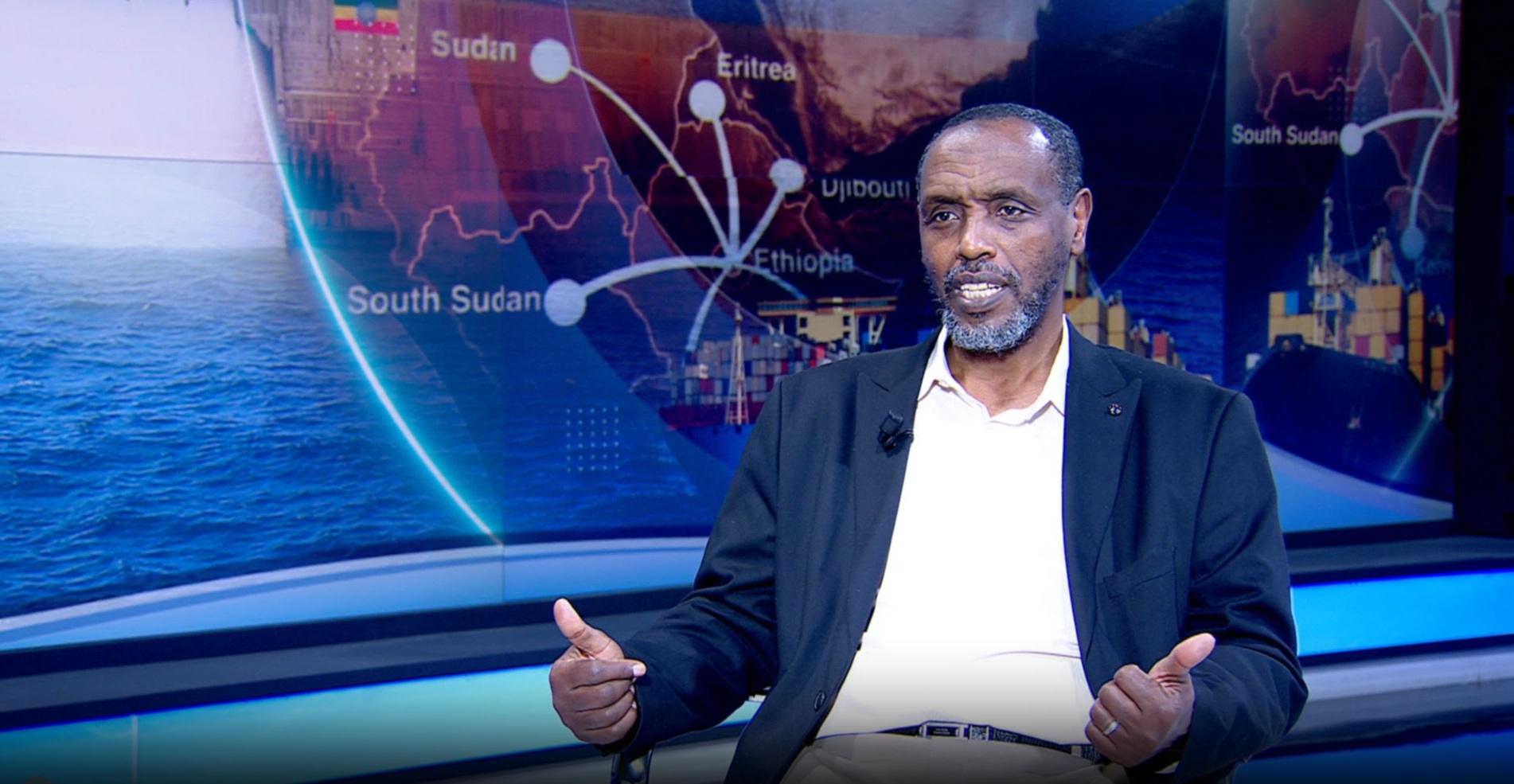
Addis Ababa, September 17, 2026 (ENA) — The Egyptian political instrumentalization of the Nile and the portrayal of Nile Basin countries as a stereotype have fostered negative public perceptions in Egypt toward basin countries in general, and Ethiopia in particular, a senior researcher at the Center for Strategic Studies and Integration Initiative, Abdushakur Abdussamad, told ENA.
“This portrayal, instrumentalization, intense media use, and heavy media campaigns are ultimately more harmful to the Egyptian public than they are effective,” Abdushakur said.
He explained that the Egyptian public has been conditioned to believe that the Nile is Egypt’s sole source of water for meeting its needs.
“This implies that any development project undertaken by another country on the Nile would come at the expense of the Egyptian people’s water share, deeply ingraining this concept in the Egyptian public’s psyche.”
The senior researcher noted that this framing serves, to a large extent, a media purpose designed to distract from domestic social, political, and economic issues within Egypt.
“In turn, this promotes a significantly biased and stereotypical image of other Nile Basin countries. As a result, generations raised on this narrative accept it as absolute fact, whereas the true reality that needs to be projected is that this water source is shared, not the exclusive property of Egypt,” he explained.
Abdushakur said the issue was thus diverted from an integrative developmental project into a politically exploited initiative.
The senior researcher pointed out that Egypt possesses numerous other water resources. It is bordered by the Mediterranean Sea to the north and the Red Sea to the east, and it also has groundwater reserves.
“However, driven by a desire for a cost-free resource that requires no additional financial burden, our Egyptian brothers focus on the Nile and seek to retain a veto over its utilization.”
Further elaborating on the Nile, the senior researcher said the Nile Basin Cooperative Framework Agreement (CFA), also known as the Entebbe Agreement, has confirmed that everyone has the right to benefit from Nile waters.
He noted that the legally binding international agreement now serves as the framework regulating relations among Nile Basin countries.
“Consequently, Ethiopia has every right to benefit and has never needed permission, as has been reaffirmed over the past decades, to pursue its legitimate right to meet its development needs, particularly in the field of hydropower,” Abdushakur stressed.
He said it should be clear that Ethiopia does not need to ask anyone’s permission, since hydropower is a renewable, safe and clean source of electricity. He added that the country is therefore “responsibly fulfilling its role without harming anyone — a principle Ethiopia emphasizes and which has been proven correct, as the Ethiopian position is sound and has caused no harm to any party.”
He underscored that the current and former Ethiopian water ministers have stated that Ethiopia’s utilization of the Nile waters — and all its water resources in rivers that feed neighboring countries — is an inherent right.
“Just imagine a country that supplies over 86 percent of the Blue Nile’s waters being barred from utilizing this vital resource. This is both an injustice and a significant bias.”
The senior researcher said Ethiopia, from the very beginning, invited downstream and transit countries to negotiate regarding the Grand Ethiopian Renaissance Dam (GERD), going even further by proposing a partnership in financing, construction and operation.
“Unfortunately, this invitation was not received in a manner befitting partners of a shared destiny.”
Abdushakur added that the issue was diverted from an integrative developmental project into a politically exploited initiative. “But political instrumentalization is short-lived, although the rift it creates in public sentiment can be difficult to overcome in the near term.”


