Former House Speaker Says Egypt Must Align Nile Strategy with 21st Century Realities - ENA English


Former House Speaker Says Egypt Must Align Nile Strategy with 21st Century Realities
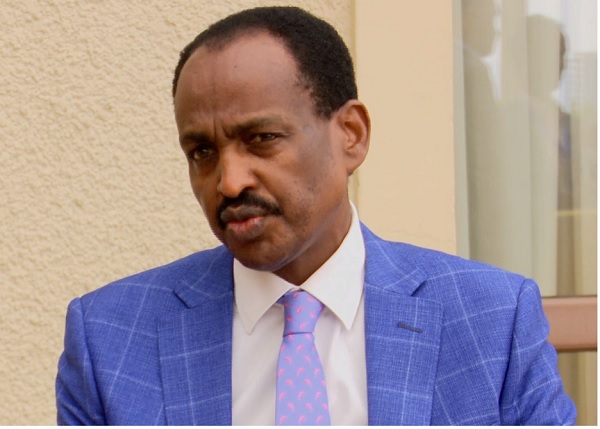
Addis Ababa, September 16, 2026 (ENA) —Egypt must align its Nile strategy with the realities of the 21st century, former Ethiopia's House of People's Representatives Speaker Teshome Toga said, stressing that outdated colonial-era notions can no longer guide the management of a shared transboundary river.
In his analytical article, the former Speaker noted that the Nile Basin has been transformed by population growth, climate change, rising energy demand, food insecurity and rapid economic development, requiring a new framework based on cooperation, equity and mutual respect.
Therefore, “the Nile must be managed according to the realities of the twenty-first century, not the logic of a bygone colonial era”.
The Blue Nile Abay River, which originates in the Ethiopian highlands, contributes about 86 percent of the Nile’s annual flow, underscoring Ethiopia’s central role in the basin.
The former Speaker stressed that Egypt’s dependence on the Nile does not give it monopoly over the river, saying a shared international watercourse must be governed through fairness and mutual recognition of the rights of all riparian states.
“Dependence on the Nile does not confer monopoly over a shared river,” he wrote.
Teshome criticized the continued reliance on colonial-era and exclusionary agreements, including the 1959 bilateral arrangement between Egypt and Sudan, which allocated the river’s waters without the participation of upstream countries, including Ethiopia.
Such arrangements cannot provide a sustainable basis for managing a shared resource in the modern era, he added.
Teshome described the Grand Ethiopian Renaissance Dam (GERD) as a clear manifestation of Ethiopia’s new reality and its growing ability to mobilize domestic resources for national development.
He noted that the dam reflects Ethiopia’s resolve to expand electricity access, reduce poverty and accelerate economic transformation through self-reliance.
“The GERD has demonstrated Ethiopia’s resolve, self-reliance, and ability to build for its future with its own resources.”
Teshome stated that attempts to block Ethiopia’s development projects through external financing restrictions, political pressure or vetoes would not succeed.
“No veto, no pressure, and no external interference can stop Ethiopia’s march toward development.”
Moreover, the former Speaker and diplomat rejected military confrontation as a solution to Nile disputes, saying no military strategy can ensure sustainable water security.
“Military confrontation cannot resolve the Nile question; only dialogue can,” he underscored.
He further underlined Ethiopia’s long-standing commitment to diplomacy and cooperation, citing the 2015 Declaration of Principles on the GERD as an important example of peaceful engagement with Egypt and Sudan.
The former Speaker called for genuine negotiations founded on sovereign equality, equitable and reasonable utilization, mutual respect, scientific cooperation and the peaceful settlement of disputes.
“The Nile should be a bridge of cooperation, not a permanent source of tension,” he pointed out.
No country should monopolize a shared river and no nation should be denied its legitimate right to development, he added.
In conclusion, Teshome noted that the future of the Nile must be built on shared responsibility, shared prosperity and a political understanding that reflects the realities of the 21st century.


