Egypt Must Align Its Nile Strategies with the Realities of 21st Century - ENA English


Egypt Must Align Its Nile Strategies with the Realities of 21st Century
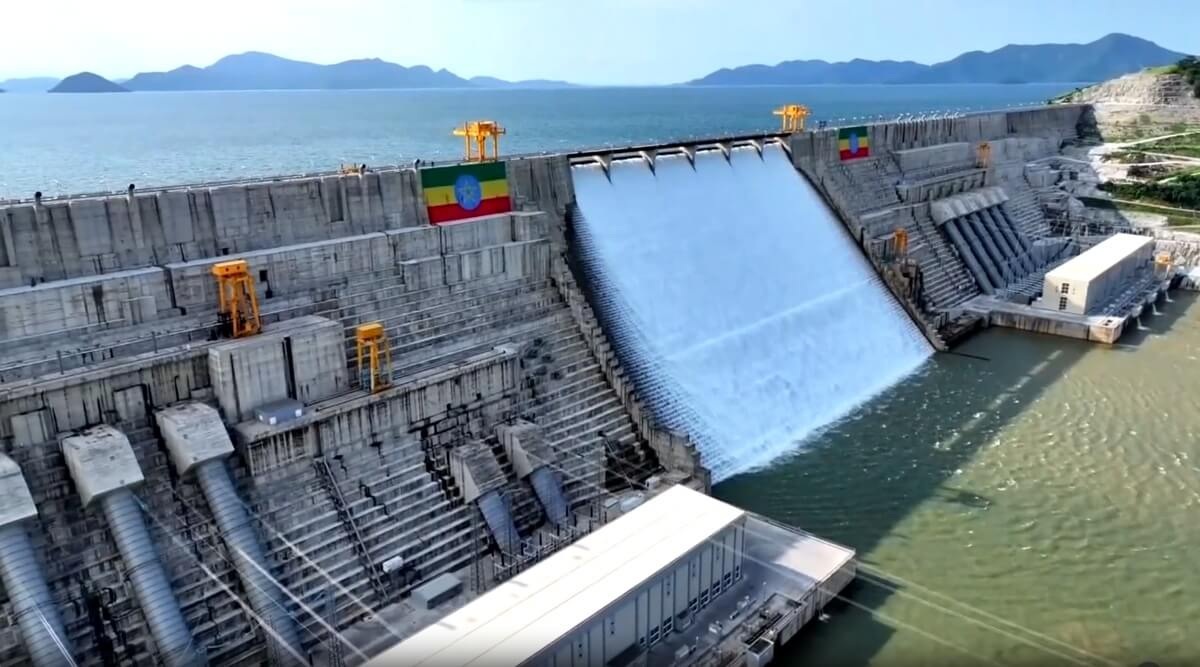
Abay/Nile Waters at the Intersection of Ethiopia- Egypt Relations
Sept. 15, 2026 (ENA)
By Ambassador Teshome Toga Chanaka
Background
The Nile is one of the world’s great transboundary river systems, shared by eleven riparian countries. Egypt and Sudan are the principal downstream states with virtually no contribution to the flow of the Nile. The Nile’s waters originate in the upstream countries, Ethiopia being the source of the Blue Nile. The Blue Nile, originating in the Ethiopian highlands, contributes 86% share of the Nile’s annual flow.
For centuries, the utilization of Nile waters has been a source of tension between upstream and downstream countries. Historical circumstances, colonial legacies and competing interpretations of rights over the river have contributed to a pattern of mistrust that has often prevented the emergence of a genuinely cooperative basin-wide framework.
Egypt, in particular, has developed and maintained an entrenched position concerning the allocation and utilization of the Nile waters. Its continued emphasis on what it describes as “historical rights” and on agreements concluded during periods when most upstream countries were not parties to the negotiations has made it difficult to establish a framework based on contemporary principles of international water law, particularly equitable and reasonable utilization and the obligation to cooperate.
The 1959 Agreement between Egypt and Sudan is a particularly important example. The agreement allocated the entire estimated Nile flow between the two downstream countries without the participation of the other riparian states, including Ethiopia, the source of the Blue Nile. It is difficult to envisage how such an arrangement could provide a sustainable basis for managing a shared trans boundary resource in the twenty-first century.
The fundamental issue, therefore, is not whether Egypt has legitimate interests in the Nile. It unquestionably does. The question is whether those interests can legitimately be pursued at the expense of the equally legitimate interests of the other riparian states.
Why Egypt Needs a New Nile Strategy for the 21st Century?
Egypt’s heavy dependence on the Nile is a reality that Ethiopia fully understands. But dependence does not confer a monopoly over a shared international watercourse. The challenge is to reconcile Egypt’s legitimate water-security concerns with the development aspirations and rights of the upstream countries.
The twenty-first century has transformed the political, economic and technological circumstances of the Nile Basin. Population growth, climate change, food insecurity, energy demands, economic development and changing patterns of regional cooperation have fundamentally altered the context in which Nile waters must be managed.
It is therefore neither realistic nor sustainable to approach the Nile exclusively through the prism of historical allocations. The river must increasingly be viewed as a shared resource whose sustainable management requires cooperation, dialogue, scientific evidence and equitable utilization.
The Grand Ethiopian Renaissance Dam (GERD) represents perhaps the clearest manifestation of this changing reality. The GERD has demonstrated Ethiopia’s growing capacity to mobilize domestic resources and undertake major infrastructure projects in pursuit of its national development objectives. Whatever one’s position on the dam, it has fundamentally changed the political and strategic context of the Nile question.
Consequently, statements that Ethiopia should not be permitted to construct another dam on the Blue Nile cannot provide a serious basis for future policy. Ethiopia’s development needs cannot be indefinitely subordinated to another country’s perception of its own water security.
Nor is it realistic to assume that Ethiopia’s development projects on the Nile can be prevented indefinitely through efforts to restrict international financing. The experience of the GERD demonstrated Ethiopia’s ability to mobilize domestic resources when external financing was unavailable.
This is an important lesson for all concerned: the future of the Nile cannot be determined through vetoes, pressure or attempts to prevent development. It must be shaped through cooperation. The same applies to the broader political relationship between Ethiopia and Egypt. Attempts to address differences over the Nile through political pressure, geopolitical rivalry or support for destabilizing forces cannot provide a sustainable solution. Such approaches risk deepening mistrust and making an eventual settlement more difficult.
Military confrontation is equally untenable. No military strategy can produce sustainable water security. The Nile will continue to flow across borders long after political crises have passed. The only durable answer is therefore a political and diplomatic framework that recognizes the legitimate interests of all riparian countries.
Other major transboundary river systems demonstrate that shared rivers need not inevitably become sources of military confrontation. China, for example, shares numerous transboundary rivers with neighboring countries and has developed a
variety of mechanisms for managing shared water interests. The experiences of other river basins demonstrate that differences can be managed through dialogue, cooperation and negotiated arrangements.
The Comprehensive Framework Agreement and the Changing Regional Context
The effort by the Nile Basin riparian states to establish a basin-wide legal framework has been underway for many years. The negotiation of the Cooperative Framework Agreement (CFA) was intended to provide a more inclusive and equitable basis for cooperation among the Nile Basin countries. The CFA’s evolution reflects an important reality: upstream countries increasingly expect their interests and development needs to be recognized within the governance of the Nile Basin.
The issue is therefore larger than the GERD or the relationship between Egypt and Ethiopia. It concerns the fundamental question of how an international river basin should be governed in an era of population growth, climate change, energy transition and rapid economic transformation.
A sustainable Nile framework cannot be built around arrangements negotiated without the participation of all concerned states. Nor can the interests of downstream countries simply be ignored. The answer lies in developing an inclusive framework that accommodates the legitimate concerns of downstream states while recognizing the development rights of upstream countries.
Ethiopia’s Cooperative Approach Should Not Be Mistaken for Weakness
Since the political transition of 1991, Ethiopia has repeatedly expressed its preference for dialogue and cooperation in addressing the Nile question. The 1993 memorandum of understanding reached during the visit of Ethiopia’s Transitional Government leadership to Cairo and the subsequent 2015 Declaration of Principles on the GERD involving Ethiopia, Egypt and Sudan were important demonstrations of Ethiopia’s willingness to engage diplomatically and seek mutually beneficial solutions.
The Declaration of Principles was particularly significant because it established a set of principles intended to guide the three countries in addressing issues related to the GERD, including cooperation, equitable and reasonable utilization, the obligation not to cause significant harm, and the peaceful settlement of disputes.
These initiatives demonstrate that Ethiopia does not seek confrontation with Egypt.
Indeed, Ethiopia has repeatedly made clear that it has no intention in harming the Egyptian people. This was amply stated by PM Abiy Ahmed during his offical visit to Cairo. Ethiopians and Egyptians share deep historical, cultural and human bonds. If the two countries estblish cooperation and working together, the benefits will
transcend the borders of the two countries. The outcome will have broader regional impact. The Nile should be a bridge connecting the peoples of the two countries rather than a permanent source of antagonism between them.
But cooperation is necessarily reciprocal.
Ethiopia’s willingness to negotiate should not be interpreted as an acceptance of arrangements that deny its legitimate development interests. Nor should restraint be mistaken for weakness. Ethiopia has legitimate interests in using its natural resources to reduce poverty, expand access to electricity, develop agriculture and transform its economy. At the same time, Ethiopia has an interest in ensuring that its utilization of the Nile is undertaken responsibly and without significant harm to downstream populations. This is precisely why a cooperative framework is possible.
The Way Forward: From Confrontation to Cooperation
The Nile question has reached a point where old assumptions need to be reconsidered. Egypt’s water-security concerns are legitimate. Ethiopia’s development aspirations are equally legitimate. Sudan also has legitimate interests that must be taken into account. The challenge is to create a framework in which these interests are not viewed as mutually exclusive.
The choice before Egypt and Ethiopia should therefore not be framed as a choice between Egyptian water security and Ethiopian development. The real choice is between competition and cooperation; confrontation and dialogue; unilateralism and shared governance.
There is considerable room for cooperation.
The two countries could strengthen scientific and technical cooperation on hydrology, climate change, drought and flood management, sedimentation, agricultural productivity, electricity trade and water-use efficiency. Ethiopia’s potential for hydropower development and Egypt’s expertise in water management could, for example, become complementary rather than competing assets.
A broader economic relationship could also transform the politics of the Nile. Energy trade, investment, infrastructure connectivity, agriculture and regional economic integration could create incentives for both countries to regard the river as an opportunity for mutual benefit rather than a zero-sum contest.
The way forward is therefore not through threats, pressure or attempts to prevent Ethiopia from developing its water resources. Nor is it through unilateral actions that disregard the legitimate concerns of downstream countries.
The answer is a return to the negotiating table with a different mindset.
Egypt needs to recognize that the Nile Basin of the twenty-first century is fundamentally different from the Nile Basin of the nineteenth or twentieth century. Ethiopia, for its part, should continue to demonstrate that its development of the Nile can coexist with the legitimate water-security interests of downstream countries.
The central principle should be simple: no country should seek to monopolize a shared river, and no country should be denied its legitimate right to development.
The Nile can become either a permanent fault line between Egypt and Ethiopia or an unprecedented opportunity for cooperation between two ancient civilizations.
The choice is ultimately political.
What is required now is not another round of confrontation, but a new political understanding—one founded on sovereign equality, equitable and reasonable utilization, mutual respect, scientific cooperation and shared prosperity.
The Nile does not belong to one country. It is a shared resource, and its future must be built on shared responsibility.
……………………
* The author is former Ethiopian Ambassador to Egypt. The views only represent that of the author alone.
Ambassador Teshome Toga Chanaka is a senior Ethiopian politician and veteran diplomat. He served as Speaker of the House of Peoples' Representatives, Minister of Youth, Sports, and Culture, and Commissioner of the National Rehabilitation Commission. In his diplomatic career, he served as Ambassador to the European Union, China, Kenya, and Ghana.


