German Diplomat Applauds Addis Ababa’s Rapid Urban Transformation - ENA English


German Diplomat Applauds Addis Ababa’s Rapid Urban Transformation
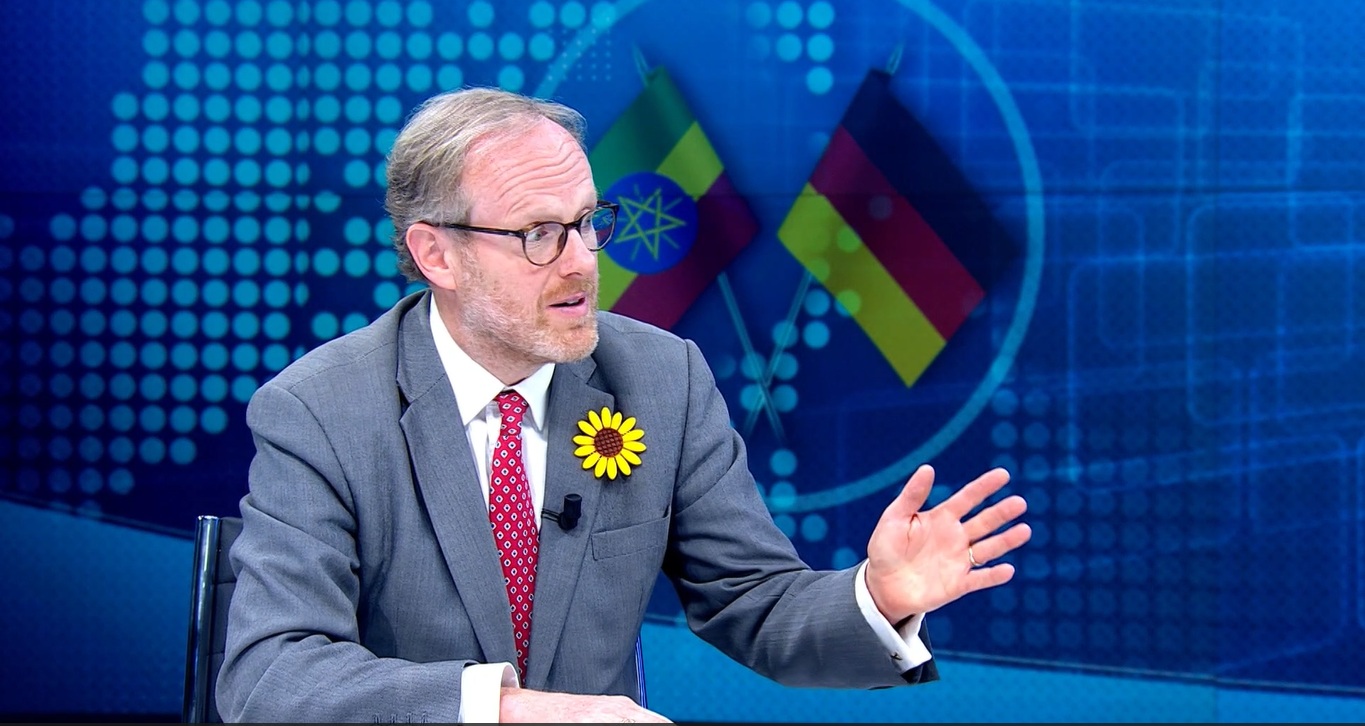
Addis Ababa, September 10, 2026 (ENA)—Acting German Ambassador to Ethiopia Ferdinand von Weyhe praised Addis Ababa’s rapid urban transformation, saying the capital’s expanding corridors, rehabilitated riverbanks, public spaces and growing urban greenery are reshaping the city at an impressive pace.
Speaking to ENA, von Weyhe said he witnessed significant changes in the capital during his three years in Addis Ababa, particularly the development of urban corridors and the rehabilitation of public spaces.
“As I have been living here for three years, I witnessed all the changes, and it is impressive for me to see the speed and the rigidity of what is happening and how it is happening,” he said.
The acting ambassador said the various development projects across the city appeared to be interconnected, suggesting the existence of a broader urban planning framework.
“There’s a big master plan, I have the impression, although I haven’t seen it, but it looks like it’s all fitting together with all the corridors,” he observed.
He cited the areas around the Kebena River and Lake, including locations near the German Embassy and extending toward the French Embassy, as visible examples of the city’s ongoing transformation.
According to von Weyhe, the changes are not limited to physical infrastructure but are also influencing how residents use and experience public spaces.
He noted that more residents are now spending time outdoors, walking along river corridors and using newly developed public spaces.
“I have seen so many people enjoying the evening and so many people walking along the river as well as children bicycling along this, which is a big change,” he said.
The diplomat also connected Addis Ababa’s urban greening efforts with Ethiopia’s broader Green Legacy Initiative (GLI), which has placed tree planting, forest development and environmental restoration at the center of the country’s development agenda.
Von Weyhe said his personal experience of participating in tree planting activities had demonstrated that the success of environmental initiatives depends not only on planting trees but also on ensuring their survival and growth.
“I have planted with my own hands hundreds of trees, and I experience that it’s not only about planting, but also about caring for the tree as it grows,” he said.
He also described the public enthusiasm surrounding tree planting and the efforts to nurture newly planted seedlings during the rainy season as “a signal of refreshing and renewing.”
Beyond the environmental benefits of tree planting, von Weyhe emphasized the need to create economic opportunities from forest resources and ensure that local communities benefit from the country’s growing forest assets.
“Having planted many trees in Germany, I know that in the end, it’s not only about aesthetics; people need a living for themselves and their families,” he said.
He stressed the importance of establishing value chains around mature trees and strengthening Ethiopia’s timber industry to create employment and generate income for communities living near forest areas.
“It is very important to make use of the wood and timber to support a timber industry and this can significantly contribute to the income of the communities living around the forests,” he said.
His remarks underline the broader potential of Addis Ababa’s urban renewal efforts to go beyond improving the city’s appearance and contribute to livability, environmental resilience and economic opportunity.
The capital’s urban development has increasingly placed public spaces, river corridors, pedestrian areas and green spaces at the center of its transformation, creating recreational areas while seeking to improve the urban environment.
Von Weyhe further underscored the economic dimension of Ethiopia’s environmental initiatives, saying the country’s expanding forest resources could become a sustainable source of livelihoods if supported by appropriate industries and value chains.
His observations come as Addis Ababa continues to expand urban corridors, rehabilitate riverbanks and public spaces, and integrate greenery and recreational areas into the city’s development, reflecting an increasingly interconnected approach to urban renewal and environmental sustainability.


