ECA Chief Urges Shift from Victimhood to Active Climate Leadership - ENA English


ECA Chief Urges Shift from Victimhood to Active Climate Leadership
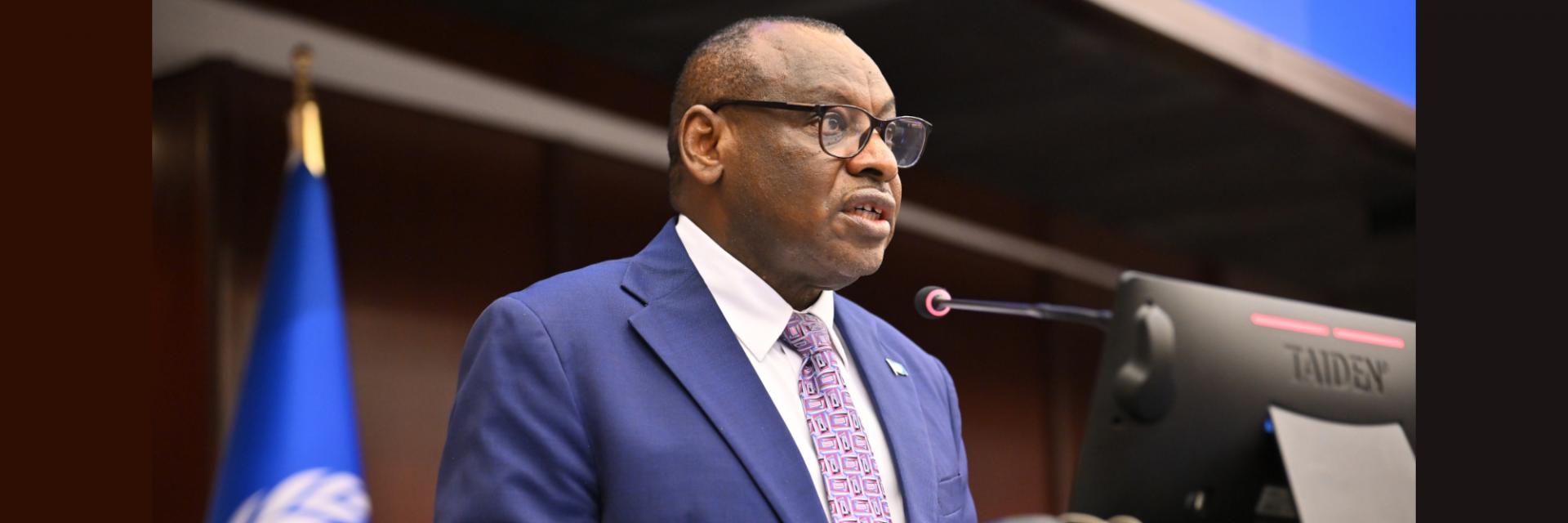
Addis Ababa, September 3, 2026 (ENA)— United Nations Under-Secretary-General and Executive Secretary of the Economic Commission for Africa (ECA), Claver Gatete, called on African nations to transition from a narrative of victimhood to positioning the continent as an active leader in global climate action.
Speaking at the opening of the 14th Conference on Climate Change and Development in Africa (CCDA-XIV) in Addis Ababa, Executive Secretary Gatete stressed that while Africa contributes less than four percent of global greenhouse gas emissions yet bears the heaviest consequences, it must harness its strategic assets to influence global solutions.
"While this remains an unfortunate reality for our continent, we must not allow it to limit Africa’s climate story to one of victimhood," Gatete declared.
"We are also a continent of enormous renewable energy potential, critical mineral resources, a young population, expanding markets and growing technological capacity. But let’s also ask how we can harness these assets for our own development, and play a greater role in shaping the rules, investments and solutions that drive global climate action."
The Executive Secretary noted that the annual theme, "From Pledges to Implementation," highlights a structural challenge where commitments and adaptation plans continue to outpace delivery.
Turnaround, he argued, depends heavily on reforming how climate finance reaches the continent. Disclosing that Africa requires an estimated 277 billion US dollars annually through 2030 to implement its Nationally Determined Contributions (NDCs)—with current flows covering merely 11 percent— Gatete raised alarm over financing terms that aggravate debt burdens.
"The question is not simply how much finance we mobilize. We must also ask: At what cost? On what terms? And what development outcomes will it deliver?" Gatete cautioned.
"For countries already grappling with high debt-service costs and limited fiscal space, the terms of climate finance matter enormously. Finance that adds to unsustainable debt will only make implementation harder."
To break this bottleneck, he called for affordable climate finance anchored in grants and concessional funding, coupled with massive private capital mobilization.
He emphasized that climate action must expand access to electricity for more than 600 million Africans without power, leveraging the African Continental Free Trade Area (AfCFTA) to process local resources and build cross-border value chains at scale.
Outcomes from the three-day gathering will shape the Addis Ababa Climate Action Messages, framing concrete proposals for COP31 in Antalya and paving the way toward COP32 in Addis Ababa in 2027.


