Egypt’s Strategic Spoiler Role in the Horn of Africa and Red Sea - ENA English


Egypt’s Strategic Spoiler Role in the Horn of Africa and Red Sea
Inside Cairo Necolonial Political Establishment and Its Longstanding Strategy to Contain Ethiopia
By Yordanos D.
Sept. 4, 2026 (ENA)
Egypt’s relationship with Ethiopia has evolved beyond a dispute over Abay (Nile) waters into a broader strategic rivalry involving political influence, regional security, maritime access and the balance of power in the Horn of Africa and the Red Sea.
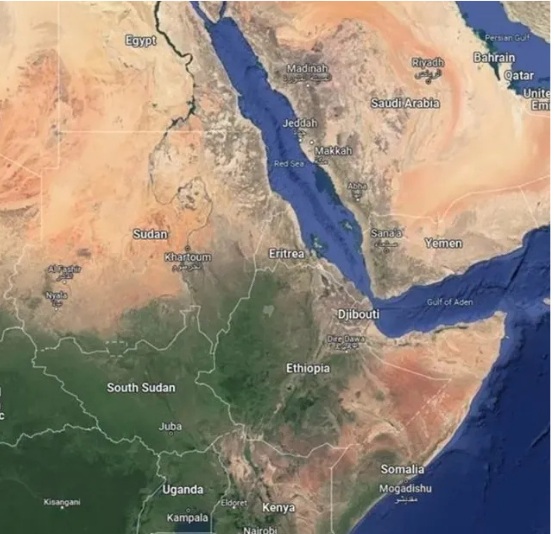
Over decades, the two countries’ competing interests have intersected with developments in Somalia, Sudan and Eritrea, while Ethiopia’s efforts to expand its economic capacity, develop its water resources and regain diversified access to the sea have added new dimensions to the relationship.
The pattern of competition can be examined through the historical role of Nile politics, regional alliances, security cooperation and the wider struggle for strategic influence in the Horn of Africa and the Red Sea.
The Roots of the Confrontation
The roots of the rivalry lie partly in geography, as the largest share of the Abay’s water originates in the Ethiopian highlands. Egypt, as a downstream country, has historically depended heavily on Ethiopia’s Blue Nile for its population and development. Although the river is a shared resource that can support the development of all the countries through which it flows, Egyptian officials have consistently opposed upstream countries’ efforts to use their water resources for development.
Egypt has sought to invoke the 1929 Anglo Egyptian Nile Agreement and the 1959 Egyptian Sudanese Nile Agreement in Nile water politics.
However, neither agreement included Ethiopia or other upstream countries as parties.
Despite Egypt’s repeated efforts to use these agreements as a basis for its position on Nile waters, agreements concluded without the participation of upstream countries, including Ethiopia, cannot permanently prevent those countries from developing their own water resources.
That was one of the reasons Ethiopia constructed the Grand Ethiopian Renaissance Dam (GERD), which has transformed the longstanding dispute over the Nile into a new chapter.
In fact, Egypt’s actions concerning Ethiopia have deep historical roots. Historical studies have linked Egyptian involvement to the Somali Ethiopian conflict. Egypt has also sought to widen its presence in the Red Sea and the Indian Ocean by cultivating relationships with countries competing with Ethiopia and applying different forms of pressure on Ethiopia.
Egypt has also been working consistently with countries around Ethiopia, including Somalia, Sudan and Eritrea aiming to put its pressure in Ethiopia.
Egypt and Somalia signed a defense agreement in August 2024, expanding military and security cooperation. While both governments described the relationship as supporting Somali sovereignty and counterterrorism, the agreement attracted attention in Addis Ababa because of its timing and its connection to wider Horn of Africa rivalries.
Egypt also has longstanding military ties with the Sudanese Armed Forces and has publicly supported Sudan’s military leadership since the outbreak of war between the Sudanese Armed Forces and the Rapid Support Forces in April 2023.
Egypt provides direct military support to the Sudanese Armed Forces. Nevertheless, Cairo’s close relationship with Sudan’s military establishment has strategic implications for Ethiopia, particularly given the two countries’ shared border, the Al Fashaga dispute, trade routes and the wider Abay Basin security environment.
Eritrea represents a particularly important dimension of Ethiopia’s maritime vulnerability. Its Red Sea coastline and ports at Massawa and Assab historically provided Ethiopia with direct access to the sea. Eritrea’s independence in 1993 transformed Ethiopia into a landlocked country dependent on neighboring states for maritime trade.
Many political analysts also believe that Egypt contributed to this situation, as Egypt maintained relations with Eritrean actors during the Ethio Eritrean conflict. As part of what has been described as a longstanding strategy, Boutros Boutros Ghali has also been mentioned as one of the figures associated with developments surrounding Eritrea’s separation from Ethiopia.
Boutros Ghali and Nile Politics
Many political analysts argue that Boutros Boutros Ghali occupies an important place in the history of relations between Ethiopia and Egypt. As Egypt’s foreign minister before becoming UN Secretary General, he was closely involved in Egyptian foreign policy during a period of major political transformation in Ethiopia and Eritrea.
Some analysts have attributed a significant role to Boutros Ghali in Eritrea’s separation from Ethiopia. Eritrea’s independence, however, resulted from decades of armed struggle the subsequent referendum. From Cairo to the halls of the United Nations, Egyptian politicians pushed to hasten Eritrea’s separation, striking at the heart of Ethiopia’s territorial integrity.
Boutros Ghali was also one of the most prominent Egyptian figures associated with the securitization of Nile politics. His warning that future conflicts could be fought over water became emblematic of Egypt’s perception of the Nile as a national security issue.
Under President Abdel Fattah el Sisi, Egypt’s policy toward Ethiopia has continued with a stronger military and geopolitical dimension. Cairo has strengthened relations with Somalia, maintained close ties with Sudan’s military establishment and preserved strategic relations with Eritrea, while continuing its opposition to Ethiopia’s position on the Nile and its pursuit of diversified maritime access.
Egypt’s October 2024 political declaration with Somalia was issued in Asmara in the presence of Eritrean regime’s leader and called for expanded cooperation and stronger Somali security capabilities. The development was viewed in Ethiopia as contributing to an emerging regional alignment with implications for Ethiopia’s stability and development.
Interference in Internal Affairs
It is also alleged that Egypt has interfered in Ethiopia’s internal affairs by supporting or maintaining contacts with opposition and armed groups.
Egypt was accused of interference during periods of unrest in the past, including allegations of armed groups. Such external support for armed or political actors, where established, can intensify existing divisions and prolong insecurity.
Egypt has been accused of exploiting domestic disagreements whenever they serve Cairo’s broader regional interests. Support, financing, training, diplomatic backing or logistical assistance to armed groups, if established, could increase their ability to sustain conflict and place additional pressure on the Ethiopian state.
Pressure on Stability and Development
Egypt has persistently pursued measures that could retard Ethiopia’s development and increase strategic pressure on the country. Ethiopia’s economic transformation depends on energy, infrastructure, industrialization, agricultural modernization, trade and reliable access to international markets.
Egypt’s strategy can therefore be viewed not as a single openly declared campaign, but as a pattern of strategic pressure operating across several fronts: water diplomacy, regional alliances, military cooperation, maritime influence and engagement with internal opposition forces.
However, Ethiopia has managed to withstand these pressures while confronting the challenges associated with Egypt and its regional partners. The country has continued to address the Nile dispute, navigate regional alliances and maritime competition, respond to internal security challenges and construct the GERD. It has also planned the construction of additional dams as part of its broader effort to develop its water resources.
Besides, Ethiopia is strongly working to regain its position in the Red Sea, which is central not only to Ethiopia’s maritime access but also to the balance of peace and security in the region.
Ethiopia’s pursuit of peaceful and diversified maritime access is part of its broader economic and national security strategy rather than simply a territorial ambition. At the same time, continued regional militarization risks turning the Horn of Africa and the Red Sea into a theater of prolonged geopolitical competition.
Ethiopia’s presence in the Red Sea will therefore remain an important element of the region’s future strategic balance, despite the opposition, allegations and competing narratives surrounding its return to the Red Sea.
In a nutshell, the relationship between Ethiopia and Egypt reflects a longstanding competition in which water resources, regional alliances, security interests and maritime access have remained closely interconnected. From Nile politics and the historical involvement of regional actors to contemporary security and diplomatic alignments, the rivalry has extended beyond the river itself and become part of the broader geopolitical competition in the Horn of Africa and the Red Sea. Ethiopia has continued to pursue its development objectives, including the utilization of its water resources, the construction of the GERD and efforts to secure peaceful and diversified maritime access.
The developments demonstrate that Ethiopia’s economic transformation and maritime aspirations are increasingly connected to the wider strategic balance of the region. As competition continues, the Horn of Africa and the Red Sea will remain important arenas in which political influence, economic interests, security considerations and maritime access intersect.


