Egypt’s Attempts to Weaken Ethiopia Would Eventually Harm Itself, Says Prof. Berhanu - ENA English


Egypt’s Attempts to Weaken Ethiopia Would Eventually Harm Itself, Says Prof. Berhanu
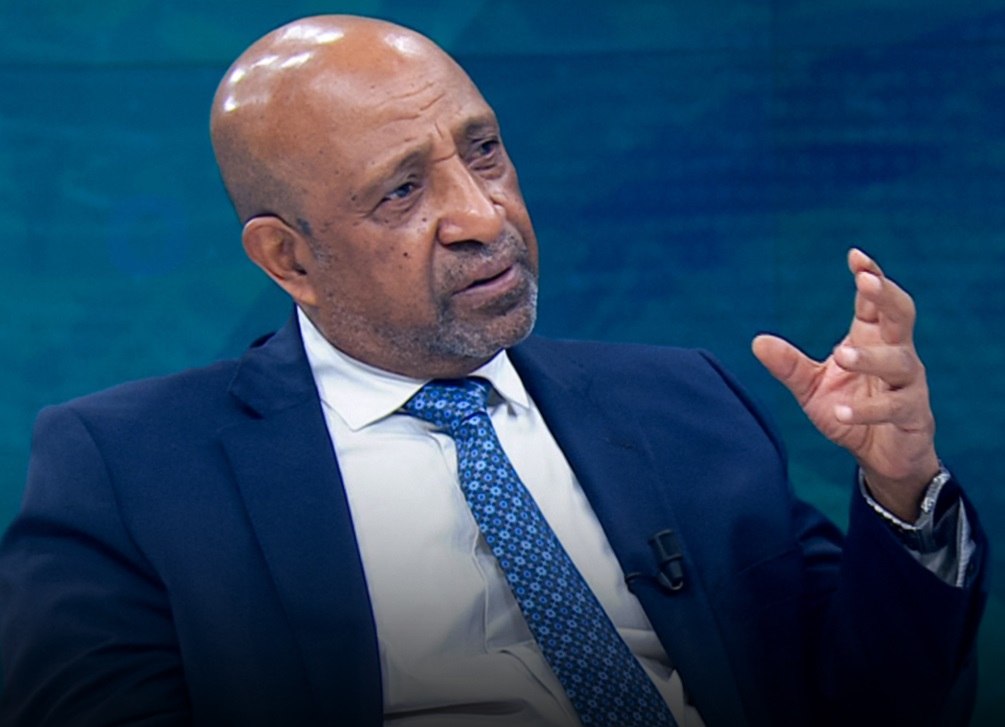
Addis Ababa, Sep 3, 2026 (ENA) — Egypt’s continued attempt to weaken Ethiopia is unlikely to succeed and would ultimately harm itself, the seasoned politician Professor Berhanu Nega said.
The professor, who is serving as Education Minister, told ENA that the Egyptian effort to block Ethiopia’s development projects is not new.
But the changing international environment requires countries in the region to abandon confrontational politics and work together, he noted.
According to him, developing countries like Egypt are failing to recognize broader changes in the international system.
“The changing international environment can completely swallow us unless otherwise we somehow unify and collaborate as Africans,” Professor Berhanu underlined.
He cited Africa’s experience during colonialism as an example of the consequences of political fragmentation, saying the continent suffered for centuries partly because of its inability to unite against external pressures.
The current global environment also represents an era in which continued divisions among neighboring countries could leave all sides vulnerable.
“If we allow these divisions within our societies and use it to weaken each other, this is not an environment where there will be winners. We will all lose,” he warned.
Professor Berhanu criticized Egypt’s approach toward Ethiopia noting that attempts to use proxies or other means to undermine it may create temporary difficulties but would not fundamentally alter the balance of power in the region.
“Countries like Egypt, who think that they can play the old politics and emerge victorious in this struggle is a very silly enterprise,” he said.
He instead urged Egypt and other countries in the region to recognize that they are not mortal enemies and should cooperate to address broader challenges facing the region.
“The smartest thing to do, I think, is to sit down and discuss. We are not each other’s mortal enemies.”
Efforts to weaken Ethiopia could ultimately undermine the interests of the countries pursuing such policies, particularly at a time when global geopolitical and economic pressures are intensifying, Professor Berhanu noted.
He referred to Egypt’s longstanding opposition to Ethiopia’s construction of the Grand Ethiopian Renaissance Dam (GERD) as futile effort that had failed to prevent Ethiopia from advancing its development agenda.
“If you were an Egyptian leader, just think what has happened. You've been trying to stop Ethiopians from building the dam for a long, long time. But did they stop it? No!”
The professor pointed out that Ethiopia has instead become stronger and more capable of undertaking additional development projects, including the construction of other dams, if necessary.
However, Ethiopia has no interest in depriving Egypt of water, he stressed.
“Ethiopia has no—or should not have—any particular interest to starve or stop Egypt from surviving because of lack of water,” he noted, emphasizing that Egypt is Ethiopia’s downstream neighbor.
Professor Berhanu finally called for nations in the region to shift from attempts to weaken one another toward cooperation aimed at improving the livelihoods of their peoples.
“If we sit down, rather than trying to weaken each other, and gather our forces, gather our energy, and work together for the prosperity of all the peoples of this region; I think that’s a much better and wiser strategy than this continuous, silly attempt to weaken Ethiopia,” he underscored.


