How History and Geography Anchor Ethiopia’s Push for the Sea - ENA English


How History and Geography Anchor Ethiopia’s Push for the Sea
With analysis from Pulse of Africa (POA)
Sept. 2, 2026 (ENA)
By Mahder Nesibu
In a session with senior government leaders in 2023, Ethiopia's Prime Minister, Abiy Ahmed, stated that his country's fortunes are intimately tied to the Nile and the Red Sea, and that these two bodies of water are fundamental factors to the country's growth or its decline. In that session, the Prime Minister set out the geographical, historical, ethnic and economic foundations of what he termed Ethiopia's legitimate need for access to the sea. The Ethiopian state has echoed that framing consistently in the years since, and securing maritime access now stands as a defined objective within Ethiopia's national interest thinking.
The geographical argument begins with scale. Ethiopia sits in close proximity to the Red Sea and the Gulf of Aden, and stands as the largest country by area in a Horn of Africa region whose other states it dwarfs in size. Addis Ababa regards its landlocked status, which it has taken to describing as a geographical prison, as an unnatural condition rather than a settled fact of geography. That framing carries into a set of ethnic considerations centred on the Afar communities along the Red Sea coast, whose cultural and political centre lies within Ethiopia's own Afar region but who have been structurally separated, on both sides of the border, from the freedom to interact as one community. The separation, among many other negative consequences, severely restricted access to the Red Sea coast, and by extension to lucrative trade and resources, of significant number of Afaris who consider the sea a home.
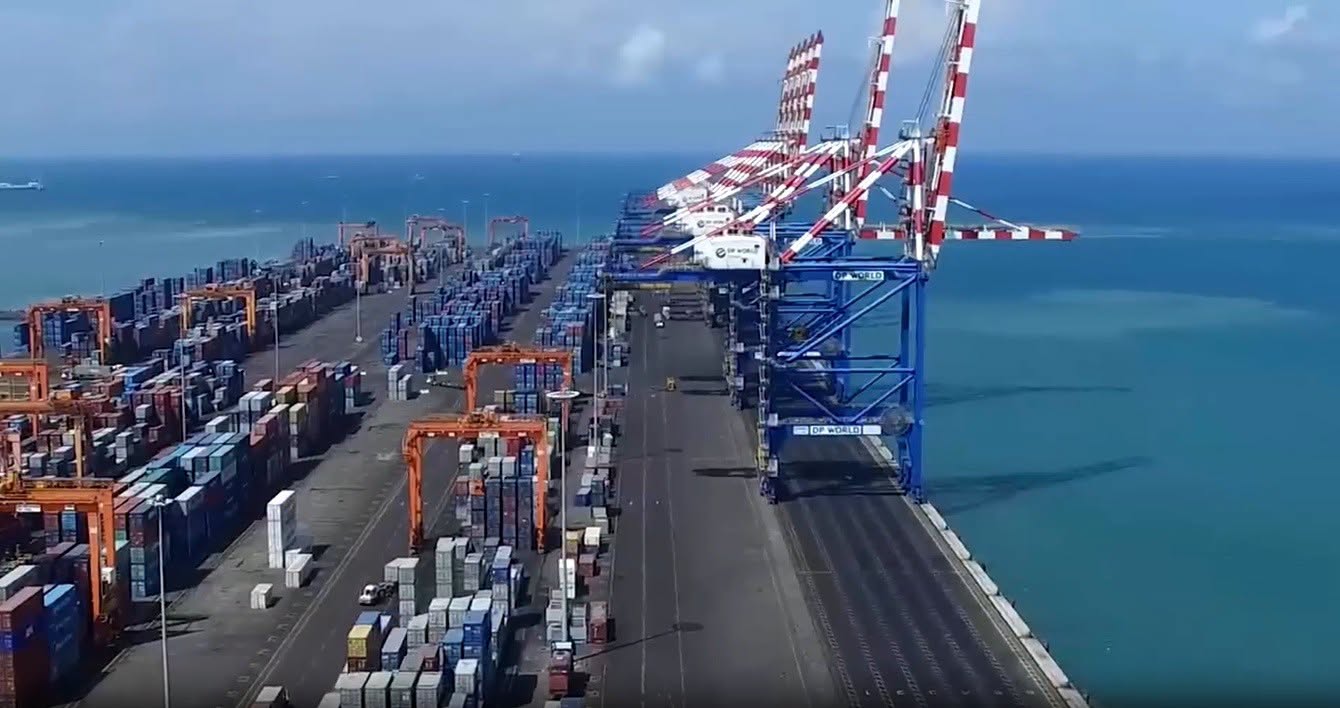
An economic imperative runs alongside these arguments. The Ethiopian economy has sustained growth of roughly ten percent a year for close to three decades, expanding its demand for engagement with the Red Sea correspondingly. Neighboring Djibouti services approximately 95% to 97% of Ethiopia's international trade, and that degree of dependence on a single conduit makes diversification a pressing concern as the economy continues to expand and requires more reliable and resilient supply chains.
Demography reinforces the same case. The Horn of Africa's total population, spanning Ethiopia, Eritrea, Somalia and Djibouti, is estimated at around 170 million people, of whom Ethiopia accounts for roughly 80 percent, a population exceeding 130 million and still expanding. For Addis Ababa, this represents a structural dilemma, in that a population of this scale remains poorly connected to global maritime trade and exchange, and the toll of that disconnection grows heavier as the country's economic and demographic weight increases.
The historical dimension of the argument is, in some respects, the most telling, and it is the one the Prime Minister invoked directly in referring to the Red Sea's influence over Ethiopia's periods of strength and weakness. The pattern he described holds up under scrutiny: Ethiopia's most active and prosperous historical periods have consistently coincided with its presence on the Red Sea, while its darkest moments of decline and dormancy have tended to follow its retreat from the coast, whether through internal weakness or foreign intervention.
The recent past illustrates this most clearly. In his work “አሰብ የማን ናት” (“To Whom Does Assab Belong”), the Ethiopian intellectual Dr Yaqob Haile-Mariam —prominent lawyer, legal scholar and politician — revisited the question of Assab in 2011, arguing that the port had long served as a natural outlet for Ethiopia and that the Ethiopian government of the period had erred in allowing Eritrean secession to proceed without first securing an outlet to the Red Sea, an outlet he regarded as fundamental to Ethiopian statehood. He criticised Addis Ababa's lack of initiative in pursuing the matter seriously through negotiation and advocacy on international platforms. For Dr Yaqob, Assab embodies a longer sequence of historical episodes that pushed Ethiopia away from the Red Sea, even as it remained, in recent history, Ethiopia's most actively used port. Ethiopia was rendered landlocked when Eritrea seceded in May, 1993.
Tracing a lineage back through the historical ports of Adulis and Zeila, Assab connected Ethiopia to the Red Sea until Eritrean secession, and continued to do so in more unconventional arrangements afterward.
Dr Yaqob argued that Ethiopia's landlocked status constitutes a structural national problem, and that Assab remains the clearest historical case through which that problem should be understood and addressed. He was particularly critical of how Assab came to be left within Eritrean territory during the secession process, and of the broader terms under which Eritrea separated from Ethiopia.
This fits into a considerably longer pattern. The Red Sea has functioned as a critical corridor for global commerce and connectivity since antiquity, and it was through this waterway that Axum, one of the earliest manifestations of Ethiopian civilisation, achieved its prosperity. Axum traded through its port of Adulis on the Red Sea as far as the Roman Empire and India, with that trade forming the principal pillar of a prosperity that made Axum one of the major powers of Late Antiquity.
The Red Sea, as a source of state power, was equally an arena of competition. Axum's decline at the turn of the first millennium CE is generally attributed to its loss of standing as a trading power, following the emergence of the Umayyad Caliphate, which challenged Axumite control of the maritime route and forced a retreat into Ethiopia's interior. That pattern recurred through much of the second millennium, as Ethiopia repeatedly re-establish its presence on the coast and repeatedly encountered geopolitical resistance, including from the Ottoman Empire in the medieval period, which understood the strategic value of the Red Sea as clearly as Ethiopia did.
The nineteenth and twentieth centuries followed a similar trajectory, though the arrival of colonialism, and later the geopolitics of two world wars and the Cold War, made the competition sharper and the Red Sea theatre considerably more complex. Italian colonialism, beginning in the late nineteenth century, marked the start of Ethiopia's modern retreat from the sea. Ethiopia's Bahr Negash resisted colonial incursions along the coast, but resistance proved insufficient to prevent Italy from annexing Ethiopia's coastal territories, a colonial advance ultimately halted at Adwa in 1896 before it could extend across the whole country. Italian colonial strategy was shaped in part by the significance of the Red Sea, beginning with the occupation of Assab and extending later into the economically rich Ethiopian interior. (The 1869 purchase of Assab was a direct private transaction between an Italian agent and local Afar leaders without the formal consent or prior knowledge of the central Ethiopian imperial government.)
Although the colonial project ended in 1952, when Ethiopia regained sovereignty over what is now Eritrea, that arrangement did not endure. A secessionist movement took root in the territory and eventually reshaped the regional order entirely. The place of Eritrea within Ethiopia, referred to by Ethiopian intellectuals as the “Eritrean Affair”, is a complex question that extends well beyond the matter of maritime access, but the direction the affair ultimately took, culminating in Eritrean secession, has been shaped substantially by the question of access to the sea and by what Ethiopian analysts describe as a conspiracy to deprive Ethiopia of it.
The role of External actors was crucial to that trajectory. The Eritrean secessionist movements, from the Muslim League during the federation period to the Eritrean Liberation Front (ELF) and later the Eritrean People's Liberation Front (EPLF), received support from states such as Egypt, which regarded Ethiopia as a historical rival. Ethiopia's leadership has long been aware of this dynamic. In 1928, Emperor Haile Selassie, addressing the Eritrean question, spoke of his country's hope in reclaiming the territories and seaports that had been taken by its enemies. External support for Eritrean secessionism following Eritrea's unification with Ethiopia reflected a strategy pursued consistently by regional and other powers, chief among them Egypt, which shared the Red Sea with Ethiopia and viewed it as a competing power over that waterway, and which regarded Ethiopia, over the Nile even more than the Red Sea, as its principal rival. Ottoman and Egyptian incursions into the Red Sea coast during the 16th and 19th centuries systematically chipped away at the Ethiopian Empire's direct access to maritime trade ports, laying the groundwork for its modern landlocked status. Emperor Yohannes IV successfully defeated major military incursions by Khedivial Egypt—then an autonomous vassal state of the Ottoman Empire—during the Egyptian–Ethiopian War in the mid-1870s.
The current Ethiopian administration has internalised this history directly. Beyond describing the Nile and the Red Sea as the twin determinants of Ethiopia's prosperity, Prime Minister Abiy's government has developed what it calls the vision of the two waters, a framework built around the geopolitical interconnection between these two bodies of water rather than treating either in isolation.
The historical foundation for this argument is substantial. It runs from Ethiopia's ancient rulers, who regarded the Red Sea as a natural frontier of their state and ruled accordingly, to the country's contemporary leadership, which now treats Red Sea security as a fundamental national security interest and the possession of a reliable maritime outlet as central to that interest. Whether that outlet is eventually secured through Assab or through other arrangements, Ethiopia's pursuit of renewed access to the sea aims to reverse a historical pattern in which loss of the coast has repeatedly coincided with periods of national decline, and access to it with periods of national strength. Combined with the mounting demographic and economic imperatives now shaping Ethiopia's position, that argument rests on considerable historical and material weight.
The question carries consequences that extend beyond Ethiopia itself, reaching the wider region and the international community. An Ethiopia genuinely integrated into the global maritime system would loosen a structural constraint that has long limited its growth, and given Ethiopia's scale as one of Africa's largest and most closely watched economies, that growth would carry transformative implications for the Horn of Africa and the continent more broadly. On the geopolitical side, the Red Sea has become, in recent decades, a site of considerable instability for international trade and shipping, a dilemma that concerns the international community and Ethiopia in equal measure. Dependent on the Red Sea for its commerce yet excluded from direct access to it, Ethiopia's landlocked status prevents it from playing a substantive role in addressing the security challenges that affect both itself and the wider region. Ethiopians tend to read their own history on the Red Sea as one of prosperous trade and stability, and a reliable outlet today, in their reading of that history, would allow the country to play a meaningful part in securing it once again.


