Ethiopia’s Mojo Dry Port Modernization Model for Regional Integration: World Bank - ENA English


Ethiopia’s Mojo Dry Port Modernization Model for Regional Integration: World Bank
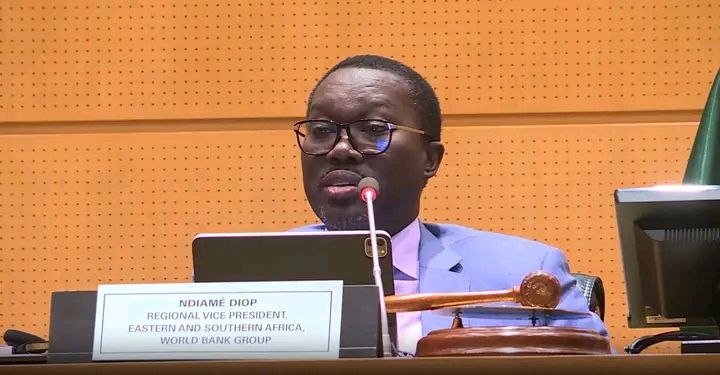
Addis Ababa, August 28, 2026 (ENA) — Modernizing logistics infrastructure and reducing trade frictions are critical to Africa’s economic transformation, with Ethiopia’s Mojo Dry Port serving as a practical model for the continent, according to World Bank (WB).
WB Vice President for Eastern and Southern Africa Ndiamé Diop made the remarks at the launch of the World Bank report titled “Integrating Africa: From Threads to Hubs”.
The vice president emphasized that reducing non-tariff barriers, including border delays, inefficient payment systems and high transportation costs, is essential to boosting regional trade and expanding cross-border supply chains.
Diop further noted that 85 percent of Africa’s current trade is conducted with countries outside the continent, with more than half consisting of primary commodities. In contrast, more than 60 percent of intra-African trade comprises manufactured and other higher value products.
“To the world we sell raw materials; to each other, we sell higher value products,” Diop noted, emphasizing that deeper regional market integration would enable African enterprises to achieve economies of scale, specialize, build larger industries and compete more effectively in global markets.
“Integrating regional markets will give African firms the scale they lack in national markets, an ability to specialize, an ability to link production across borders, and an ability to build larger industries that create more jobs,” he emphasized.
As a practical example of efforts to reduce trade frictions, Diop highlighted the World Bank’s joint project with the Government of Ethiopia at the Mojo Dry Port, which handles nearly 95 percent of Ethiopia’s land-based trade.
“In Ethiopia, I visited a few months ago the Mojo Dry Port, which handles some 95 percent of Ethiopia’s land-based trade,” he said.
He also said the WB, together with the Ethiopian government, invested more than 200 million USD to modernize the dry port, digitize its operations, improve regulatory frameworks and strengthen coordination among agencies.
“Together with the Government of Ethiopia, the WB invested over 200 million USD to modernize that dry port and to upgrade its capacity,” Diop noted.
As a result, Mojo Dry Port’s handling capacity doubled, while the average container dwelling time declined sharply from 60 days to 15 days.
“Mojo’s capacity has doubled, and average container dwelling time fell from 60 to 15 days. That is what reducing trade frictions can do and look like in practice and it can be done,” he added.
Diop also said the most ambitious aspect of the project was not the physical infrastructure alone, but the reforms aimed at improving regulations for private sector participation, digitizing port operations and connecting ports and government agencies along the corridor to facilitate information sharing.
According to the vice president, such measures demonstrate how reducing logistical and regulatory barriers can improve the efficiency of trade corridors and strengthen regional economic integration.


