WHO Chief Says Africa Made Significant Progress in Health Gains Despite Sharp Cuts in Global Funding - ENA English


WHO Chief Says Africa Made Significant Progress in Health Gains Despite Sharp Cuts in Global Funding
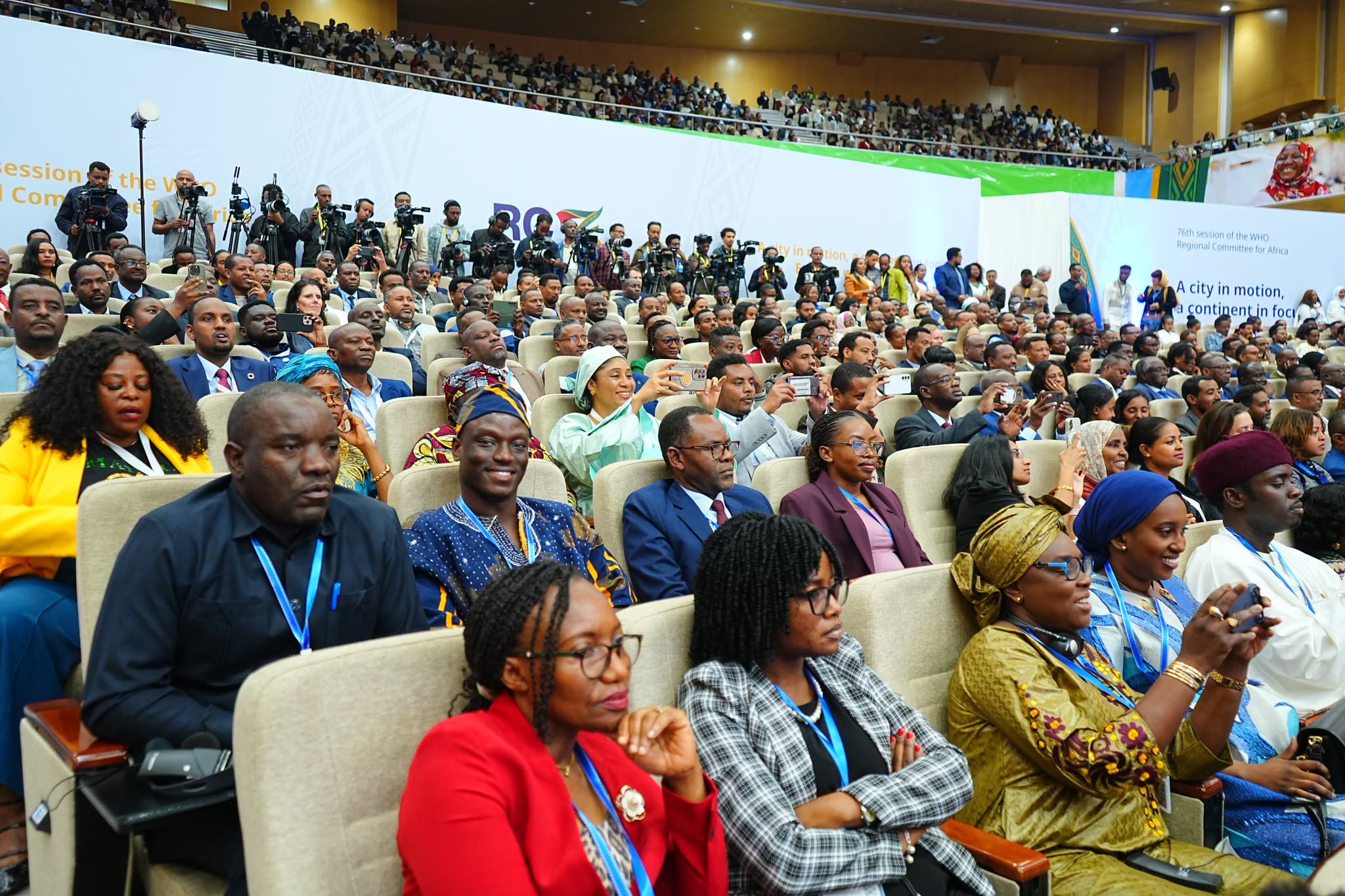
Addis Ababa, August 25, 2026 (ENA) —Africa has made notable progress on key health targets even as the continent faces the deepest cuts to international health financing in a generation, World Health Organization (WHO) Director-General, Dr. Tedros Adhanom, said.
Speaking at a webinar during the 76th session of the WHO Regional Committee for Africa in Addis Ababa this morning, the Director-General noted that multiple countries continued advancing disease-control goals despite funding freezes that have disrupted life-saving services across the region.
Some 8 countries, including Algeria, Burundi, Cabo Verde, Guinea, Kenya, Mauritius and Senegal have reached major milestones in disease elimination, according to Dr. Tedros.
The Director-General also noted that more than 28 million doses of donated essential medicines were delivered, even amid financing disruptions, with the Democratic Republic of the Congo (DRC) cited as an example of a country carrying the world’s largest sleeping sickness burden.
On HIV, Dr. Tedros said 21.7 million people living with the virus remain on uninterrupted treatment. Several countries, including Botswana, Eswatini, Lesotho, Namibia, Rwanda, Zambia and Zimbabwe, have already met the 95-95-95 targets.
Progress in tuberculosis care was also highlighted, with treatment coverage rising to 74 percent, compared with 52 percent in 2020. Uganda is now treating more than 90 percent of estimated TB cases.
The WHO chief further credited efforts to improve vaccination coverage, saying health system improvements have enabled the catch-up of more than 18 million children who had missed vaccines.
Malaria advances were also reported after the malaria vaccine rollout reached 25 countries.
Additional achievements mentioned included new human papillomavirus (HPV) vaccination introductions in six countries, and Cabo Verde, Mauritius and Seychelles becoming the first sub-Saharan states to achieve verified measles and rubella elimination.
Mental health access has also expanded with four million additional people gaining access to services, Dr. Tedros said.
He also described strengthening outbreak detection and response, saying both Ethiopia’s Marburg outbreak and the DRC’s previous Ebola outbreak were contained within 90 days.
Despite the gains, the Director-General warned that Africa remains under severe pressure. Families still pay about one-third of health spending out of pocket; cholera has reached a regional record of more than 245,000 cases; and 44 of 47 countries cannot reliably record causes of death.
He further pointed to ongoing maternal and child mortality, saying around 70 percent of maternal deaths and nearly half of under-five deaths worldwide occur in Africa.
The Director-General said DRC is battling a major ongoing Ebola crisis—the second largest in history—with spread described as faster than in previous outbreaks.
According to Dr. Tedros, WHO is scaling up the response with DRC’s government, Africa CDC and partners, while also advancing clinical trials of three vaccines and three treatments.
He emphasized that Ebola is only one threat in DRC and that strengthening health systems must remain the top priority to support universal health coverage.
The Director-General noted that the health system task in general has become harder because funding cuts were sudden rather than gradual, leading to clinic closures and job losses affecting HIV, TB, malaria, neglected tropical diseases, and maternal and newborn care.
However, some countries are also working to expand domestic revenue, including tobacco tax reforms and increased domestic funding for HIV and TB, citing South Africa and Nigeria.
Moreover, Africa now has an opportunity to reduce dependency by building “health sovereignty,” self-reliance and solidarity, he stressed.
WHO has begun preparing for funding reductions during transformation efforts launched in 2017, after identifying reliance on a limited donor base as a risk.
The Director-General acknowledged that many voluntary contributions remain earmarked, creating gaps in some areas.
Dr. Tedros outlined five priorities for the coming year: completing the path strategy for the pandemic agreement; approving the next assessed contribution increase at next May’s World Health Assembly; engaging in reforms to strengthen the global health architecture; supporting the Ebola response in DRC; and continuing WHO transformation toward a leaner organization focused on delivering results at country level.


