President Taye Calls for African Ownership, Action in Future Health Agenda - ENA English


President Taye Calls for African Ownership, Action in Future Health Agenda
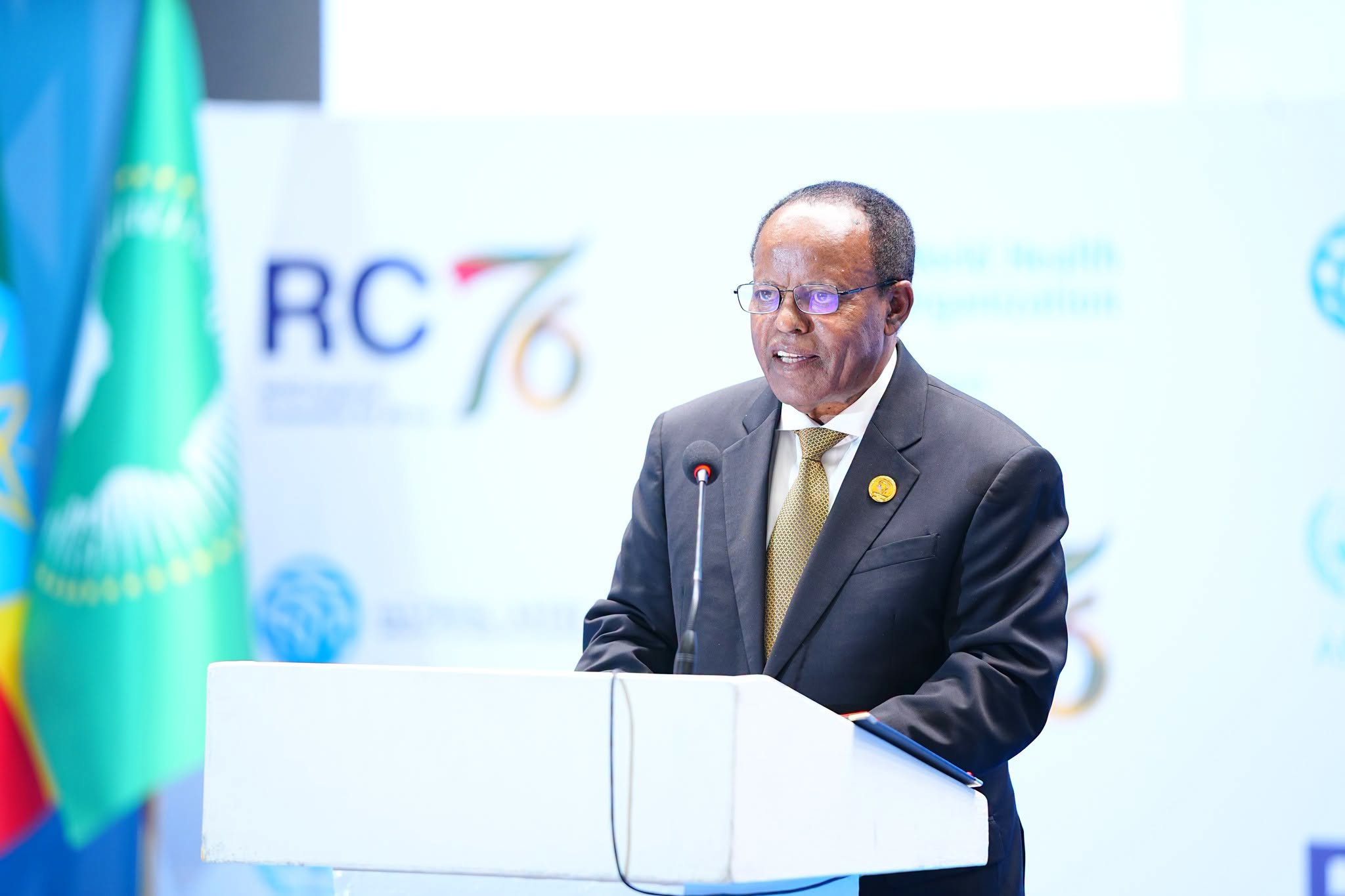
Addis Ababa, August 25, 2026 (ENA) —Africa’s next chapter in health must be driven by African ownership, stronger integration and measurable action rather than continued dependence and fragmented responses, Ethiopia’s President Taye Atske Selassie said.
Addressing the World Health Organization (WHO) Regional Committee for Africa in Addis Ababa, President Taye called for a continent-wide approach that puts African priorities at the center of health policy, financing and implementation.
He said external support can strengthen national health objectives, but development assistance must be aligned with Africa’s priorities rather than shaped by reform agendas designed elsewhere.
“We must not sit here and adapt to reforms designed elsewhere,” President Taye said.
He further urged African countries instead to “shape the reform agendas” in line with their own vision.
The President outlined five priority areas that he said should guide Africa’s next health agenda, emphasizing the need to move beyond declarations and translate commitments into concrete results.
First, he called for greater domestic investment in health, with African countries progressively reducing dependence on external financing and building more predictable and sustainable national health systems.
The President also stressed the importance of health security and self-reliance, urging Africa to strengthen its capacity to produce medicines, vaccines and diagnostic tools.
The COVID-19 pandemic, he noted, demonstrated the risks of relying heavily on external supply chains, particularly during global emergencies when access to essential health commodities can become severely constrained.
President Taye further called for stronger coordination among the Africa Centres for Disease Control and Prevention (Africa CDC), WHO and other technical institutions, saying closer alignment of work plans would improve the delivery of coordinated support to African health systems.
He also urged countries to strengthen regional emergency preparedness by investing in disease surveillance, technical expertise and rapid access to essential supplies.
Africa, he said, must draw lessons from past health emergencies and institutionalize what he described as “strategic solidarity” so that countries can support one another more effectively during crises.
Climate change should also be treated as a central health priority, President Taye said, calling for unified African leadership in global climate negotiations.
He argued that climate resilience, stronger health systems and adequate adaptation financing must be placed at the heart of international discussions, as climate-related pressures increasingly affect public health across the continent.
The President challenged African leaders to confront what he described as the “top question” facing the continent’s health sector: who sets Africa’s health agenda, who finances it and who ultimately delivers results for its people?
The answer, he said, must begin with African leadership.
National governments should drive policy and investment, regional institutions should support implementation, while global organizations should provide technical expertise, coordination and assistance at scale, he said.
President Taye reaffirmed Ethiopia’s readiness to advance this approach through increased national investment, regional cooperation and sustained support for African health institutions.
He urged delegates to conclude the meeting with commitments linked to measurable actions, stressing that Africa’s health transformation will depend not only on the strength of its ambitions but on its ability to translate them into tangible results.
He subsequently declared the WHO Regional Committee for Africa session officially open on behalf of the Government and people of Ethiopia.


