Ethiopia's Domestic Market Share of Local Medical Supplies Surges to 44 Percent: Health Minister - ENA English


Ethiopia's Domestic Market Share of Local Medical Supplies Surges to 44 Percent: Health Minister
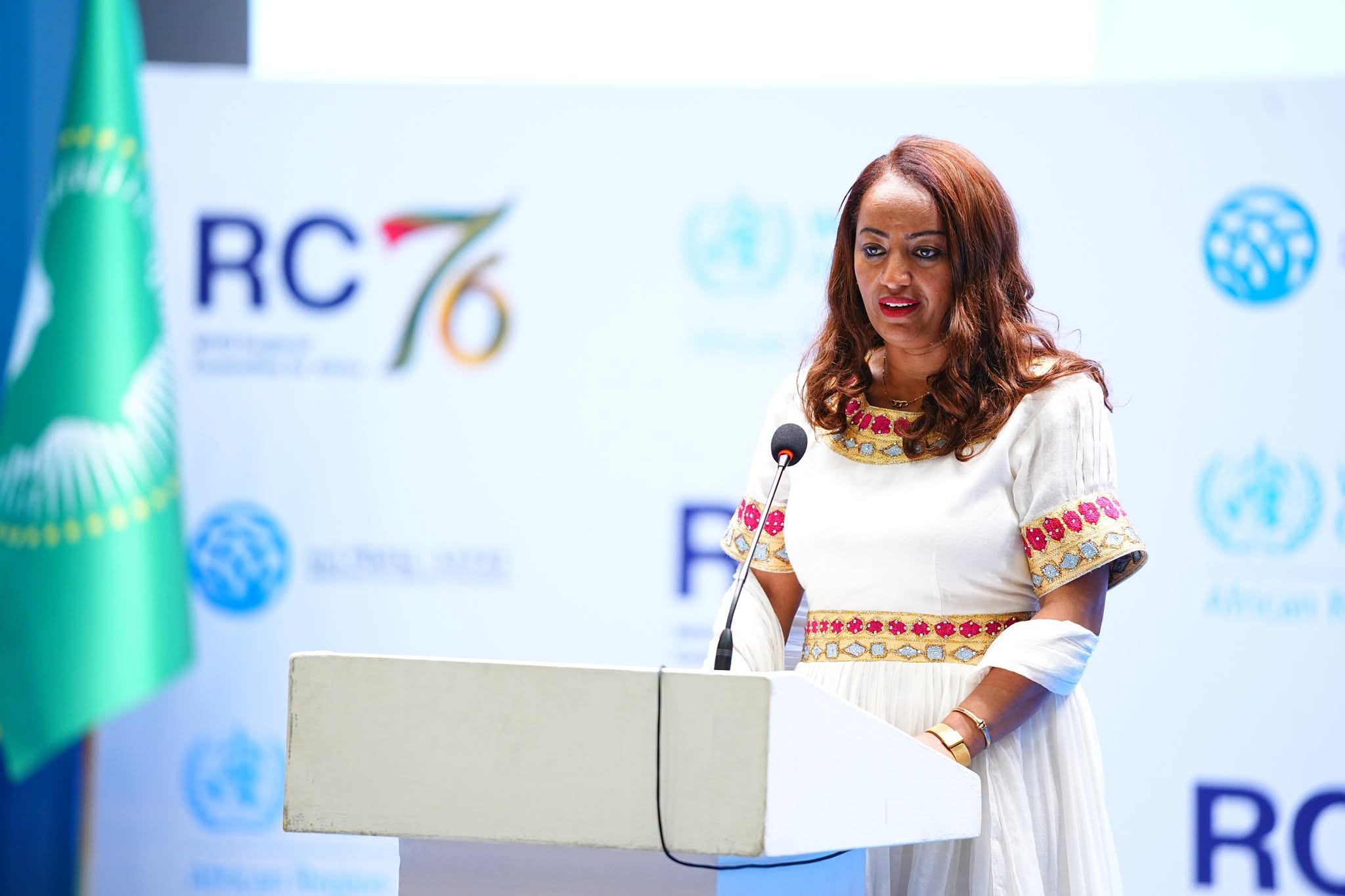
Addis Ababa, August 25, 2026 (ENA) — Ethiopia has registered impressive progress in expanding its health sector capacity, with the domestic market share of locally manufactured medicines and health products surging from 8 percent to 44 percent, Minister of Health Dr. Mekdes Daba announced today.
Speaking at the opening of the 76th Session of the WHO Regional Committee for Africa (RC76) in Addis Ababa, Mekdes highlighted the nation's strategic focus on local production and self-reliance as key pillars of national health security.
"In Ethiopia, the domestic market share of local manufacturers and local medicines for health products has increased from 8 percent to current data of 44 percent," Mekdes stated, emphasizing that recent global challenges have demonstrated why nations must build independent manufacturing infrastructure.
"Health security cannot rest entirely on supply chains beyond our control. Africa must increase, and is increasing, its capacity for Africans' needs."
The Minister highlighted several major achievements reflecting Ethiopia's ongoing health system transformation over recent years.
Maternal mortality has dropped to 141 per 100,000 live births according to recent demographic data, while under-five mortality fell from 67 to 51 per 1,000 live births since 2016. Over the same period, child wasting saw a significant decline from 10 percent down to 5 percent.
Primary healthcare coverage across the nation expanded from 64 percent to 86.3 percent, supported by a growing workforce of approximately 325,000 health professionals and nearly half a million total support staff. Outpatient departments recorded over 233 million patient visits over the past year alone.
In terms of financial protection, Community-Based Health Insurance now covers 91 percent of woredas across the country, providing financial coverage to more than 69 million citizens.
"These are not simply numbers, but they represent mothers who survived childbirth, children who lived to celebrate their fifth birthday, communities with access to care, and a health workforce serving our people day and night," Mekdes said.
Ethiopia has also made significant strides in digital health and emergency preparedness.
Digital health coverage expanded through the Ethiopian Community Health Information System, now managing records for 7 million households and encompassing real-time data for over 33 million citizens. Outbreak detection capacity rose from 65 percent to 95 percent, while rapid response team coverage reached 93 percent.
She further noted that the Ethiopian Food and Drug Authority achieved WHO Maturity Level 3 status, reinforcing that localization remains a core health strategy rather than just an industrial policy.
Calling for unified action across the continent, Mekdes urged African delegates to prioritize domestic resource mobilization, equity, and local capacity building.
"Africa's health future will not be built by one country, one institution, or one technology. It will be built by our African sisters and brothers together," she concluded.


