ECA Calls for Shift from Treating Health as Social Cost to Productive Economic Investment - ENA English


ECA Calls for Shift from Treating Health as Social Cost to Productive Economic Investment
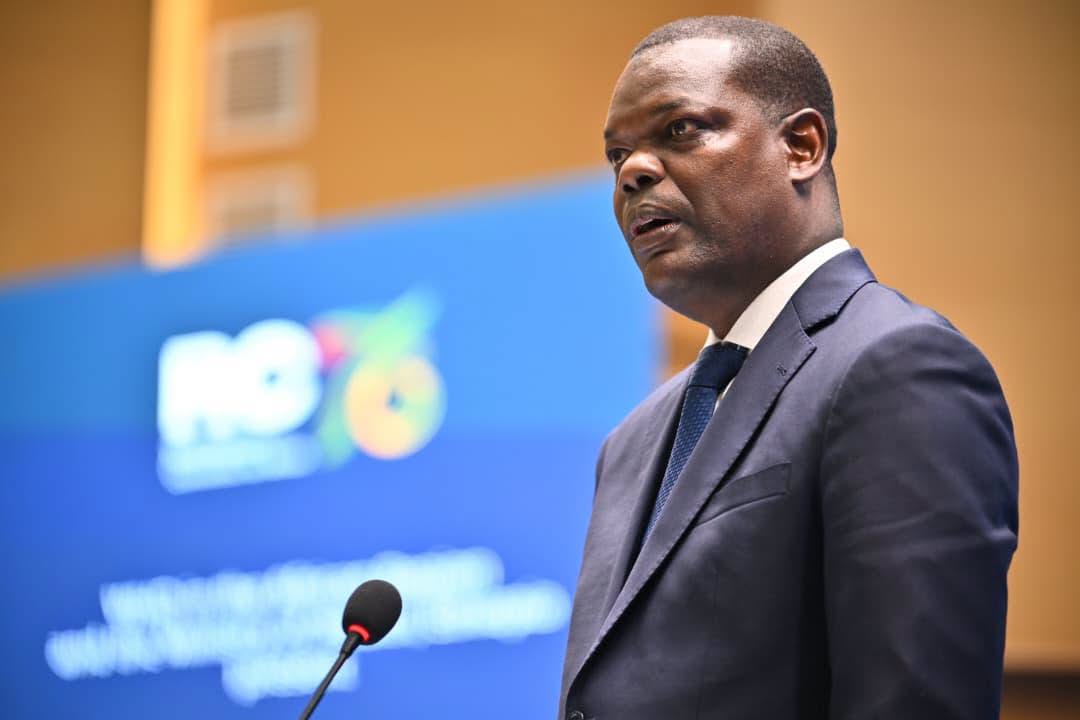
Addis Ababa, August 25, 2026 (ENA) — The United Nations Economic Commission for Africa (ECA) urged African nations to transition from treating health as a recurrent social expenditure to positioning it as a strategic, productive economic investment.
Speaking on behalf of ECA Executive Secretary Claver Gatete at the opening of the 76th Session of the WHO Regional Committee for Africa (RC76) in Addis Ababa, ECA Chief of Staff Aboubakri Diaw stressed that health must be prioritized across all government sectors.
"Health is not the responsibility of one ministry alone. It is a whole-of-government priority, a foundation of Africa's economic transformation," Diaw said.
Invoking the historical venue of the Adwa Victory Memorial, he highlighted that the spirit of Adwa serves as a reminder of African agency and solidarity.
"Adwa is first and foremost the story of citizens who united to defend their country's sovereignty," he stated.
Diaw added that: "Yet its meaning travels far beyond Ethiopia, becoming a continental symbol of African dignity, agency, and determination to shape our own future. That spirit remains relevant to our health agenda today."
He outlined three major structural hurdles currently confronting sustainable health financing across the continent: severe fiscal pressures from declining external aid, high out-of-pocket health expenditures pushing millions into poverty, and an implementation gap between health strategy design and actual budget execution.
To overcome these challenges, he asserted that raising funds alone is insufficient. Africa must transform how it manages its financial resources.
"Africa's health sector does not suffer from only a financing gap. It also suffers from a confidence gap, and confidence, unlike capital, cannot be borrowed—it must be built," he noted.
"Our analysis recognizes that the answer is not simply to raise more money. It is to collect better, pool better, purchase better, and account better."
Calling for three fundamental shifts, he urged countries to create nationally owned health financing compacts and match national priorities with appropriate financial instruments.
He also pointed to real-time digital tracking and data transparency as vital elements to unlock private investment and bolster accountability.
Illustrating how digital transformation and artificial intelligence can enhance public finance tracking, Diaw commended Ethiopia's leadership in driving digital health solutions.
"Digital health is not simply about replacing paper with screens. It is about replacing fragmentation with visibility, replacing leakage with accountability, and replacing uncertainty with trust," he emphasized.
"Ethiopia can demonstrate how digital identity, interoperable health information, real-time expenditure tracking, and AI-enabled decision-making can strengthen both health outcomes and fiscal accountability."
In his concluding remarks, Diaw reaffirmed ECA’s commitment to partnering with the World Health Organization (WHO), the African Union, and national governments to ensure that universal health coverage generates lasting economic stability across Africa.
"Universal health coverage becomes real the day seeking care stops costing a family its future," he declared. "Health is not what we spend when Africa grows; health is how Africa grows."


