Egypt’s Resistance Delays Permanent Nile Commission, Says Ethiopian Minister - ENA English


Egypt’s Resistance Delays Permanent Nile Commission, Says Ethiopian Minister
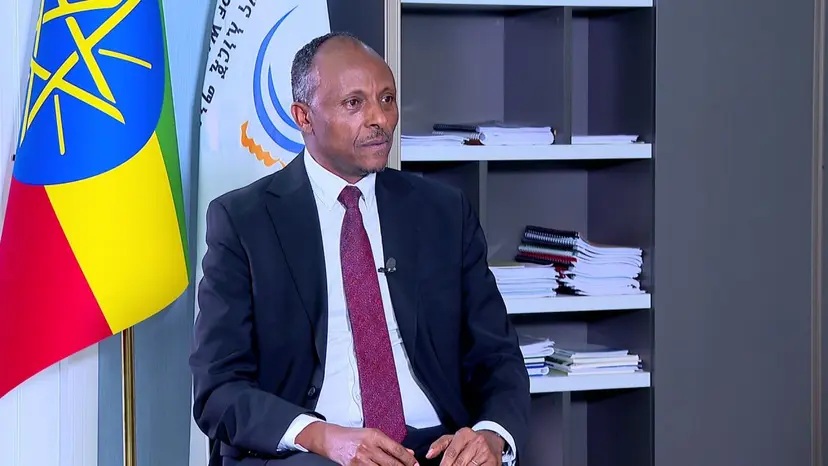
Addis Ababa, August 21, 2026 (ENA) —Ethiopia’s Water and Energy Minister Habtamu Itefa revealed that opposition from Egypt and Sudan is slowing the establishment of a permanent Nile River Basin Commission, despite the entry into force of the Cooperative Framework Agreement (CFA).
The Commission, ratified by six Nile Basin countries, is envisioned as the Nile Basin’s permanent legal and institutional mechanism for managing and developing shared water resources, replacing the transitional Nile Basin Initiative.
Habtamu said Ethiopia is among the countries pushing for the Commission to become fully operational, but resistance from Egypt and Sudan has prolonged the process.
“Because of this kind of mindset from that side, the Nile River Basin Commission is taking more time than what it’s used to be to be functional,” he told Pulse of Africa.
He argued that the CFA represents a major shift from previous arrangements that, in Ethiopia’s view, excluded upstream countries from meaningful participation in Nile water management.
The Minister said the CFA establishes a shared principle that the Nile belongs to all its basin countries, calling for joint management, development, protection and respect among riparian states. He said Egypt and Sudan oppose this approach, placing them at odds with the majority of Nile Basin countries.
“CFA is telling to the globe and to the beneficiary member countries to say, ‘The Nile belongs to all of us.’ We have to take care of it. We have to manage the river. We have to develop the river. We don't have to pollute the river. We have to respect each other. These are the contents. Our brothers from the downstream side, Egypt and Sudan, they oppose this idea. They are against the voice of the majority.”
The Minister said the framework is designed around equitable and reasonable utilization, sustainable management and information sharing, rather than denying the interests of downstream countries. He has urged Egypt and Sudan to engage with the framework rather than oppose it.
According to Habtamu, Ethiopia has supported efforts to give countries that had not joined the CFA additional time to participate. However, he said continued opposition to the Commission’s functionality is becoming an obstacle to advancing basin-wide cooperation.
He maintained that Egypt’s resistance is also part of a longer pattern of opposition to Ethiopian development of Nile water resources, including projects that preceded the Grand Ethiopian Renaissance Dam (GERD).
The Minister rejected the idea that Ethiopia’s development of its Nile tributaries should depend on approval from downstream countries, arguing that Ethiopia has the right to pursue development while ensuring that its projects do not cause significant harm to other riparian states.
At the same time, Habtamu emphasized that Ethiopia prefers cooperation over confrontation.
Habtamu said Ethiopia remains willing to wait for countries that have not ratified the CFA or continue to oppose the Nile River Basin Commission. He stressed that cooperation, mutual understanding and flexibility are the only ways to resolve Nile water disputes, warning that continued disagreements could lead to a situation similar to the Tigris and Euphrates basins.
He outlined Ethiopia’s position that the Nile should ultimately serve as a platform for shared development, with upstream countries benefiting from hydropower opportunities while downstream countries contribute expertise in areas such as irrigation and agricultural development.
The Nile Basin Initiative describes the CFA as a framework for integrated management, sustainable development and harmonious utilization of Nile waters, with the proposed Commission serving as the permanent institution to facilitate cooperation among basin states.
For Ethiopia, Habtamu said, delays to the Commission will not stop the country from developing its water resources.
“If they keep on opposing that, nothing will hinder Ethiopia not to develop its water resources and one of the tributaries of the Nile River Basin,” he stressed.
For Ethiopia developing its Nile tributaries is essential to expanding electricity generation, driving industrialization and creating jobs, while upholding the principles of equitable and reasonable utilization of shared transboundary water resources.


