Ethiopia’s Health Minister Stresses Needs for Stronger Regional Health Cooperation - ENA English


Ethiopia’s Health Minister Stresses Needs for Stronger Regional Health Cooperation
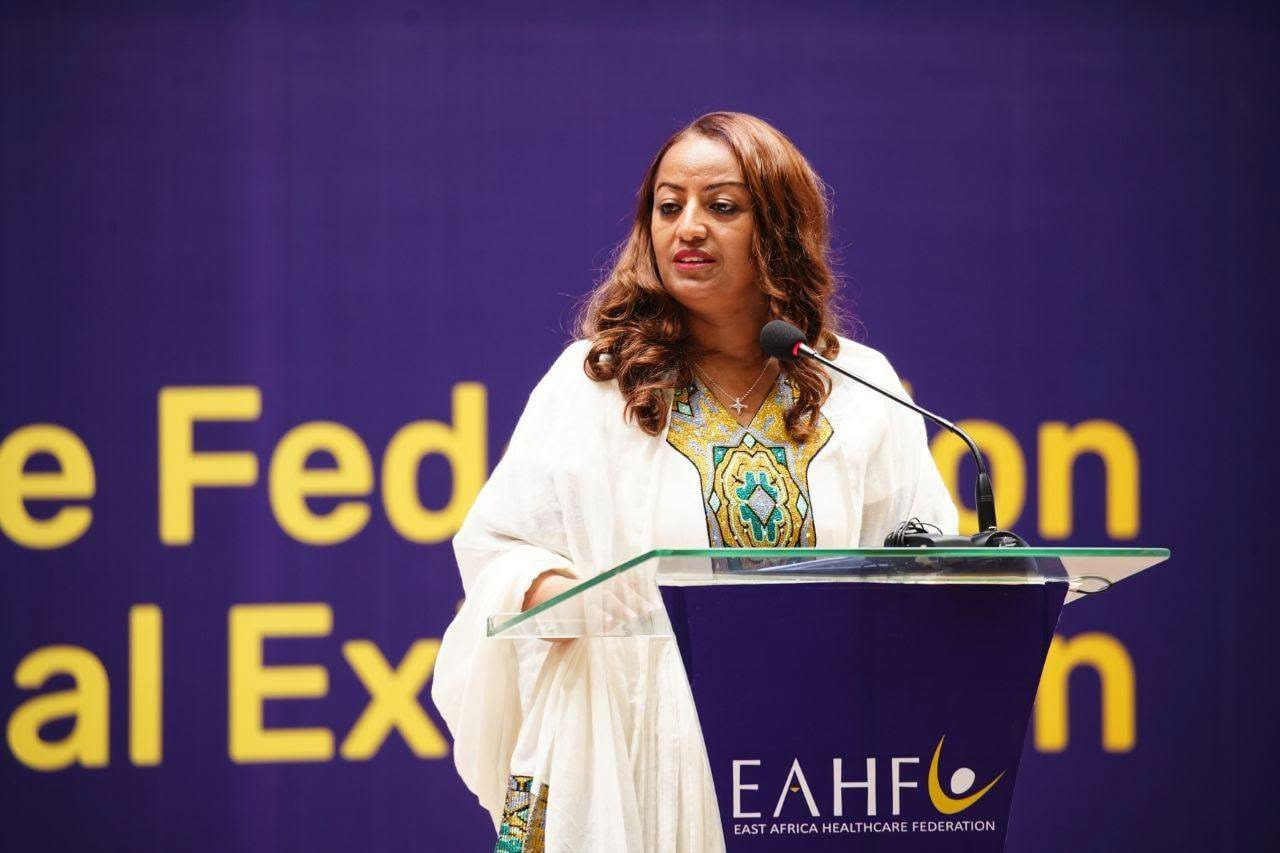
Addis Ababa, August 21, 2026 (ENA) — Ethiopia’s Health Minister Dr. Mekdes Daba, at the regional health conference, urged for stronger regional cooperation and public-private partnerships to build resilient and self-reliant health systems across East Africa.
Mekdes said health security, financing, supply chains, technology, climate change and the movement of health workers extend beyond national borders and require joint solutions.
“Our challenges do not have borders, but our unity can have more than borders to bound us,” Mekdes said at the 13th East Africa Healthcare Federation Conference and International Health Exhibition in Addis Ababa.
She said Ethiopia is committed to strengthening local pharmaceutical and medical manufacturing, research and development to reduce vulnerability to external supply disruptions.
“The pandemic has made this lesson unmistakably clear: the region cannot afford to do it again,” Mekdes said.
“We cannot afford to be closed without having medicines close to us,” the Health Minister stated.
Mekdes also called for greater investment in specialized healthcare, including cardiac care, oncology, neurosurgery, child healthcare and complex surgeries.
In this cause, stronger regional links can expand healthcare services and cross-border referrals, the minister said.
She said Ethiopia is working to create a more predictable environment for healthcare investment while strengthening regulation and patient protection.
The Ethiopian Food and Drug Authority has reached WHO Level 3 maturity, she said, calling for stronger regulatory capacity across East Africa.
Ethiopia has expanded primary healthcare, infrastructure and its health workforce, while skilled birth attendance has risen to more than 64 percent, according to the latest Ethiopian Demographic and Health Survey.
Mekdes also highlighted the expansion of digital health and telehealth.
She linked health with climate, food and nutrition through a One Health approach, citing the Green Legacy Initiative and Seqota Declaration as examples of Ethiopia’s integrated development efforts.
The Ministry’s Master Facility Registry has recorded more than 30,000 private health facilities, she said, creating a basis for investment and improved health-service planning.
“Health is not just taken as an investment that will leak, but an investment that will return,” Mekdes said. She further stressed the government’s commitment to viewing healthcare as an investment in people and the economy.
On his part, President of the East Africa Healthcare Federation and Ethiopian Healthcare Federation, Dr. Markos Feleke Haile, said the conference should translate regional dialogue into concrete action.
He announced a planned private-sector demand aggregation and pooled procurement mechanism, starting in Ethiopia, to reduce procurement costs and improve the availability, quality and security of medicines and medical supplies.
“We have to do it patiently, deliberately, through trust between the state, the public, the private sector, and the communities at large,” Haile said.
Haile also invited the Africa Healthcare Federation to consider establishing its headquarters in Addis Ababa, citing the city’s role as a major continental diplomatic and institutional hub.
The three-day conference, running from August 21 to 23, brings together more than 2,000 delegates from more than 20 countries under the theme “Resilience: Building the East African Health Economy.” It focuses on regional cooperation, healthcare investment, local manufacturing, health financing, technology and regional integration.


