From African Newsrooms to Moscow: A Journey of Learning and Discovery - ENA English


From African Newsrooms to Moscow: A Journey of Learning and Discovery
Aug 17, 2026
By Girma Mirgisa
What comes to your mind when you think about Russia?
For many first-time visitors, Russia may seem distant and mysterious. It’s a vast nation known through powerful images of history, politics, literature, architecture, and global events. Before my trip, I primarily knew Russia through books, news, from people and other platforms. I had heard of Moscow, Red Square, and the country’s rich history, but understanding a place through media is quite different from experiencing it personally.
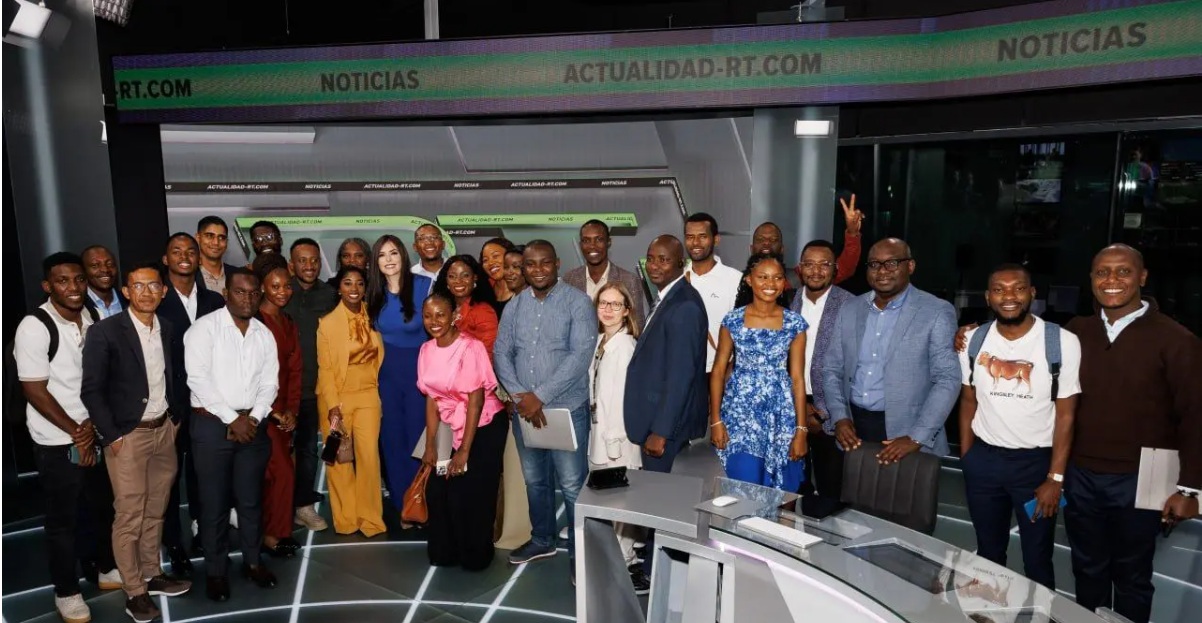
From July 19 to 26, 2026, I had the opportunity to travel to Moscow as one of 31 journalists from 22 African countries for an intensive journalism and cultural programme organized by RT Academy under Rossotrudnichestvo’s “New Generation” initiative.
I arrived in Moscow expecting a week focused mainly on professional training. But the experience turned out to be much bigger than I expected. I returned home with new experiences, meaningful friendships, different perspectives, and a deeper understanding of Russia beyond what I had seen or heard in the media.
The journey turned into much more than a journalism program. It became an opportunity to experience Russia through its culture, history, technology, people, and everyday life. One thing became clear to me: you cannot truly discover Russia in just one day, but you can certainly be impressed by it from the moment you arrive.
Starting With Journalism
The journey began with the profession that brought all 31 of us together: journalism. It was our shared passion and profession that created the opportunity to meet, learn from one another, and explore new ideas together.
Throughout the program, we took part in masterclasses, practical exercises, newsroom discussions, and exchanges with RT correspondents and media professionals. We explored various aspects of international journalism and learned how RT International and RT en français organize their news operations and correspondent networks.
The practical focus of the program was especially beneficial. We didn’t just listen to lectures; we had direct chances to practice, ask questions, share experiences, and create media content. We explored mobile journalism, advanced filming techniques, and new ways to produce digital content.
One topic that particularly intrigued me was artificial intelligence.
AI is quickly changing journalism. It assists with research, transcription, translation, editing, data processing, and multi-platform media production, allowing journalists to work more efficiently.
However, the technology also raises important questions. How do we maintain strict factual accuracy? How do we verify information in an automated world? How do we protect editorial independence? And how do we ensure technology supports journalism instead of undermining a journalist’s responsibilities?
In my view, AI should be treated strictly as a tool, not a replacement for professional judgment. A machine can process information quickly, but journalism still requires human curiosity, ethics, context, and an unwavering commitment to truth.
For African journalists, understanding emerging technologies is becoming increasingly essential as the continent's media landscape evolves. The training in Moscow provided not only technical knowledge, but also a space to critically reflect on where our profession is heading.
For me, practical learning is the cornerstone of journalism. A journalist may understand the theory of reporting, but real skill develops through observation, practice, questioning, and lived experience. The Moscow programme was a powerful reminder that journalism is a profession that requires continuous learning.
Learning From 31 African Journalists
Perhaps one of the most valuable parts of the programme was not inside the classroom at all—it was the people.
Thirty-one journalists from 22 African countries came together, each bringing different professional backgrounds, languages, cultures, and experiences. Some were reporters, while others were presenters, editors, and foreign correspondents. Yet, despite coming from different corners of the continent, we quickly discovered that many of the challenges facing African journalists are remarkably similar.
We discussed changing audience habits, digital platforms, newsroom pressures, artificial intelligence, mobile journalism, and the shared challenge of telling African stories to both continental and global audiences. Our conversations often continued long after the formal sessions had ended. Over meals, during site visits, and while traveling across the city, we shared stories about our countries, our work, and our lives.
That camaraderie made the programme feel less like a formal training course and more like a dynamic summit of African journalists learning from one another. For me, these human connections were among the greatest achievements of the journey.
From the Training Room to the Streets of Moscow
As the week progressed, the programme moved beyond the newsroom. This was when I began to discover Moscow as a visitor.
My first impression was the sheer scale of the city. Moscow is massive, yet it retains a distinct identity. Everywhere I looked, modern urban life existed alongside reminders of centuries of history. Sleek skyscrapers, advanced transportation systems, and modern technology stood side by side with historic monuments, ancient churches, grand public squares, and classical architecture.
The city seemed to tell two stories at the same time: one about its deep past, and another about its future. Moscow appeared uniquely determined to preserve both.
Walking through Moscow gave me a deep appreciation for urban design. The city masterfully combines historic architecture with sprawling, green public spaces. Parks and tree-lined avenues offer a sense of openness within a massive metropolis. Moscow has not chosen between preserving its heritage and modernizing—it is actively mastering both.
Our tour guide added an invaluable layer to this experience. With deep historical knowledge and an evident connection to the city, the guide brought Moscow’s transformation to life. The storytelling went far beyond a dry list of dates and figures; it was filled with personal understanding, emotion, and genuine pride.
Listening to the guide while navigating the city helped me see Moscow not just as a collection of structures, but as a living landscape shaped by generations of people. It was a clear reminder that to truly understand a country, you must listen to how its people remember their past.
Red Square: Seeing History With My Own Eyes
One of the places I had most wanted to see was Red Square. I had seen it countless times in photographs and news broadcasts, but standing there in person was completely different. The static images suddenly came to life.
The historic buildings surrounding the square, the majestic architecture, and the movement of people created an atmosphere that no television screen can capture.
For me, Red Square represented more than a famous landmark; it was a vivid reminder that history isn't just something we read about in books—sometimes, we can stand in the very places where it unfolded.
Another memorable experience was our visit to the National Centre Russia. The centre offered an extraordinary experience: a journey across one of the world's largest countries without leaving the capital.
Through interactive exhibitions and modern technology, we were introduced to Russia's diverse regions, geography, history, traditions, and cultural identities. What impressed me most was how technology was used to bring history to life, proving that preserving heritage doesn't mean keeping it locked away in dusty archives. Technology can make history accessible, interactive, and engaging for younger generations.
Russia's vast geography and cultural diversity became much easier to grasp, reinforcing my core impression of the city: Russia is deeply rooted in its past, but actively leveraging technology to tell its story to future generations.
Later, we travelled to Sparrow Hills, where we enjoyed a panoramic view of the city from the viewing point. From high above Moscow, the scale of the city became even more striking. The view brought together the city’s buildings, roads, green spaces, and landmarks, offering a different perspective from what we had seen while walking through its streets.
Remembering the Great Patriotic War
Another deeply moving experience was our visit to the Central Museum of the Great Patriotic War in Moscow.
The visit gave me an opportunity to learn more about the Soviet Union's experience during the Second World War and to witness how the Russian people remember one of the most difficult and defining periods in their modern history.
Walking through the museum, I encountered historical stories, photographs, military objects , and memorial spaces that presented the scale of the suffering, sacrifice, and courage associated with the war.
For me, this was more than simply visiting a museum. It was a journey through memory.
The guide helped me understand how deeply the Great Patriotic War remains connected to Russian historical consciousness and national identity.
The atmosphere was solemn and reflective. It was a place where history felt close.
What I found particularly meaningful was the sense of remembrance and patriotism expressed throughout the museum. The stories of soldiers, families, and civilians brought a human dimension to an enormous historical event.
An Evening at the Theatre: Experiencing Russian Ballet
The cultural experience took another memorable turn when we attended a ballet performance at the theatre. We watched “Bakhchisarai Fountain.”
For me, it was a completely different way of experiencing Russian culture. After spending the day learning about the country’s history and visiting its landmarks, sitting in the theatre and watching the dancers tell a story through movement, music, and expression offered another window into Russia’s artistic heritage.
The performance showed me that culture does not always need words to communicate.
It was one of those moments when I simply sat back and enjoyed the experience, allowing the performance to speak for itself.
The cultural experience extended far beyond famous buildings and historical sites. It was alive in everyday interactions—in public parks, street conversations, theatres, and around the dinner table.
Culture is not only preserved in museums; it is also tasted and shared.
During the programme, sharing meals and experiences with fellow African journalists became an important part of our cultural exchange.
Russian cuisine reflects the country’s climate and history, featuring hearty soups, fresh bread, potatoes, meats, and traditional dishes that were entirely new to me.
Trying unfamiliar foods was a pleasant reminder of what travel is all about: stepping outside your comfort zone.
You do not simply observe a country; you taste it, listen to it, walk through it, and absorb it. Sometimes, a simple meal shared with new friends becomes the memory that lingers longest.
Beyond the landmarks, the people were the true highlight of the experience.
Travel challenges assumptions. Before visiting a place, we construct mental images based on news reports, films, and social media. Meeting people directly can challenge those preconceived notions.
Conversations with Russian media professionals and the organizers behind our programme revealed another side of the country. Their hospitality and enthusiasm made the experience deeply personal.
The visit reaffirmed that international understanding is not forged solely through official diplomacy—it also happens when people meet, talk, share experiences, and learn from one another.
Ethiopia and Russia: Beyond Headlines
As an Ethiopian journalist, my visit also prompted me to reflect on the relationship between Ethiopia and Russia. The two nations share long-standing political, educational, cultural, and people-to-people ties.
Being in Moscow allowed me to view this relationship through a direct lens rather than through official statements or secondhand reports. This is exactly where responsible journalism plays a vital role.
Journalists are uniquely positioned to help audiences see foreign societies beyond basic stereotypes, bringing to light stories of human connection, culture, and innovation. The deeper our mutual understanding, the stronger our connections become.
During the city tour, an unforgettable moment occurred when the guide paused and asked the group if anyone knew about Alexander Pushkin and his connection to Africa.
For an Ethiopian journalist, this question hit home immediately. Widely celebrated as the founder of modern Russian literature, Pushkin holds a central place in the nation’s cultural heart. Yet, Pushkin is more than just Russia’s national poet—he represents a tangible historical bridge between Russia and Ethiopia.
Pushkin proudly traced his ancestry back to his maternal great-grandfather, Abram Petrovich Gannibal, an African nobleman brought to the court of Peter the Great, whom historical tradition and research strongly tie to Ethiopian origin.
Responding to the guide's question was a moment of pride to explain how Pushkin's legacy is celebrated back home. In Addis Ababa, his memory is honored with a dedicated square and a bronze monument—a symbol of the long-standing cultural link between Ethiopia and Russia.
Standing in Moscow and encountering Pushkin’s presence across monuments, squares, and literary institutions created a profound feeling of shared history. It was a clear reminder to everyone in the group that the bonds connecting Ethiopia and Russia were woven centuries ago through literature, royalty, and shared heritage.
A Meeting Point for Africa and Russia
The programme served as a vital platform for Global South media cooperation. African journalists were able to engage meaningfully with Russian counterparts while fostering stronger intra-African networks.
This kind of exchange is increasingly critical. Africa is producing rich stories, building powerful media platforms, and asserting its own perspectives on global affairs. African journalists need opportunities to engage with international colleagues not merely as passive observers but as equal professionals who bring vital expertise and distinct viewpoints to the table.
The Moscow program demonstrated how professional exchanges can build enduring networks that far outlast the event itself.
Looking Back on the Journey
When I first boarded my flight to Moscow, I thought I was traveling primarily for media training. I returned home with far more.
I gained valuable technical knowledge on emerging media tools, exchanged insights with brilliant journalists from across Africa, and experienced Russian culture, cuisine, and warmth firsthand. I walked through iconic historical sites, stood in awe within the Central Museum of the Great Patriotic War, and listened to local stories that breathed life into the streets.
On my final day, I looked at Moscow through a new lens. The streets that once felt unfamiliar had become recognizable. The buildings were no longer just architecture, the museums were no longer just tourist stops, and the stories I heard throughout the week had woven themselves into a clear picture.
You cannot discover Russia in a day, or even in a week. But one week is more than enough to ignite a lifelong desire to explore more. Sometimes, the best way to truly understand a place is simply to go there.
I left Russia with rich memories—and with the feeling that I had only opened the first page of a much larger story.


