Ethiopia Does Not Need Permission to Develop Abay Resources, Says Water Minister - ENA English


Ethiopia Does Not Need Permission to Develop Abay Resources, Says Water Minister
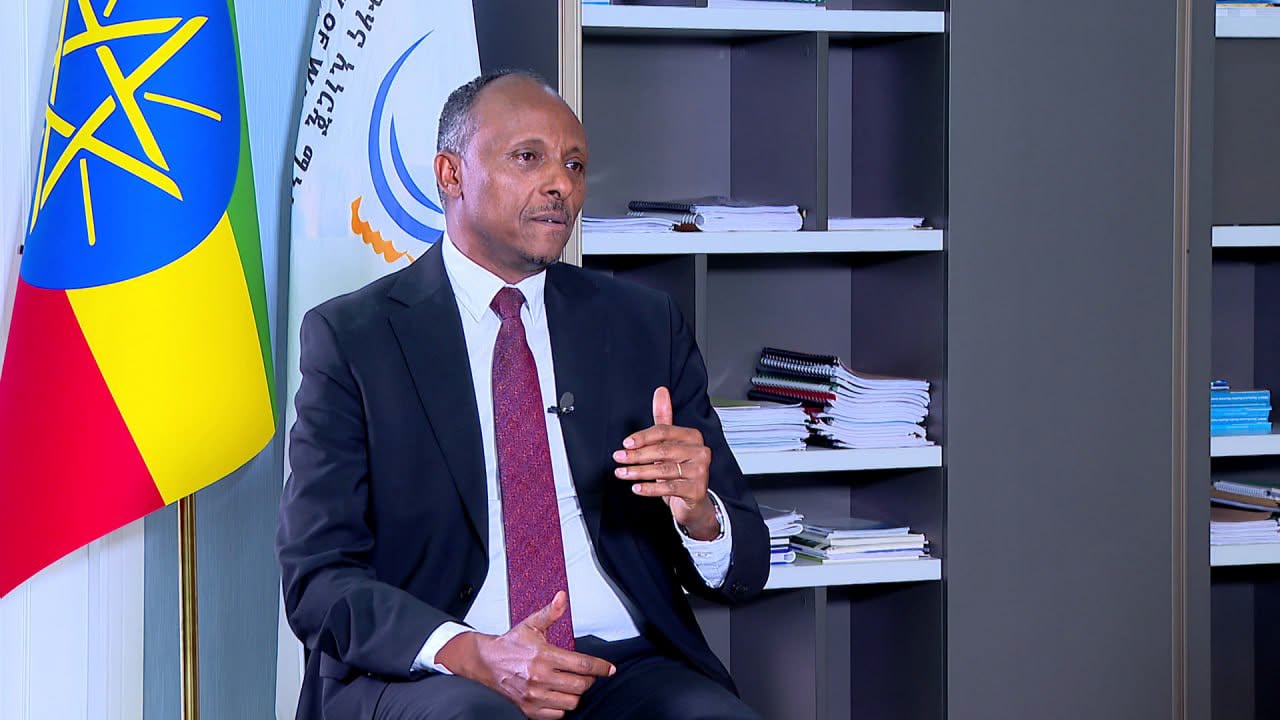
Addis Ababa, August 20, 2026 (ENA) —“Ethiopia does not need permission from anyone to develop its water resources as it is a sovereign country,” Water and Energy Minister Habtamu Itefa said.
“Who said that we need permission from anyone? Ethiopia is a sovereign country... Look, we built the GERD without the permission, and we will also build other dams on other river basins whenever the needs arise,” he elaborated.
In an exclusive interview with Pulse of Africa, Habtamu noted that the Grand Ethiopian Renaissance Dam was built solely for electricity generation and it is providing the region with hydro power.
He categorically rejected calls for joint management of the GERD, saying Ethiopia would not accept arrangements that would give other countries control over the dam nor ask permission to build others.
“How come any entity asks to jointly manage the dam built by Ethiopians. This is impossible and unacceptable,” the Minister underscored.
Ethiopia’s position as regards the Nile is that the Basin countries negotiate and cooperate rather than seek to restrict the country's development using its own water resources.
With respect to the GERD, Ethiopia's intention is to generate hydropower supply citizens with electricity and export energy to benefit the region, the Minister explained.
Accordingly, Ethiopia has been supplying electricity to neighboring countries including Djibouti, Kenya, and Sudan, while demand is also coming from Somalia and South Sudan.
Moreover, “the Kenyans are demanding more than what really we could give them,” Habtamu said. “There is again a big demand from Somalia; but the country is not yet connected. So we are working on it. Besides, South Sudan also demands power.”
He also defended Ethiopia’s approach to Nile Basin cooperation, citing the Nile Basin Initiative and the Cooperative Framework Agreement as examples of efforts to promote shared use of the river.
Further elaborating on the generous move of Ethiopia in developing the Nile tributaries, the Minister stated that unlike in other transboundary river basins where downstream countries often lead cooperation efforts, Ethiopia has taken the lead in bringing Nile Basin countries together.
“In the case of Nile, it is Ethiopia that has been trying to lead the initiative to cooperate and work together,” he noted.
He also revealed that Ethiopia has refrained from developing potentially irrigable land”, arguing that this demonstrates consideration for downstream countries.
“Technically speaking, we have more than 230,000 hectares of irrigable land. But we are not irrigating that land because we know that there is a demand from the downstream side.”
Habtamu pointed out that water released from the GERD continues to flow to downstream countries after electricity generation.


