What Has the Arab World Gained from Egypt? - ENA English


What Has the Arab World Gained from Egypt?
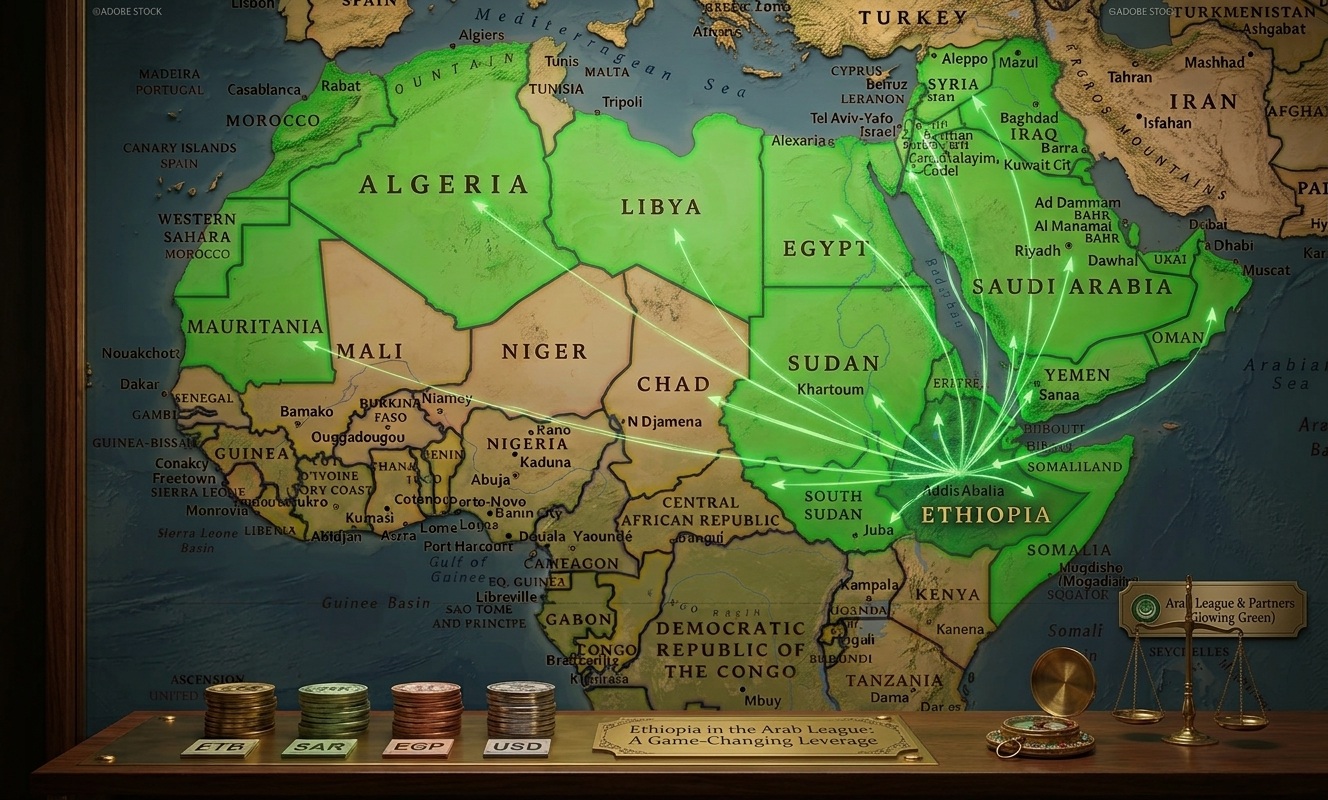
Why Ethiopia Belongs in the Arab League?
By Jibril Lamo
August 19, 2026
The trajectory of global diplomacy is shifting toward historic truth and economic pragmatism, exposing the futility of outdated geopolitical vetoes. For decades, Egypt has extensively leveraged the Arab League to serve its own narrow interests and geopolitical agenda. Yet, this transactional dynamic begs a fundamental question: what has the Arab world received from Egypt in return? Let us confront the uncomfortable truth.
The answer is virtually nothing. Rather than consistently advancing collective strength, Cairo’s policies and decades of authoritarian rule have, critics argue, contributed to instability across the region—weakening Sudan’s sovereignty while pursuing policies that have fueled tensions in East Africa and the Red Sea. These regions are not peripheral to Arab interests; they are strategically indispensable to the Arab world’s security, maritime trade, energy supplies and food security.
One of the most consequential examples of Egypt’s divisive regional approach is its historical involvement in the Eritrean question and the broader struggle over Ethiopia’s territorial integrity. Cairo was overtly supporting separatist forces and political projects intended to weaken Ethiopia and constrain its regional influence. The eventual separation of Eritrea from Ethiopia remains a defining episode in the Horn of Africa’s turbulent history and a powerful reminder of how external geopolitical calculations can reshape the destiny of nations.
Historical diplomacy reveals that Egyptian politician Boutros Boutros-Ghali, who served as acting Foreign Minister before becoming UN Secretary-General, played a pivotal role in advancing the Eritrean secession project to permanently weaken Ethiopia. Furthermore, Cairo’s active destabilization of the southern Red Sea basin presents a direct threat to global maritime trade and regional security. By stoking tensions around the Bab-el-Mandeb Strait and proxying armed factions, Cairo has transformed vital maritime passages into arenas of geopolitical confrontation, jeopardizing the broader security architecture essential for the energy and food logistics of the entire Arab world.
While Egypt’s self-serving maneuvers generate regional friction, Ethiopia’s accession to the Arab League presents a transformative opportunity from which the Arab world stands to gain immensely. Under the visionary framework of the Medemer philosophy, Ethiopia possesses the diplomatic posture and inclusive vision needed to unite and integrate the Arab world far more effectively than Cairo ever could. As the undisputed diplomatic capital of Africa and the permanent headquarters of the African Union, Ethiopia brings unparalleled experience in multilateral consensus-building. Far from being a geopolitical gamble, Ethiopia’s aspiration to join the Arab League is a natural homecoming. As a Red Sea nation with a population exceeding 135 million, a booming economy, and deep civilizational ties, Ethiopia’s membership would establish an indispensable bridge between Africa and the Middle East.
Ethiopia’s connection to the Middle East is built upon millennia of shared heritage, culture, and bloodlines. In academic institutions such as Harvard University, Ethiopian studies have historically resided within Oriental and Near Eastern departments, reflecting the deep historic entanglement between Habesha civilization and the Near East. The Bab-el-Mandeb Strait was never a barrier; it served as a vibrant corridor connecting commerce, culture, and communities across the Red Sea. From the reign of King Abraha to modern genetic studies confirming shared ancestry between Ethiopian and Middle Eastern populations, these foundational bonds remain undeniable.
Linguistically and culturally, the structural bedrock of the Ethiopian state is Semitic. Ge'ez, the sacred classical language of Ethiopia, alongside its modern descendants Amharic and Tigrinya, belongs directly to the South Semitic branch of the Afroasiatic language family. This linguistic heritage inextricably links Habesha syntax, vocabulary, and literary traditions to classical Arabic, Aramaic, and Hebrew. The shared linguistic infrastructure between the Horn of Africa and the Arabian Peninsula offers continuous, tangible proof of a bi-directional civilizational flow.
Beyond linguistics, Ethiopia holds a sacred and irreplaceable standing in the foundational history of Islam. When the companions of the Prophet Muhammad faced severe persecution in Mecca, it was to the Aksumite Kingdom that they fled for survival. The First Hijrah to Habesha, where the righteous Emperor Najashi extended royal dignity and sanctuary to the early Muslim community, saved the Islamic faith at its inception. This deep spiritual intertwining makes Ethiopia’s cultural identity inseparable from the broader Near East.
Despite these undeniable facts, Cairo has systematically weaponized the Arab League as an instrument of institutional containment against Addis Ababa. For generations, Egyptian foreign policy has operated on an obsolete zero-sum doctrine that views any Ethiopian sovereign progress—whether the construction of the Grand Ethiopian Renaissance Dam or the reclamation of direct maritime access—as a threat. By projecting its own hydropolitics onto the entire Arab bloc, Egypt has forced the League into a posture of artificial hostility toward its most powerful neighbor.
In contrast to Cairo's policy of exclusion, contemporary realities demand total integration. Under the guiding principle of Medemer, Ethiopia offers the Arab world structural advantages that far surpass outdated rivalries. With an expanding industrial base and immense green energy capacity, Ethiopia serves as the primary stability anchor for the Horn of Africa and the Red Sea basin. While much of the Middle East faces severe water scarcity, desertification, and vulnerable food supply chains, Ethiopia’s highland ecology and abundant freshwater resources position it to become a vital agro-industrial partner for the entire Arabian Peninsula. Integrating Ethiopia into the Arab League transforms the Red Sea into a prosperous economic zone driven by Arab capital paired with Ethiopian land, energy, and labor scale.
The League of Arab States must transcend twentieth-century nationalisms and embrace the civilizational reality of the Red Sea basin. Existing member states like Djibouti, Somalia, the Comoros, and Mauritania demonstrate the bloc's capacity to accommodate diverse regional realities. Full membership for Ethiopia does not diminish its proud African identity; rather, it elevates Ethiopia to its rightful role as the primary bridge connecting the African continent to the Middle East. It is time for the Arab League to move past Egyptian gatekeeping, leverage Ethiopia’s unifying synergy, and grant Addis Ababa its full and rightful seat.


