Reclaiming Ethiopia’s Sea: An Injustice Long Overdue for Rectification - ENA English


Reclaiming Ethiopia’s Sea: An Injustice Long Overdue for Rectification
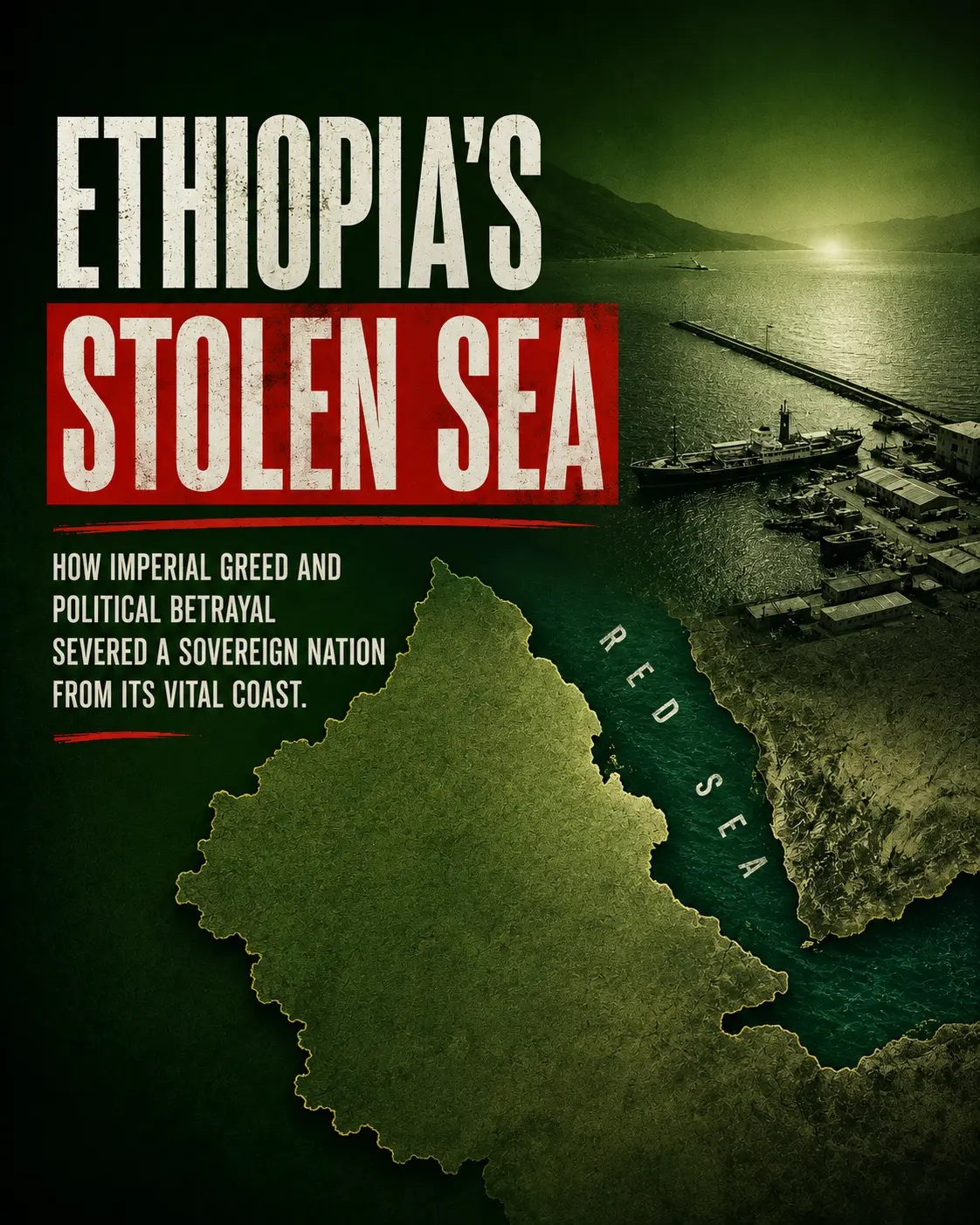
With analysis from Pulse of Africa (POA)
Aug 16, 2026 (ENA)
By Mathias Bule
Ethiopia’s alienation to its once-sovereign territory of the port of Assab has been fraught with shady deals, and complicated by the presence and involvement of colonial forces in the Horn of Africa region.
Ethiopia’s quest to regain access to the sea is not merely a territorial ambition; it is a fundamental claim rooted in centuries of colonial subjugation, legal deceit, and political betrayal. The history of Ethiopia’s lost port of Assab is a stark testament to how imperial powers, through clandestine deals and manipulative treaties, deliberately and systematically deprived a sovereign nation of its maritime rights. This injustice must be recognized, rectified, and finally corrected.
The modern story of it begins in 1869, when local Afar sultans sold a strip of land in Assab to Giuseppe Sapeto, representing Italy’s Società Rubattino. The deal was struck in secret, for a paltry sum of just 6,000 Italian lire—conducted entirely outside Ethiopian knowledge or approval. At the time, Ethiopia’s central government, under Emperor Menelik II, was unaware of this transaction. The sale was a clandestine act by local authorities seeking economic advantage, but it was exploited by colonial powers to establish Italy’s foothold in the Horn of Africa. Italy’s subsequent annexation of Assab in 1882 marked the beginning of a colonial empire that would dominate the region for decades. This early act of territorial theft was a clear violation of Ethiopia’s sovereignty, yet it laid the foundation for future injustices.
The most infamous chapter in Ethiopia’s loss of access to the sea is the 1889 Wuchale Treaty. Drafted amidst Italy’s expansion into the region, this treaty contained a deceptive mistranslation. The Italian version declared Ethiopia a protectorate, effectively stripping it of sovereignty, while the Amharic version purportedly maintained Ethiopia’s independence. This language trickery was designed to facilitate Italian colonization. Although Ethiopia later nullified the treaty following its victory at the Battle of Adwa, Italy had already cemented control over Assab and surrounding territories through subsequent treaties in 1900, 1902, and 1908. These agreements formalized Italy’s colonial borders and made Assab a vital part of Italian Eritrea, cutting Ethiopia off from its historical coast.
Post-World War II, the international community attempted to rectify colonial wrongs by dissolving Italian rule and federating Eritrea with Ethiopia under UN Resolution 390A. However, this process was, according to some political scientists and historians, marred by negligence and political expediency. During the 1950s negotiations, Ethiopian leaders failed to assert Assab’s status as an independent Ethiopian port. Instead, they treated Eritrea as a whole—along with Assab—merely as a territory to be integrated, ignoring the port’s strategic importance and its distinct ethnic and historical identity. This omission was a grave oversight, one that left Assab vulnerable to future loss.
The latest blow came with the overthrow of Ethiopia’s military regime in 1991. The rebel groups that seized power—the Tigray People’s Liberation Front (TPLF/EPRDF) and the Eritrean People’s Liberation Front (EPLF)—fought as allies against colonial and imperial forces. Yet, their hasty, unlegislated decision to cede Assab to Eritrea in 1993 was a betrayal of Ethiopia’s sovereignty. The transition government, led by Meles Zenawi, acted without parliamentary ratification or public consultation. Consequently, Ethiopia was left landlocked, stripped of its sovereign access to the sea and its vital port infrastructure. This was not just a territorial loss; it was a blow to Ethiopia’s economic independence, national pride, and strategic security.
Ethiopia’s historical narrative is one of resilience and sovereignty. The loss of Assab was not an inevitable fate but the result of colonial greed, diplomatic deception, and political negligence.
It is time for Ethiopia to reclaim its rightful access to the sea—an essential element of its sovereignty and future prosperity. Restoring Ethiopia’s maritime rights is not only a matter of rectifying historical injustices but also a crucial step toward national dignity and economic independence. Ethiopia’s seas are its birthright, and the time has come to fight for that legacy—justice demands no less.


