Egyptian Media Contradicts its Own Experts on GERD, Says Journalist - ENA English


Egyptian Media Contradicts its Own Experts on GERD, Says Journalist
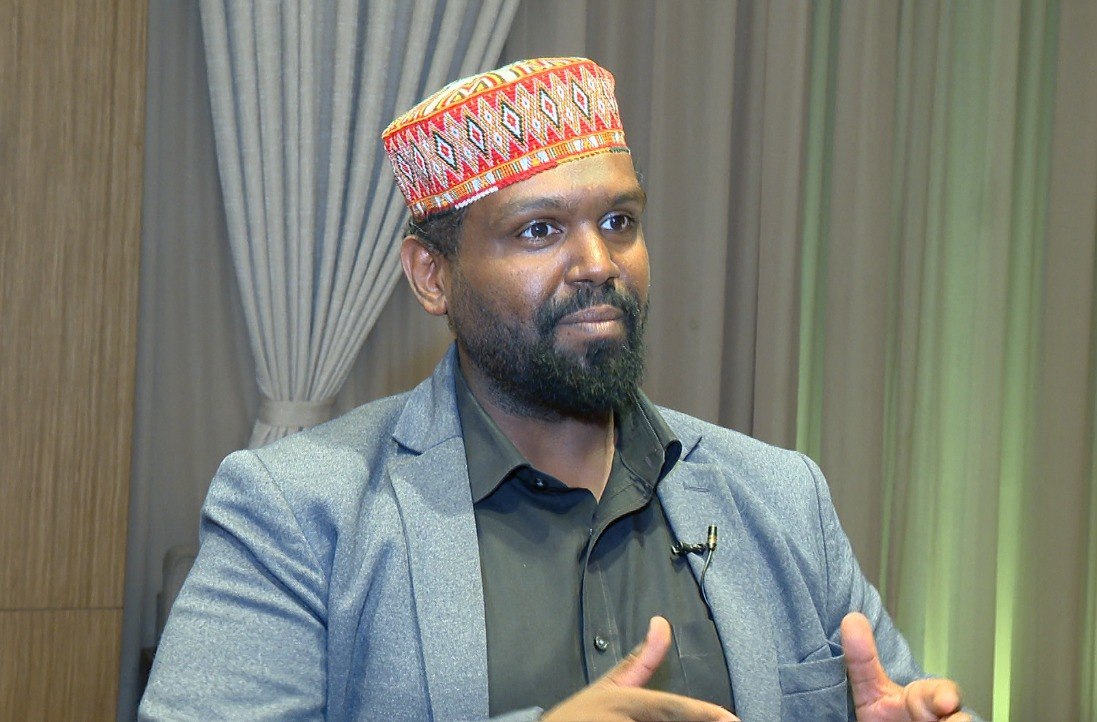
Addis Ababa, August 14, 2026 (ENA) —Egyptian media coverage of the Grand Ethiopian Renaissance Dam (GERD) has become increasingly inconsistent, often diverging from the assessments of several Egyptian scientists and water experts, journalist and writer Zahid Zidan, said.
Speaking to ENA Arabic, Zahid noted that public debate surrounding the GERD has frequently been shaped by contradictory media narratives rather than by scientific and technical analysis.
He cited a number of Egyptian experts who, according to him, have publicly stated that the dam does not pose a direct threat to Egypt.
Among them is Egyptian geologist Dr. Abbas Sharaqi, whom Zahid identified as one of the experts who has repeatedly argued that the GERD does not inherently harm Egypt.
He also referred to Egyptian scientist Dr. Sameh Armanious, who has described the project as a hydropower dam that returns water to the river system after electricity generation.
Zahid further cited Egyptian space scientist Dr. Farouk El-Baz, saying that El-Baz has indicated the dam could contribute to protecting the interests of Sudan and Egypt, as well as Ethiopia, through more regulated water management.
He argued that water availability and hydrological conditions should be assessed through scientific observation rather than political interpretation.
“Discussions about water abundance or scarcity cannot be based on scientific criteria before the end of the water season,” Zahid said.
According to him, some Egyptian media outlets have at different times linked the GERD to entirely opposite phenomena, first associating it with flooding and infrastructure damage, and later blaming it for declining water levels and drought.
He said attributing contradictory hydrological events to the same project reveals significant inconsistencies in parts of the Egyptian media discourse.
At the same time, Zahid argued that claims by some Egyptian officials and media outlets that the GERD poses a threat to downstream countries are politically driven and lack a consistent scientific basis.
He said such narratives have, for decades, sought to obstruct Ethiopia’s sovereign right to pursue development through the utilization of its natural resources, particularly the Abay (Blue Nile), which contributes about 86 percent of the Nile waters that flow to downstream countries.
In that regard, he contended that media narratives should be distinguished from scientific assessments.
Zahid said the views of several Egyptian and Sudanese experts suggest that the GERD should be evaluated primarily through technical and hydrological evidence rather than through sensational or politically driven narratives.
He also cited Sudanese specialists, including Professor Saif al-Din Hamad and former Sudanese Minister of Irrigation and Water Resources Dr. Osman Al-Tom, saying their assessments have emphasized the importance of evidence-based analysis in discussions over the Nile.
The journalist stressed that the GERD was principally designed as a hydroelectric project intended to generate electricity and utilize Ethiopia’s water resources for development.
“The technical nature of the project differs from the portrayal presented by some Egyptian media outlets,” he said.
Zahid stated that the shift from describing the dam as a project that could contribute to water management to occasionally portraying it as a “dam of destruction” illustrates a widening gap between scientific discourse and parts of the media narrative.
He added that annual water volumes cannot be accurately assessed until several months after the rainy season has ended.
“The annual volume of water cannot be accurately assessed until March or April of next year,” he said, stressing that early judgments about water abundance or scarcity do not provide a comprehensive hydrological picture.
Zahid called for more balanced and scientifically grounded reporting on the GERD and the Abay urging media organizations to rely on technical studies and verified data rather than rhetoric that could further complicate regional discussions over Nile water management.


