Ethiopia’s National Dialogue Offers Africa Grassroots Model for Inclusive Nation-Building, says EIPD president - ENA English


Ethiopia’s National Dialogue Offers Africa Grassroots Model for Inclusive Nation-Building, says EIPD president
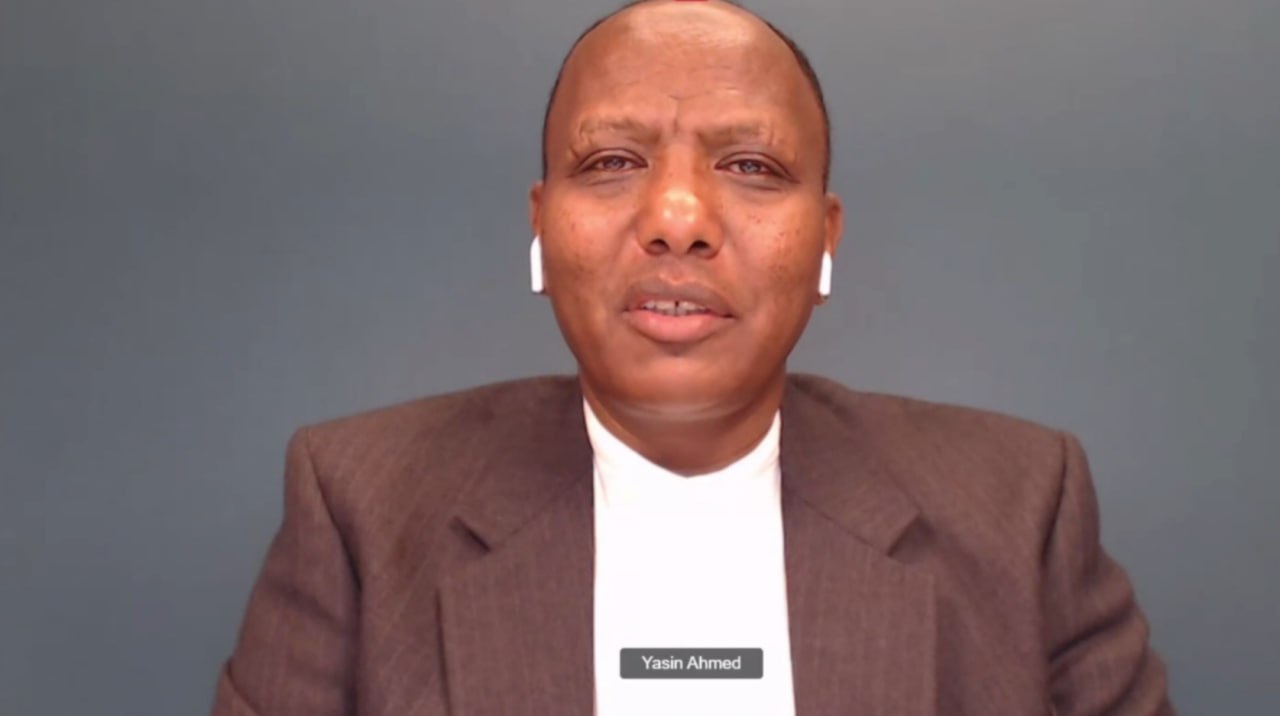
Addis Ababa, August 13, 2026 (ENA) —Ethiopia’s National Dialogue is emerging as a distinctive African model for resolving complex political and social challenges through a grassroots-driven process, according to Yassin Ahmed, President of the Ethiopian Institute for Public Diplomacy (EIPD).
Approached by ENA, Yassin said the Ethiopian experience marks a significant departure from dialogue processes that have traditionally been shaped by political agreements among elites, party leaders and state actors.
Across much of Africa, he noted, national dialogue initiatives have often followed a top-down approach in which agreements are reached at the leadership level before being presented to the wider public.
While such processes can produce political settlements, they may not fully reflect the concerns and aspirations of citizens across diverse communities.
Ethiopia, he said, has taken a different path.
“What distinguishes Ethiopia’s National Dialogue is that it was launched on the principle of dialogue from the grassroots to the top, rather than the other way around,” Yassin said.
According to him, the process began with extensive consultations in communities across the country, bringing together clan elders, religious leaders, women, youth, farmers, academics and civil society representatives.
These consultations were intended to identify citizens’ concerns and priorities before they were elevated to the national agenda.
He described the approach as a significant institutional and political shift in Ethiopia’s modern history.
“For decades, national political issues were largely approached through hierarchical and elite-driven systems,” he said.
The president however, noted that: “The current process reverses that logic by placing local communities and ordinary citizens at the starting point of national deliberations.”
Yassin argued that this citizen-centered approach offers an important lesson for African countries seeking durable solutions to deeply rooted political and social challenges. By grounding dialogue in local participation, he said, governments can strengthen public ownership of national processes and improve the legitimacy of outcomes.
He also stressed that the significance of Ethiopia’s experience is closely tied to the country’s scale and diversity.
“With a population of more than 130 million and a rich mosaic of ethnic groups, languages and cultures, managing national diversity through dialogue is an extraordinarily complex undertaking,” he said.
“Bringing such diverse constituencies into a single national process is, in itself, a major institutional achievement,” he further stated.
At the same time, Yassin emphasized that meaningful political participation cannot coexist with armed confrontation.
He said participation in the National Dialogue requires a commitment to peaceful political engagement, arguing that violence and military activity undermine the conditions necessary for inclusive democratic deliberation.
Yassin further noted that the National Dialogue was established through legislation approved by Parliament and is administered by an independent commission, providing the process with a formal legal foundation and an institutional mechanism for addressing national issues.
He said the Ethiopian experience demonstrates that inclusive national dialogue can serve as a practical framework for managing diversity, building consensus and addressing complex political questions in pluralistic African societies.
As African countries continue searching for sustainable approaches to peacebuilding and democratic governance, Yassin said Ethiopia’s grassroots-to-national dialogue model offers a potentially important contribution to the continent’s evolving dialogue architecture.


