Ethiopia’s Future Development Anchored in Abay, Read Sea, Underscores Water Minister - ENA English


Ethiopia’s Future Development Anchored in Abay, Read Sea, Underscores Water Minister
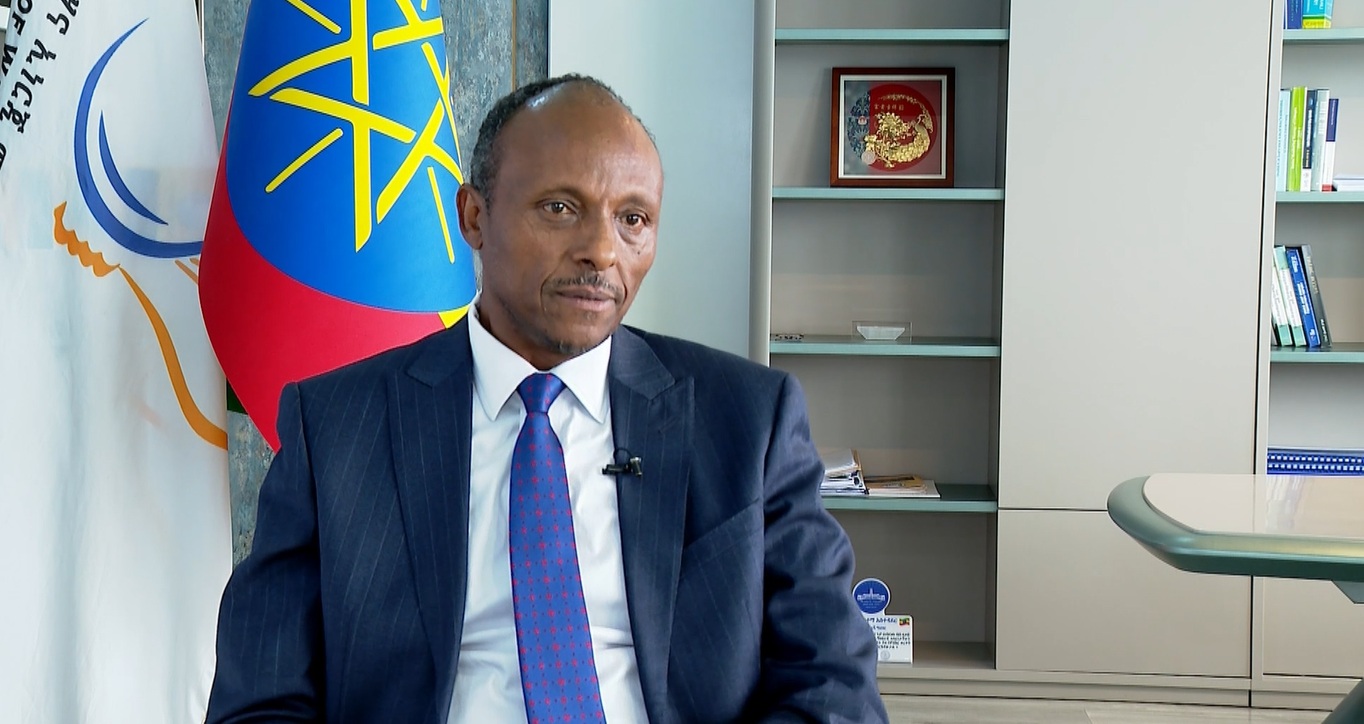
Addis Ababa, August 11, 2026 (ENA) —Ethiopia’s future is inseparable from the Abay River and the Red Sea, with both serving as strategic pillars for national development and regional connectivity, Minister of Water and Energy Habtamu Itefa said.
Speaking to ENA, the minister described the Abay (Blue Nile) and the Red Sea as two water bodies that have shaped Ethiopia’s history, influenced regional power dynamics, and continue to define the country’s economic and strategic trajectory.
“The issue of these two waters should not be viewed simply in terms of whether water exists or not,” Habtamu said.
He added that: “It must be understood in a much broader historical, economic, and geopolitical context.”
Ethiopia is a major contributor to the Abay Basin, with about 86 percent of the Blue Nile’s flow originating in the Ethiopian highlands.
At the same time, the country has intensified diplomatic efforts to secure peaceful and mutually beneficial access to the Red Sea, a move that has increasingly gained regional and international momuntem.
The minister said the wellbeing and future prosperity of Ethiopia’s more than 130 million people are closely linked to both the Abay and the Red Sea. The two water bodies are strategic assets with implications that extend beyond Ethiopia’s borders, he noted.
Habtamu recalled that, for decades, Ethiopia was prevented from fully developing and utilizing the Abay River amid external political pressures.
“Ethiopians have paid a heavy price because of these two waters,” he said, referring to historical constraints that limited the country’s development aspirations.
He described the Grand Ethiopian Renaissance Dam (GERD) as a transformative national project that has fundamentally changed Ethiopia’s position. The dam, he said, has enabled the country to realize a long-held national aspiration while strengthening energy security and regional economic integration.
GERD is now generating around 5.15 gigawatts of electricity, allowing Ethiopia to meet growing domestic demand and expand electricity exports to neighboring countries. This makes the country a key driver of regional power interconnection.
On the Red Sea, the minister said Ethiopia’s current approach is based on diplomacy, peaceful engagement, and the principle of mutual benefit. He argued that the country’s pursuit of sea access should not be viewed as a short-term political agenda but as a strategic national objective that spans generations.
“The Red Sea issue is not the work of a government or a political party,” Habtamu said.
He underscored that: “It is a long-term, intergenerational undertaking.”
He added that improved Ethiopian access to the Red Sea could contribute not only to the country’s economic transformation but also to regional stability, maritime security, and reduced geopolitical competition in one of the world’s most strategically significant waterways.
Amid East Africa’s shifting geopolitics, Habtamu said the Abay and Red Sea are interconnected strategic assets vital to Ethiopia’s growth and regional cooperation.


