Eritrea’s Regime Military Adventurism Risks Dragging Horn of Africa Back into Conflict - ENA English


Eritrea’s Regime Military Adventurism Risks Dragging Horn of Africa Back into Conflict
By Staff Writer
August 9, 2026 (ENA)
The Horn of Africa is once again facing the danger of military and political escalation as renewed manoeuvring involving Eritrea, illegal TPLF-led political and military actors, and other regional and external forces threatens to undermine the fragile peace achieved after years of devastating conflict.
At the centre of these concerns is Tigray, a region still struggling to recover from the destruction, displacement and human suffering caused by the 2020 to 2022 war. The conflict ended with the signing of the Pretoria Cessation of Hostilities Agreement (CoHA), creating an opportunity for the region to pursue reconstruction, reconciliation and political dialogue.
That opportunity remains fragile.
Reports of renewed military contacts involving Eritrean officials and former TPLF military figures inside Tigray have raised concerns that political disagreements could once again be transformed into military calculations. Against the backdrop of tensions involving Ethiopia, Eritrea, Egypt and armed groups in the region, such developments risk turning Ethiopia’s internal political challenges into a wider regional confrontation.
The central concern is not merely which political actors may gain from renewed alliances, but who will bear the consequences if those alliances lead to another conflict. For the people of Tigray, particularly its youth, the answer is painfully familiar.
Foreign Military Involvement
One of the most troubling issues is the reported engagement of Eritrean military officials with banned TPLF military figures inside Tigray. Reports of meetings involving Eritrean and TPLF faction leaders on Ethiopian territory have raised questions about the purpose, authorization and implications of such contacts.
If confirmed, the presence of foreign military officials inside Ethiopian territory without the authorization of the federal government would raise serious questions concerning national sovereignty and territorial integrity. Tigray is an integral regional state of Ethiopia and should not become a platform for external military calculations or geopolitical competition.
The timing is also significant. Northern Ethiopia needs reconstruction, economic recovery, reconciliation and political stability. Renewed military engagement risks diverting attention and resources away from these priorities while creating an atmosphere in which mistrust and mobilisation can once again flourish.
Ethiopia’s federal government and people have repeatedly expressed a desire to avoid another war, including renewed confrontation with Eritrea. Preserving that restraint requires all actors to avoid steps that could create facts on the ground and gradually transform political tensions into military confrontation.
Eritrea's Regime History of Regional Confrontation
The current concerns are also being viewed against Eritrea’s broader regional history. Since its independence from Ethiopia in 1993, Asmara has been involved in a series of military disputes and diplomatic tensions with neighbouring countries.
The Ethiopia Eritrea border war of 1998 to 2000 remains the clearest illustration of how political and territorial disputes can escalate into devastating conflict. Tens of thousands of people were killed before the Algiers Agreement brought the major hostilities to an end.
The 2018 rapprochement between Addis Ababa and Asmara marked a dramatic improvement in relations and raised hopes for a lasting transformation in the relationship between the two countries. Yet unresolved security concerns and competing strategic interests have continued to shape the politics of the region.
Eritrea has also experienced serious disputes and security tensions involving Yemen, Djibouti and Sudan. Critics of Asmara have consequently accused the Eritrean government of relying heavily on military pressure, strategic alliances and security calculations to advance its regional interests.
Whatever the interpretation of these episodes, the history demonstrates the danger of allowing regional disputes to become militarised. The Horn of Africa has repeatedly paid a heavy price when political disagreements are settled through force rather than sustained diplomacy.
Danger of Proxy Politics
The wider geopolitical environment makes the current situation even more complicated. Egypt’s strategic rivalry with Ethiopia, particularly over the Grand Ethiopian Renaissance Dam and competing interests in the Nile Basin and Red Sea, has added another dimension to regional calculations.
Any alignment between external actors and domestic political forces around Ethiopia’s internal divisions could deepen instability. The possibility of competing regional interests converging around armed groups or political factions creates the risk of turning domestic disputes into a proxy confrontation.
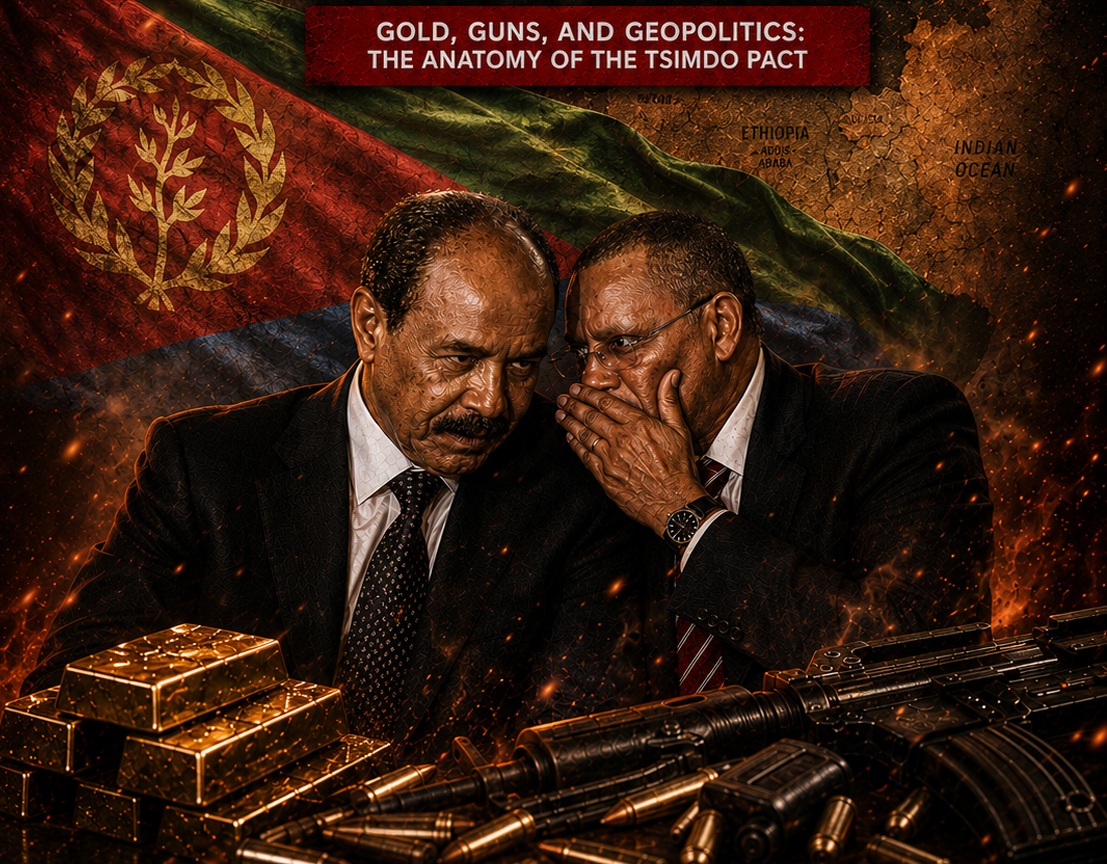
The reported network involving the TPLF, Eritrea, Fano aligned forces and external actors such as Egypt is therefore particularly concerning. The alliance sometimes referred to as “Tsimdo” could, if it develops into a coordinated political or military arrangement, turn Tigray region of Ethiopia and neighbouring areas into an arena for competing strategic interests.
Such arrangements may provide short term tactical advantages to individual actors. But alliances formed around a common opponent can be inherently unstable. Once immediate interests change, former partners can become rivals, leaving civilians to bear the consequences of conflicts they did not create.
For Eritrea, deeper involvement in Ethiopia’s internal affairs could expose its own population to another costly regional confrontation. For Fano aligned forces, cooperation with former adversaries could transform political grievances into a broader conflict with national and ethnic dimensions. For external actors, using Ethiopia’s internal divisions to advance strategic interests could further destabilise an already fragile region.
The People of Tigray Must Not Pay
The greatest danger is that young Tigrayans could once again become the human cost of decisions made by political and military elites. At the heart of this threat is Eritrea’s regime, whose long-established reliance on proxy actors and military adventurism has repeatedly undermined peace efforts and fueled instability across the Horn of Africa.
The region’s youth have already endured violence, displacement, economic hardship and interrupted education. Thousands of families continue to face the consequences of a conflict that disrupted livelihoods.
Reports of renewed recruitment and alleged coercive mobilisation in Tigray region have therefore intensified public concern. Such allegations require serious scrutiny, transparency and accountability. Any effort to rebuild armed structures or mobilise young people for another confrontation would threaten not only immediate security but also the future of an entire generation.
Tigray does not need another mobilisation campaign. It needs functioning schools, hospitals, roads, businesses and institutions. Its young people need opportunities to study, work and build families rather than being placed once again in the path of war.
The political future of Tigray region must consequently be pursued through dialogue and legitimate political processes. Attempts to regain influence through armed confrontation would risk repeating the very tragedy from which the region is still recovering.
A renewed Ethiopia Eritrea confrontation would not remain confined to the border between the two countries. The Horn of Africa is interconnected through security, trade, migration, political alliances and strategic interests.
Another war could draw in armed groups, neighbouring states and external powers, producing a crisis whose humanitarian and economic consequence would be difficult to contain. It could disrupt trade routes, increase displacement, deepen food insecurity and divert resources from development and reconstruction.
For Ethiopia, renewed conflict would threaten economic progress and divert national attention from domestic development priorities. For Eritrea, another confrontation could impose further human and economic costs on a population that has already experienced prolonged militarisation. For Tigray, the consequences could be catastrophic, given the region’s unfinished recovery from the previous war.
The wider lesson is clear: military confrontation rarely remains under the control of those who initiate it. Once violence begins, political calculations can quickly give way to humanitarian catastrophe.
All the people of Tigray Should struggle to enhance peace and stability in their region through preserving the Pretoria peace agreement and denying the defunct TPLF leaders who made unholy marriage with internal and external enemies to engage the people in a devastating war.
The Pretoria cessation of Hostilities Agreement (CoHA) demonstrated that even one of the Horn of Africa’s most destructive conflicts could be brought to an end through negotiation. Its significance extends beyond the cessation of hostilities. It created an opportunity for political dialogue and recovery after years of devastating violence.
That opportunity should not be undermined by renewed military preparations.
If Eritrean authorities are engaging with political or military actors inside Tigray, transparency is essential. Such engagement should respect Ethiopia’s sovereignty and contribute to peace rather than destabilisation. The TPLF belligerent political and military actors, for their part, must recognise that armed confrontation cannot provide a sustainable solution to political disagreements.
The Ethiopian government also has a responsibility to maintain restraint while addressing security concerns through lawful and diplomatic channels. In this regard, the federal government has gone to considerable lengths to demonstrate maximum restraint despite mounting security concerns and repeated provocations. Preventing another war requires more than military preparedness; it requires sustained political engagement, confidence-building, and a genuine willingness by all sides to resolve disputes through dialogue rather than force.
The same principle applies to external actors. Regional and international powers should support peace, reconstruction and dialogue rather than encourage political divisions that could produce another cycle of violence.
The Horn of Africa has suffered enough from conflicts fueled by mistrust, rivalry and military adventurism. The region now faces a choice between protecting the fragile gains of peace and allowing political calculations to reopen one of its most destructive fault lines.
Tigray must not become a battlefield for regional rivalries. Ethiopian territory must not become a stage for unauthorized foreign military manoeuvring. And the youth of Tigray must not once again be sacrificed for the ambitions of competing political and military elites.
The responsibility rests with all actors. Eritrea must avoid actions that threaten Ethiopia’s sovereignty or regional stability. Political forces in Tigray region must pursue their objectives through peaceful political means. Ethiopia must continue to use restraint and diplomacy. Regional and external powers must resist the temptation to exploit internal divisions for strategic advantage.
The consequences of failure would extend far beyond the immediate political actors. Families would once again lose loved ones, communities would face displacement, development would be disrupted, and another generation would inherit the burdens of war.
Conclusion
The Horn of Africa stands at a critical moment. The region has an opportunity to consolidate the peace achieved through negotiation or to repeat the destructive patterns of the past.
For Tigray, the priority should be recovery, reconciliation and rebuilding. For Ethiopia and Eritrea, it should be preventing another confrontation that could inflict enormous costs on both populations. For regional and external actors, the responsibility should be to support stability rather than deepen existing divisions.
The Pretoria agreement showed that dialogue can succeed where war cannot. Its promise must therefore be protected from renewed militarisation and political adventurism.
The people of Tigray have already paid too high a price for war. Their future should not be determined by military alliances forged behind closed doors or by geopolitical calculations made far from the communities that would suffer their consequences.
The choice before the region is ultimately simple: preserve peace and give a generation the opportunity to rebuild or allow military adventurism to reopen a conflict whose wounds have not yet healed. The Horn of Africa can ill afford to make the wrong choice.


