Who is Really Water -rich? - ENA English
Who is Really Water -rich?
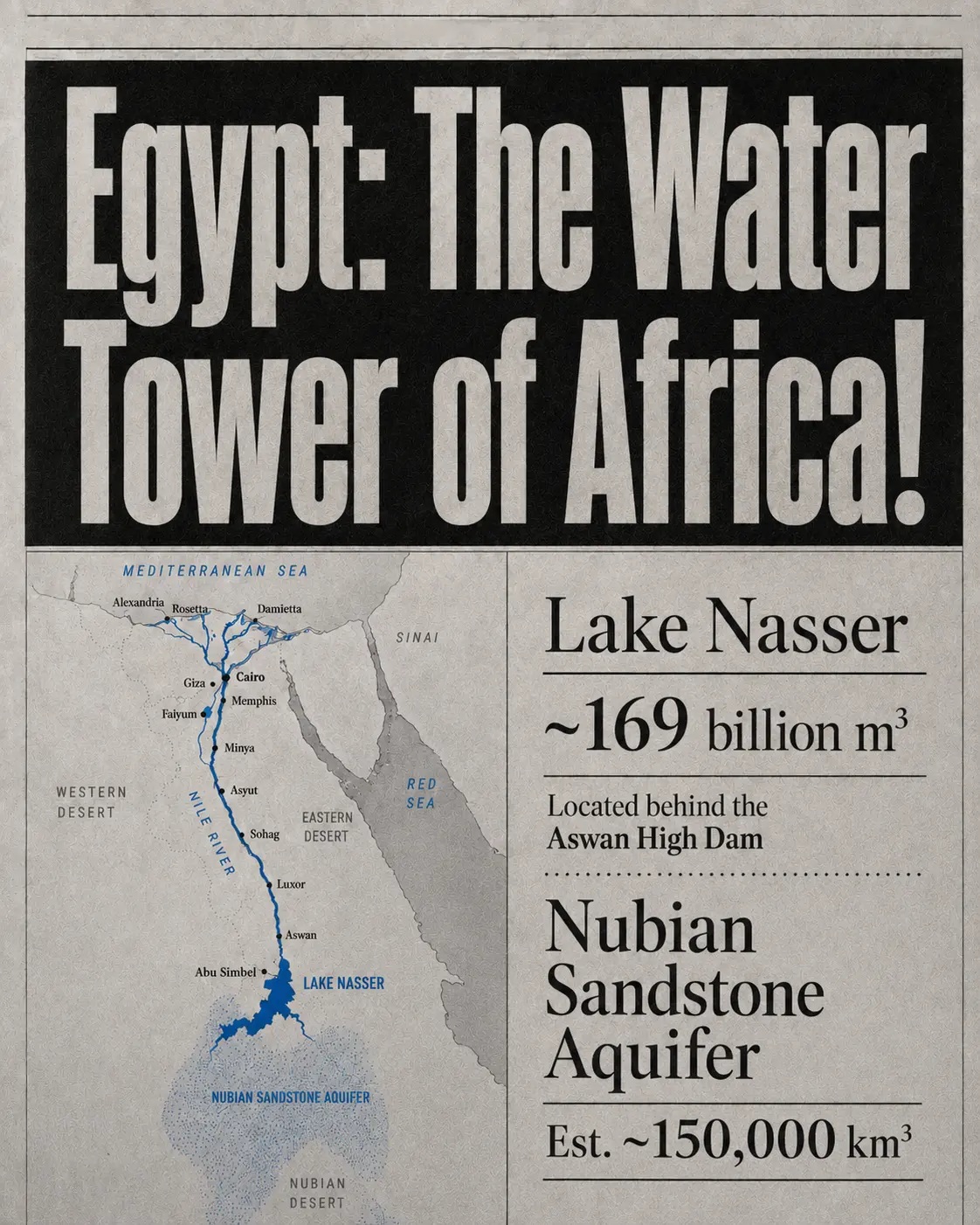
By Yimer Ayele (from POA)
August 9, 2026 (ENA)
Contrary to popular belief and the UN's designation of Egypt as water-scarce, the nation possesses immense water potentials that remain largely underreported and misunderstood.
Egypt’s water security is often portrayed as precarious, primarily due to its heavy reliance on the Nile River and the challenges posed by climate change and population growth. However, a closer examination reveals a wealth of hidden resources and strategic infrastructure that position Egypt as a water rich nation with significant untapped potential.
These resources include the vast reservoirs behind the Aswan High Dam, the immense Nubian Sandstone Aquifer System, advancements in desalination technology, and regional cooperation through the Grand Ethiopian Renaissance Dam (GERD). Recognizing and harnessing these resources is essential not only for Egypt’s future but also for redefining regional water narratives across Africa and beyond.
At the core of Egypt’s water resilience is Lake Nasser, stored behind the Aswan High Dam. This massive reservoir holds approximately 169 billion cubic meters of water, acting as a strategic buffer against both seasonal flooding and periods of drought. The dam’s ability to regulate flow has historically safeguarded Egypt’s agriculture, industry, and domestic water needs.
Yet, the story does not end there. Beyond Lake Nasser lies the Nubian Sandstone Aquifer System (NSAS), the world’s largest known fossil water underground reservoir. Spanning over two million square kilometers across Egypt, Libya, Sudan, and Chad, the NSAS contains an estimated 150,000 cubic kilometers of water. This underground aquifer is a silent, yet potent, resource that far exceeds the Nile’s discharge over five centuries, representing a strategic reserve that Egypt and neighboring countries can tap into for decades to come.
The sheer scale of this resource underscores Egypt’s hidden water wealth and potential for long-term resilience. The aquifer’s existence challenges the narrative of water scarcity and opens avenues for sophisticated, sustainable extraction strategies that can complement surface water sources.
In addition to these underground and surface reserves, Egypt has made significant strides in desalination—producing roughly 1.5 to 2 million cubic meters of desalinated water daily. The country has launched a strategic master plan through 2050 that aims to multiply desalination capacity utilizing public-private partnerships, green grants, and coastal expansion projects. The integration of renewable energy, especially solar power, into desalination facilities can be a cornerstone of Egypt’s sustainable water future, aligning with global efforts to reduce carbon footprints and harness green energy sources.
Egypt’s water strategy should also encompass regional cooperation, exemplified by Ethiopia’s Grand Ethiopian Renaissance Dam (GERD). This mega hydropower project, while primarily aimed at electricity generation, exemplifies regional collaboration that benefits downstream countries. The dam helps regulate the Blue Nile’s flow, trapping sediments, and reducing downstream siltation that historically degraded reservoirs like Lake Nasser. It also ensures a more consistent water release, reducing extreme floods and droughts and extending reservoir lifespan through sediment trapping. Ethiopia’s focus on hydropower for electricity rather than mass diversion for irrigation exemplifies a sustainable approach that aligns with Egypt’s needs and regional stability.
Egypt’s water story must shift to one of resilience, strategic resource management, and regional cooperation. It must shift to a narrative that highlights the immense hidden potential—vast underground aquifers, advanced desalination capacity, and collaborative water governance—that must be communicated globally. The misconception of Egypt as a water-scarce country overlooks these critical resources and innovations.
Recognizing and harnessing Egypt’s true water potential is essential for ensuring sustainable development, regional stability, and a resilient future for all. The world must be told the truth: Egypt is not just a water-scarce country but a water-rich nation with enormous, largely untapped resources that can secure its future for generations to come.
However, Egypt is actively pursuing massive desert development projects—such as the New Delta agricultural scheme and the new city of Jirian—by shifting the natural course of the Nile and reallocating billions of cubic meters of Nile water to supply new farming and urban areas.
The Egyptian desert where Nile waters have been diverted (such as through the Toshka Project or spillways from Lake Nasser) is the Western Desert. This vast arid region experiences extreme heat, leading to high evaporation rates in artificial lakes and open irrigation canals.
Egypt must be more transparent not only in the wasteful practice observable in the ways that the northern Africa country is diverting the natural course of the Nile, but also in declaring truth concerning the immense water buried underground across vast area of land.It is spectacular how Egypt managed to bamboozle the whole world, portraying itself as a water-scarce country. It is not!