Prosperity Party Says Institutionalizing Democracy Central to Its Eight-Year Journey - ENA English


Prosperity Party Says Institutionalizing Democracy Central to Its Eight-Year Journey
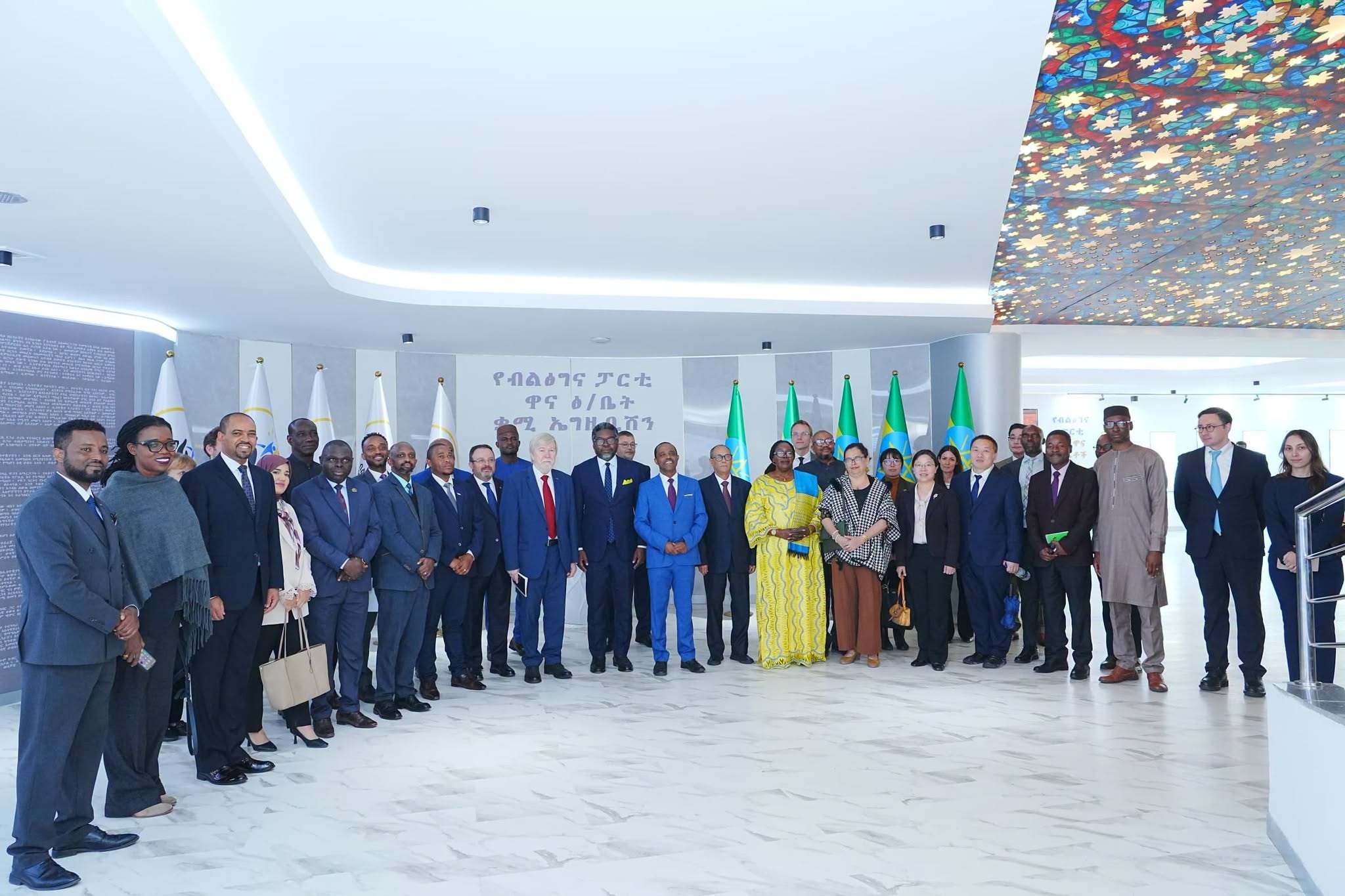
Addis Ababa, August 7, 2026 (ENA) — The Prosperity Party (PP) stated that institutionalizing practical democracy has been a central pillar of its eight-year political journey.
Bikila Hurisa, Minister Coordinator for the Democratic System Building Center at the Office of the Prime Minister and Head of the Party’s Public and International Relations, made the remarks during a briefing for the diplomatic community and development partners on Ethiopia’s experience of conducting the 7th General Election.
He stated that the party has focused on translating democratic principles into tangible improvements in citizens’ lives through freedom, equality, peace, and prosperity.
Consolidating democracy in Ethiopia, he emphasized, requires a strong, competent, and institutionally resilient political organization capable of articulating citizens’ interests and translating them into practical policies and development programs.
Over the past eight years, the PP has strengthened its institutional capacity by clarifying its vision, expanding its organizational structure down to the grassroots level, and building strong links with communities across the country.
Bikila attributed Ethiopia’s political and economic transformation to the party’s emphasis on visionary leadership, broad membership, and effective institutions guided by the Medemer philosophy under the leadership of Prime Minister and PP President Abiy Ahmed.
Currently, the party has approximately 89,000 appointed grassroots leaders working across key sectors, including agriculture, manufacturing, mining, business, and community development, to help translate national priorities into local action.
Bikila highlighted the party’s central role in implementing flagship national initiatives, including the Green Legacy Initiative, agricultural transformation, and food security programs.
Through these efforts, Ethiopia has become one of Africa’s largest wheat producers and has planted more than 48 billion tree seedlings over the past eight years.
He added that ongoing urban development projects in Addis Ababa and other cities demonstrate the concrete outcomes of the party’s development agenda.
Looking ahead, Bikila noted that the Party’s mandate following the 7th General Election is to accelerate poverty reduction, strengthen food security and food sovereignty, deepen economic reforms, and improve household livelihoods through targeted investments in agriculture, manufacturing, tourism, mining, and the digital economy.
The party has begun converting its election manifesto into annual implementation plans, which will be monitored over the next five years to ensure all commitments are realized.
Reaffirming the government’s commitment to democratic consolidation, institutional strengthening, improved healthcare and education services, nation-building, and sustainable peace, Bikila also referenced the ongoing Inclusive National Dialogue Conference.
Approximately 4,000 Ethiopians are participating in the process, the outcomes of which are expected to shape future political, economic, and social reforms.
"The PP will continue working to consolidate democracy, promote economic prosperity, reduce poverty, and ensure lasting peace and stability in Ethiopia," he stressed.
During the same briefing, PP International Relations Director Nebiyu Sehul presented an overview of Ethiopia’s General Election, describing it as a landmark milestone in the country’s democratic consolidation.
Nebiyu noted that preparations began well ahead of polling day, with more than half of all operational activities completed a full year before the vote.
The process was backed by nationwide voter education campaigns, broad civic mobilization, and the active involvement of 15.9 million PP members.
Although the official announcement of results was delayed by three weeks to allow for verification, Nebiyu highlighted that public patience was maintained as electoral institutions, security agencies, political parties, and observers worked together to safeguard the process.
The election involved 54.57 million registered voters, with a voter turnout of 94 percent, across 501 constituencies and approximately 52,000 polling stations.
More than 195,000 election officials were deployed on polling day, following the deployment of 187,000 officials for voter registration.
A total of 47 political parties fielded more than 10,000 candidates, including 2,198 federal candidates, 8,736 regional and city council candidates, and 73 independent candidates.
The electoral process also involved more than 220,000 political party representatives, 1,840 journalists from more than 64 media institutions, 169 civil society organizations engaged in voter education, and 55 accredited observer organizations, reflecting the scale and broad-based scrutiny of the election.
International observer missions included 73 members of the African Union Election Observation Mission led by former Kenyan President Uhuru Kenyatta, 26 IGAD short-term observers, and representatives from various diplomatic missions.
Nebiyu stated that the party’s 87 percent parliamentary majority reflects strong public confidence in its political vision and governance performance, while also noting that opposition representation in parliament expanded compared to previous cycles.
He also acknowledged significant obstacles during the electoral period, including domestic campaigns questioning whether the vote would take place, misinformation from certain international media outlets, security threats from armed groups, political disengagement, and various operational hurdles.
Despite these challenges, citizens demonstrated democratic resilience by participating under demanding circumstances. Coordinated efforts across electoral bodies, security agencies, and political stakeholders helped maintain the integrity of the vote.
Contesting parties accepted the official results, the post-election period remained peaceful, and international partners have continued their active engagement with Ethiopia.
Reflecting on the broader experience, Nebiyu concluded that the election underscored the vital role of credible institutions, a strong democratic culture, active civic participation, national cohesion, and inclusive development.
Guided by the Medemer philosophy, he emphasized that democracy serves not merely as a mechanism for electing leaders, but as a platform for collective action to advance peace, prosperity, and national transformation.


