The Red Line of Sovereignty: Shabia’s Test of Ethiopia’s Restraint for Peace - ENA English


The Red Line of Sovereignty: Shabia’s Test of Ethiopia’s Restraint for Peace
By Jibril Lammo
August 6, 2026 (ENA)
In any sovereign nation, the open entry of foreign military commanders into domestic territory to hold public engagements with non-state forces would be met with an immediate defensive military response. No government in the world permits foreign military officials to freely operate within its borders without explicit state sanction. Yet recent developments in Ethiopia’s Tigray region, where figures associated with the Eritrean regime reportedly entered openly and were received by a TPLF faction under the guise of a public welcome, represent a dramatic and brazen departure from basic international norms.
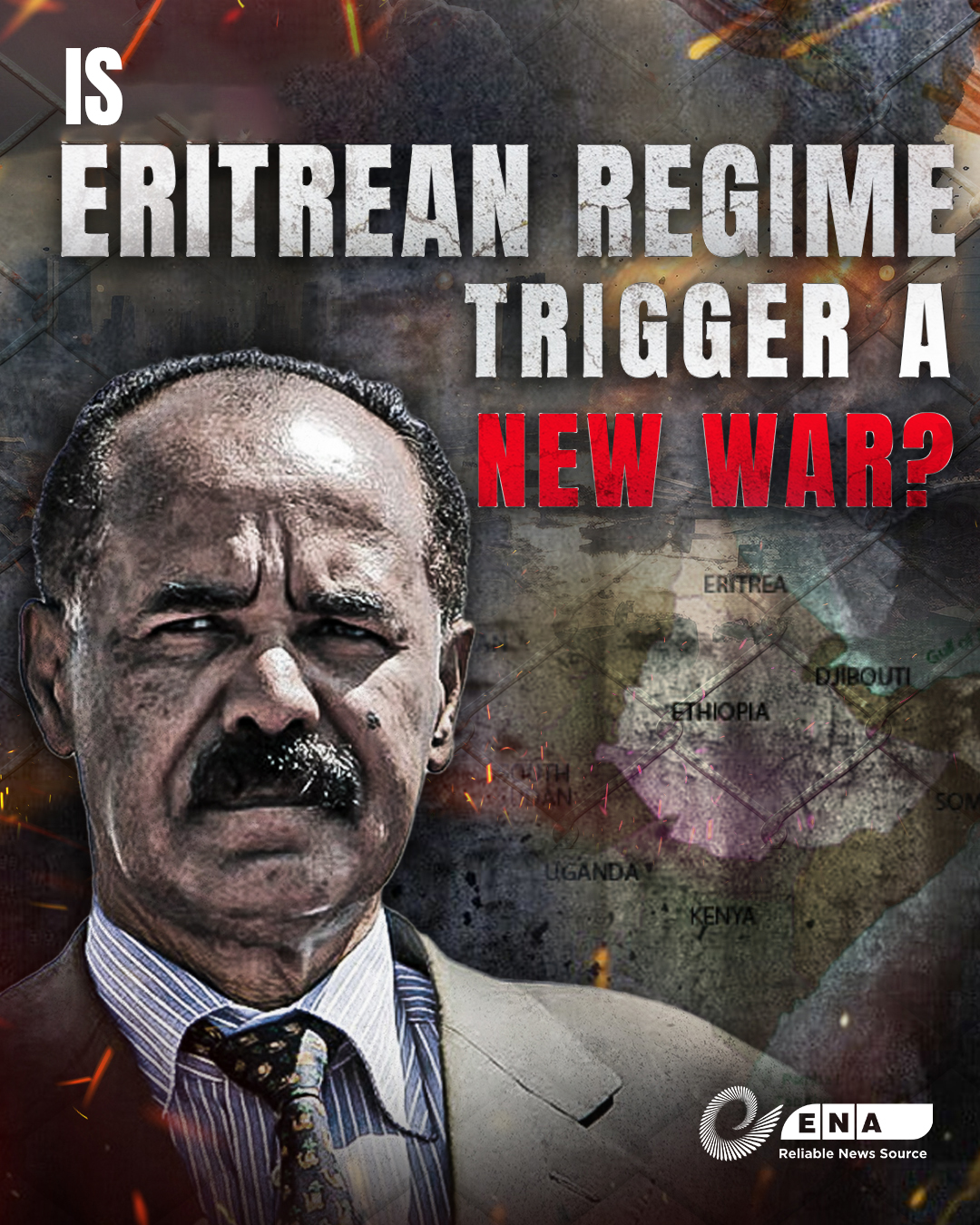
In what appears to be a blatant disregard for international law, the regime in Asmara has embarked on a dangerous path that risks pushing Ethiopia and Eritrea toward another devastating confrontation. Such actions could be interpreted as a grave provocation with serious consequences for regional security. This unholy alliance is not merely an Ethiopian crisis; it is a regional hazard.
This public spectacle is not simply a breach of diplomatic etiquette. It is a direct challenge to Ethiopia’s sovereignty and a deliberate disregard for the spirit of the 2022 Pretoria Peace Agreement. The Pretoria accord explicitly established the federal government’s sole authority over national defense, external relations, and territorial integrity.
Broken Pledges versus Federal Commitment
Tigray has been, and will always remain, an integral part of Ethiopia. However, by conducting public ceremonies to welcome foreign military figures, certain defunct TPLF actors have signaled a brazen contempt for the peaceful settlement that ended the conflict in northern Ethiopia. While the international community previously lauded the Pretoria Agreement as a historic step toward stability, the silence surrounding these open breaches exposes a striking double standard.
In stark contrast, the Ethiopian federal government has fully honored its commitments under the Pretoria Peace Agreement. The federal administration has restored basic services, re-established power grids, facilitated the return of internally displaced persons, and consistently disbursed regional budgets to foster stabilization and recovery.
The Asmara Strategic Miscalculation
While the Asmara leadership has remained hostile to a peaceful resolution from its inception, its collaboration with elements inside Tigray region risks plunging the region back into chaos. Historically, the ruling clique in Asmara operated under the flawed premise that Ethiopian strength was an existential threat to Eritrean national security. By denying Ethiopia direct sea access, Asmara calculated it could stifle the nation’s growth, but that policy failed when Ethiopia successfully pivoted its trade logistics through Djibouti.
The original vision promised to transform Eritrea into the “Singapore of the Horn of Africa.” Without economic cooperation with Ethiopia, that vision collapsed. Instead of working with Ethiopia to promote domestic economic development, the regime in Asmara expended vital resources—illegally extracted from its citizens—to fund anti-Ethiopian forces and cultivate alliances with destabilizing actors.
This policy of containment has impoverished Eritrea. Deprived of opportunity, hundreds of thousands of Eritrean youths have fled across the border into Ethiopia. The Eritrean youth population in Addis Ababa has grown so significantly that it rivals that of Asmara itself. Rather than building hope, jobs, and economic security at home, the regime has devoted its energy to encirclement strategies, collaborating with external actors such as Egypt and regional proxy networks to destabilize Ethiopia during one of the most transformative periods in its economic history.
Economic Transformation and Regional Momentum
These destabilization efforts come at a pivotal moment. Ethiopia is experiencing a historic economic breakthrough, transitioning from a traditional agricultural economy into an industrial and resource-driven powerhouse. Decades of reliance on coffee as the country’s primary foreign exchange earner are giving way to high-value mining, gold exports, natural gas development, and industrial manufacturing that could position Ethiopia among the largest fertilizer producers in the region.
This momentum has been highlighted internationally, including by CNN’s Connecting Africa, which underscored Ethiopia’s infrastructure-driven transformation. The Grand Ethiopian Renaissance Dam, generating more than 5,150 megawatts, stands as Africa’s largest hydroelectric facility, providing clean power for domestic industry and regional exports. Concurrently, the 12-billion-dollar Bishoftu International Airport megaproject, spearheaded by Ethiopian Airlines, is designed to accommodate up to 110 million passengers and nearly four million tons of cargo annually, potentially transforming intra-African trade under the African Continental Free Trade Area.
Alongside strategic investments in eco-tourism and natural heritage destinations such as Bale Mountains National Park, these developments signal an economic trajectory that offers hope not only for Ethiopia but for the entire continent.
As the anchor state of the Horn of Africa, Ethiopia’s economic trajectory and national security are of paramount importance. Conflict in Ethiopia would risk destabilizing the entire region, running counter to the collective interests of Africa and the broader international community. Make no mistake: Ethiopia will continue to pursue its development, overcome strategic obstacles, and seek a constructive role in the Red Sea and Horn of Africa corridor.
A Call for Global Accountability
No sovereign nation would tolerate external military interference on its soil. Ethiopia’s restraint in the face of these grave provocations should not be mistaken for weakness. It reflects a deliberate choice to prioritize lasting peace and spare its citizens another catastrophic war. But unilateral patience alone cannot guarantee long-term stability while the fundamental principles of international law and sovereignty are challenged.
The international community must not remain indifferent. Preserving the Horn of Africa’s primary economic engine requires a firm commitment to Ethiopia’s territorial integrity, the full implementation of the Pretoria Peace Agreement, and the withdrawal of any unauthorized foreign military involvement from Ethiopian territory. Lasting stability cannot be achieved through one-sided restraint, but through consistent respect for national sovereignty, international law, and the rule-based order.


