Ethiopia’s historic rise is shattering Cairo’s campaign of hostility - ENA English
Ethiopia’s historic rise is shattering Cairo’s campaign of hostility
By Jibril Lammo
Egypt’s approach to the Abay (Nile) River has been shaped by a doctrine of strategic dominance rather than equitable partnership. Successive governments in Cairo have sought to preserve a privileged position rooted in colonial-era arrangements that Ethiopia never accepted. From this perspective, a stronger, more self-reliant Ethiopia is not merely a neighboring state pursuing development. Evidently, the East African nation is confronting a regional order that Egypt has long sought to preserve.
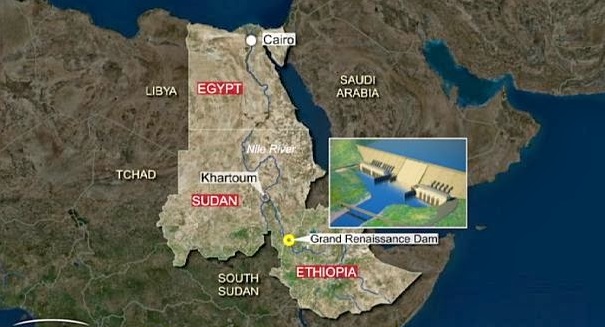
That mindset helps explain why Egypt has consistently opposed Ethiopia’s sovereign development agenda, particularly the Grand Ethiopian Renaissance Dam (GERD). Rather than embracing a framework of equitable Nile utilization, Cairo has repeatedly treated Ethiopia’s development as a geopolitical threat. The result has been a pattern of diplomatic pressure, regional maneuvering, and efforts to constrain Ethiopia’s strategic space.
In recent years, these efforts have extended beyond Abay itself. From Red Sea geopolitics to security and diplomatic dynamics in the Horn of Africa, Egypt has sought to build leverage around Ethiopia’s vulnerabilities. What emerges is a broader containment strategy: using regional alignments, diplomatic pressure, and political influence to keep Ethiopia under constant geopolitical strain.
A central feature of this strategy has been the exploitation of Ethiopia’s internal divisions. Throughout modern history, external actors have often attempted to convert domestic political fractures into strategic leverage against the Ethiopian state. Today, many Ethiopian analysts argue that some anti-government factions have increasingly aligned themselves with external actors whose interests converge on weakening Ethiopia’s national position.
The most controversial concern cooperation between elements of the TPLF and foreign actors hostile to Ethiopia’s strategic rise. Whether through political coordination, media amplification, or external backing, the perception within Ethiopia is that domestic instability is being internationalized. In that narrative, Ethiopia’s internal conflicts become instruments of external pressure rather than purely domestic political disputes.
This is where Egypt’s campaign has been most visible: psychological warfare, diplomatic obstruction, and media disinformation surrounding the GERD. For years, Egyptian officials have promoted catastrophic narratives about the dam, despite the absence of evidence that the GERD will permanently deprive downstream countries of Abay or Nile water. The dam does not consume the river; it regulates it.
The hydrological reality is difficult to ignore. The GERD can reduce destructive seasonal flooding, regulate river flows, decrease sediment accumulation in downstream reservoirs, and improve water management across the basin. These are not merely Ethiopian claims; they are issues widely discussed in technical and hydrological assessments of large upstream reservoirs.
More importantly, the GERD represents something far greater than a hydroelectric project. It is a symbol of African self-financing, technological ambition, and sovereign development. Built largely through Ethiopian public financing, it embodies a principle that has long unsettled those who believe the Nile should remain governed by inherited geopolitical privilege.
What Egyptian officials always appear to have underestimated is the resilience of the Ethiopian state and the depth of Ethiopian nationalism. External pressure has not broken Ethiopia’s determination; in many ways, it has strengthened it. The country’s ongoing efforts at national dialogue and internal reconciliation are aimed at reducing the very political fractures that foreign actors have historically sought to exploit.
At the same time, Ethiopia’s economic transformation is becoming increasingly difficult to dismiss. International attention has shifted from predictions of collapse to recognition of a country investing heavily in energy, infrastructure, logistics, and industrialization. CNN’s recent focus on Ethiopia’s economic trajectory reflects a broader reality: Ethiopia is increasingly being viewed as one of Africa’s most consequential emerging economies.
At the center of this transformation stands the GERD. With generation capacity exceeding 5,000 megawatts, it is laying the foundation for industrial expansion, export-oriented manufacturing, electrification, and regional energy integration. The project is not simply producing electricity; it is reshaping Ethiopia’s economic future.
This energy revolution is being complemented by major investments in transport and logistics. The planned Bishoftu International Airport project, led by Ethiopian Airlines, is designed to position Ethiopia as a continental aviation and cargo hub serving the African Continental Free Trade Area. Combined with investments in mining, renewable energy, tourism, and digital infrastructure, Ethiopia is building a more diversified and resilient economy.
That is the deeper significance of Ethiopia’s rise. Egypt’s strategy has been rooted in the assumption that pressure could delay or derail Ethiopia’s emergence. Instead, Ethiopia has continued to expand its infrastructure, strengthen its energy base, and deepen its economic integration with the continent.
The fundamental dispute is no longer only about a dam. It is about competing visions of the Nile and the Horn of Africa. One vision seeks to preserve historical dominance; the other insists on equitable development and sovereign equality.
History is moving in one direction. Ethiopia is not abandoning the principle of equitable Nile utilization, and it is not surrendering its right to lift millions of its citizens out of energy poverty. The GERD has become a symbol of that determination.
Egypt may continue to resist Ethiopia’s rise, but resistance is not the same as victory. The era in which a single state could dictate the future of the Abay (Nile) is steadily coming to an end. Ethiopia’s historic rise is not merely surviving Egypt’s hostility; it is exposing the limits of it.