CNN highlights GERD Landmark Engineering Achievement Transforming Ethiopia’s Remote Valley into Africa’s Largest Project - ENA English


CNN highlights GERD Landmark Engineering Achievement Transforming Ethiopia’s Remote Valley into Africa’s Largest Project
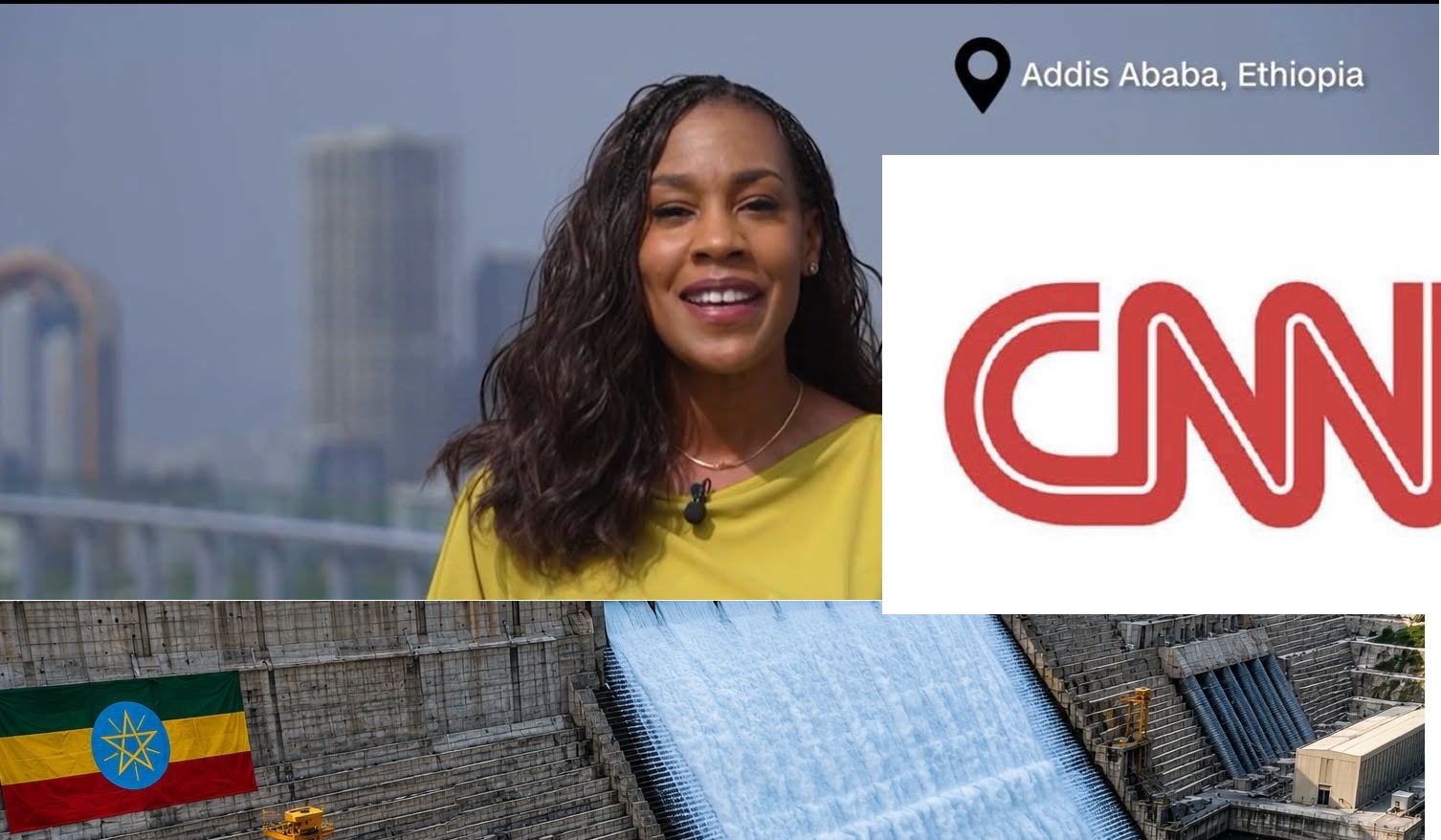
Addis Ababa, August 3, 2026 (ENA) —The U.S.-based Cable News Network (CNN) has spotlighted Ethiopia’s Grand Ethiopian Renaissance Dam (GERD) as one of Africa’s most remarkable engineering achievements.
The media company also portrayed the project as a symbol of the country’s broader economic transformation and infrastructure-driven development strategy.
In a feature on its Connecting Africa program, CNN journalist Victoria Rubadiri traveled to the GERD site in western Ethiopia, where she explored the scale of the dam and interviewed its Project Manager, Engineer Kifle Horo.
The documentary noted that while Ethiopia has long been known globally for its coffee exports, the country is increasingly diversifying its economy through major investments in renewable energy, mining, tourism, and large-scale infrastructure projects aimed at driving long-term growth and regional trade.
CNN described GERD as an unprecedented hydroengineering accomplishment on the African continent.
“Thousands of construction workers and engineers have transformed a remote valley to build Africa’s largest hydroelectric dam. Today, at a height of 145 meters and stretching 1.8 kilometers across the Blue Nile, the Grand Ethiopian Renaissance Dam is truly a sight to behold,” the network reported.
Engineer Kifle Horo, Project Manager of GERD, said the power plant has an installed generation capacity of about 5,150 megawatts, making it the largest hydroelectric facility in Africa and a major contributor to Ethiopia’s electricity production.
It contributes more than 50 precent, he pointed out.
Built on the Blue Nile River, construction of GERD began in 2011, and the project officially entered operation in September 2025.
Moreover, Kifle told CNN that one of the greatest challenges during construction was logistics.
“We are around 1,400 kilometers from the port of Djibouti. Transporting heavy equipment to the site took between 60 and 90 days,” he said, highlighting the complexity of building a mega-infrastructure project in a remote location.
CNN also emphasized what it described as the dam’s most distinctive feature: its financing model.
Unlike many large infrastructure projects in developing countries, GERD was built primarily through domestic financing, with Ethiopians contributing through public donations, government-issued bonds, and national budget allocations.
“We have no single coin from outside Ethiopia. This project was constructed by Ethiopians, and the total cost—estimated at between 4.2 and 5 billion U.S. dollars—was financed entirely by Ethiopians,” Kifle said.
The report presented GERD not only as a massive energy project but also as a rare example of a nationally funded mega-dam built through broad public participation.
Addressing concerns raised by Egypt as a downstream country, Kifle reiterated Ethiopia’s position that the dam is designed for hydropower generation rather than water consumption.
“This is not a water-consumptive project. Whatever water comes in goes out. The main challenge was during the filling period, which took five years. Ethiopia advocates equitable and sustainable use of shared water resources without causing significant harm to downstream countries,” he said.
CNN’s feature framed GERD as more than a dam, portraying it as a transformative infrastructure project that has turned a once-isolated valley into a strategic energy hub with the potential to support industrialization, expand electricity access, and strengthen regional economic integration across East Africa.
By highlighting both the engineering scale of the project and its domestically financed construction, the network underscored GERD’s significance as one of the continent’s most consequential infrastructure achievements of the 21st century, it was learned.


