Water Minister Says Green Legacy Benefiting Not Only Ethiopia but Neighbors, Downstream Nations - ENA English
Water Minister Says Green Legacy Benefiting Not Only Ethiopia but Neighbors, Downstream Nations
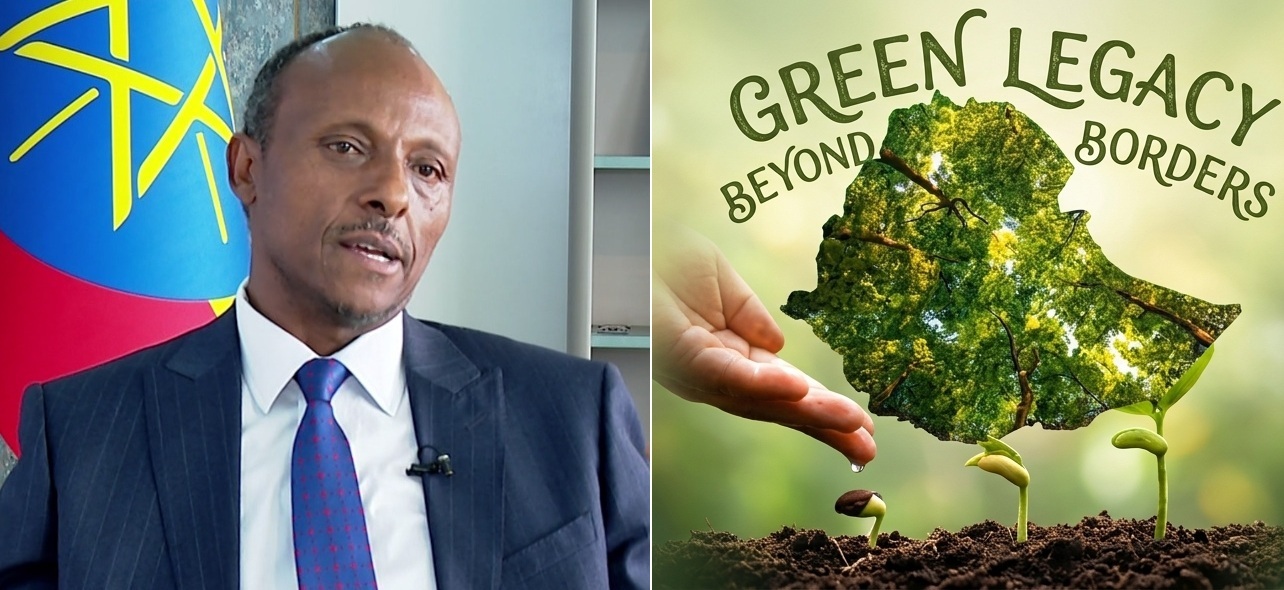
Addis Ababa, August 2, 2026 (ENA—Ethiopia's Green Legacy Initiative (GLI) is not only delivering measurable improvements in water resources, dam sustainability and agricultural productivity through scientifically proven environmental restoration, but also benefiting neighboring and downstream countries, Water and Energy Minister Habtamu Itefa said.
In an exclusive interview with ENA, the Minister also underscored the need to explore internationally recognized Payment for Ecosystem Services (PES) mechanisms.
According to Habtamu, the environmental restoration program has transformed degraded watersheds, enabling more rainfall to infiltrate the soil instead of being lost as destructive surface runoff.
Vegetation cover plays a critical role in the hydrological cycle by increasing groundwater recharge, reducing soil erosion and improving river flows.
He said the ministry has scientifically verified the impact of the Green Legacy Initiative through satellite data and watershed studies conducted in several river basins.
Studies undertaken in Upper Awash, the Abay (Blue Nile) Basin and the Hawassa catchment have shown significant improvements in vegetation cover, accompanied by the re-emergence of springs and streams that had previously dried up.
"There are areas where rivers and small streams had disappeared because of deforestation. Following large-scale reforestation, these water sources have begun to recover, and springs are flowing again," the Minister said.
Improved vegetation has also enhanced water quality by reducing sedimentation as tree roots and ground cover stabilize soil and prevent erosion.
The reduced sediment load entering rivers and reservoirs has become increasingly important for Ethiopia's hydropower infrastructure.
"The more water we store in our dams and the less sediment entering them, the greater our capacity to generate electricity while extending the operational life and safety of the dams."
Habtamu noted that the initiative is also improving agricultural productivity by increasing dry-season water availability for irrigation.
Communities across Ethiopia are increasingly cultivating wheat, vegetables and fruits using rivers and springs that have become more reliable due to watershed rehabilitation, he added.
Beyond its national benefits, the Minister said Ethiopia's Green Legacy Initiative is contributing to climate change mitigation by increasing carbon sequestration while improving water availability across the region.
"Ethiopia is not only planting trees for itself. By restoring our watersheds, we are reducing carbon emissions, increasing oxygen production and improving water flows that benefit neighboring countries."
Neighboring countries like Kenya, Somalia, South Sudan are benefiting from improved river flows and reduced flood risks resulting from Ethiopia's watershed conservation efforts, the Minister elaborated.
He noted that nearly 30 percent of the more than 48 billion seedlings planted under the Green Legacy Initiative are in the Abay, Baro and Tekeze river basins, which contribute significant transboundary water resources.
These investments help regulate river flows during dry seasons while reducing flooding downstream, the Minister added.
Both Sudan and Egypt are benefitting from the investments as they could get more water, Habtamu said, calling for greater international recognition of Ethiopia's investment in environmental restoration that provides ecosystem services which extend well beyond its borders.
The Minister further underscored the need to explore internationally recognized Payment for Ecosystem Services (PES) mechanisms, arguing that Ethiopia's investments in watershed protection generate measurable environmental and water-resource benefits for downstream countries.
"Ethiopia is investing land, resources, time and labor to protect these watersheds. This creates benefits that have economic value, and such contributions should be scientifically assessed under internationally accepted Payment for Ecosystem Services frameworks," Habtamu said.
He emphasized that any future discussions on ecosystem compensation should be supported by rigorous scientific research and international best practices.
Habtamu concluded by saying Ethiopia's Green Legacy Initiative has evolved beyond a tree-planting campaign into a comprehensive environmental restoration program that is strengthening water resources, supporting food security, improving renewable energy generation and contributing to regional environmental sustainability.