49th Ordinary Session of AU Executive Council Wraps Up in Addis Ababa - ENA English


49th Ordinary Session of AU Executive Council Wraps Up in Addis Ababa
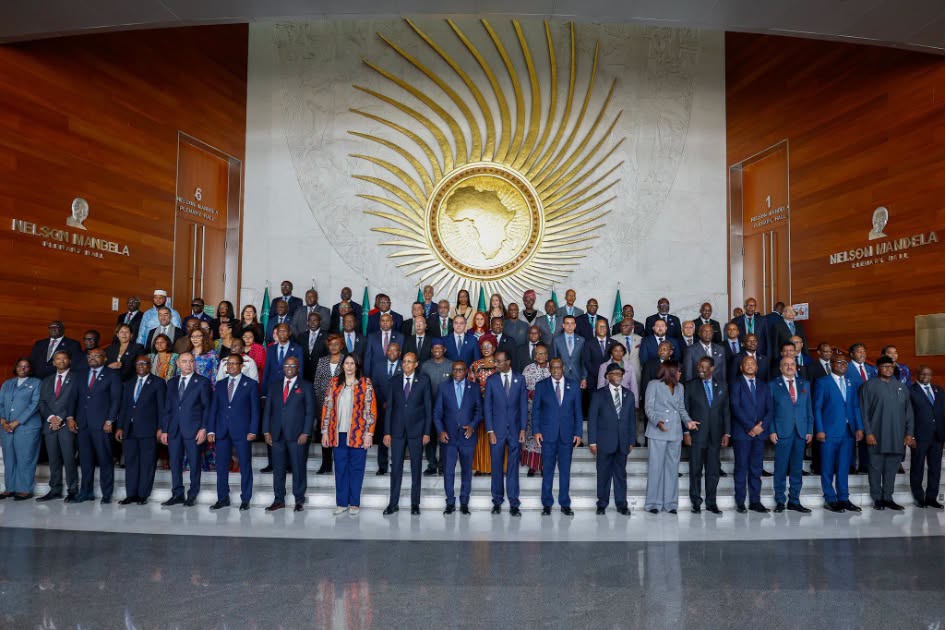
Addis Ababa, July 29, 2026 (ENA) —A two-day 49th Ordinary Session of the African Union (AU) Executive Council concluded in Addis Ababa after high-level deliberations on the continent’s development priorities, institutional reforms, and sustainable financing.
The session, held under the African Union’s 2026 Theme of the Year, “Assuring Sustainable Water Availability and Safely Managed Sanitation Systems to Achieve the Goals of Agenda 2063,” focused on the AU’s policy agenda ahead of the AU Assembly of Heads of State and Government.
The meeting also explored ways to forge coordinated strategies to address Africa’s pressing development challenges while accelerating the continent’s long-term vision for integration, prosperity, and sustainable development.
The opening ceremony was attended by senior African and international leaders, including African Union Commission Chairperson Mahmoud Ali Youssouf, Ethiopia’s Minister of Foreign Affairs Gedion Timothewos, United Nations Under-Secretary-General and Executive Secretary of the United Nations Economic Commission for Africa (UNECA) Claver Gatete, and Burundi’s Minister of Foreign Affairs and Development Cooperation, Édouard Bizimana, who chaired the Executive Council session.
Foreign ministers from AU member states, senior government officials, diplomats, and representatives of regional and international organizations participated in the meeting.
During the two-day session, ministers deliberated on a wide range of strategic priorities aimed at deepening regional integration, strengthening cooperation among member states, and advancing the implementation of Agenda 2063, the African Union’s blueprint for an integrated, prosperous, and peaceful continent.
Key agenda items included reviewing progress in the implementation of Agenda 2063, assessing decisions and institutional frameworks adopted under both the former Organisation of African Unity (OAU) and the African Union, and evaluating achievements made under the AU’s 2026 Theme of the Year.
The Executive Council also formulated policy recommendations and draft decisions for consideration and adoption by the AU Assembly of Heads of State and Government, reinforcing its central role in shaping the continent’s political, economic, and development priorities.
African Union Commission Chairperson Mahmoud Ali Youssouf welcomed the decision on enhanced member-state contributions, describing it as a demonstration of the commitment to financing Africa’s development agenda despite prevailing global economic challenges.
“I want to seize this opportunity to thank Kenya and Ethiopia for their decision to join Tier 1. This shows that, with the conviction of our member states to move Agenda 2063 forward, the Commission will have the necessary resources,” he said.
“I am particularly encouraged by the decision of our member states to revise the scale of assessment. I know that this decision is a difficult one given the economic situation and the impact of the current geopolitical environment on the continent. As the economic situation is difficult for everybody, these efforts are truly appreciated.”
Closing the session, Executive Council Chairperson and Burundi’s Minister of Foreign Affairs and Development Cooperation, Ambassador Édouard Bizimana, praised the spirit of consensus demonstrated throughout the meeting and said the latest financing commitments reflected growing African solidarity and determination to build a stronger and more self-sustaining Union.
“I want to express satisfaction at a major achievement, namely the sovereign decision of the Federal Democratic Republic of Ethiopia and the Republic of Kenya to increase their annual contribution and join the first category, Tier 1, for 2027–2029 under the Harmonized Scale of Assessment.
This exemplary gesture of African solidarity and Pan-Africanism reaffirms their unwavering commitment to sustainable financing and strengthens our collective resolve to build a strong, united African Union capable of financing its own ambitions,” Bizimana said.
The decisions adopted during the two-day session will now be transmitted for implementation across the African Union Commission, AU organs, and member states, while also shaping the agenda for the upcoming AU Assembly of Heads of State and Government.
The resolutions are expected to guide the Union’s work on institutional reform, sustainable financing, regional integration, peace and security, and the implementation of Agenda 2063 in the months ahead.


