New Central Lab Pivotal to Boost Ethiopia's Defense Capabilities, Says Minister Aisha - ENA English
New Central Lab Pivotal to Boost Ethiopia's Defense Capabilities, Says Minister Aisha
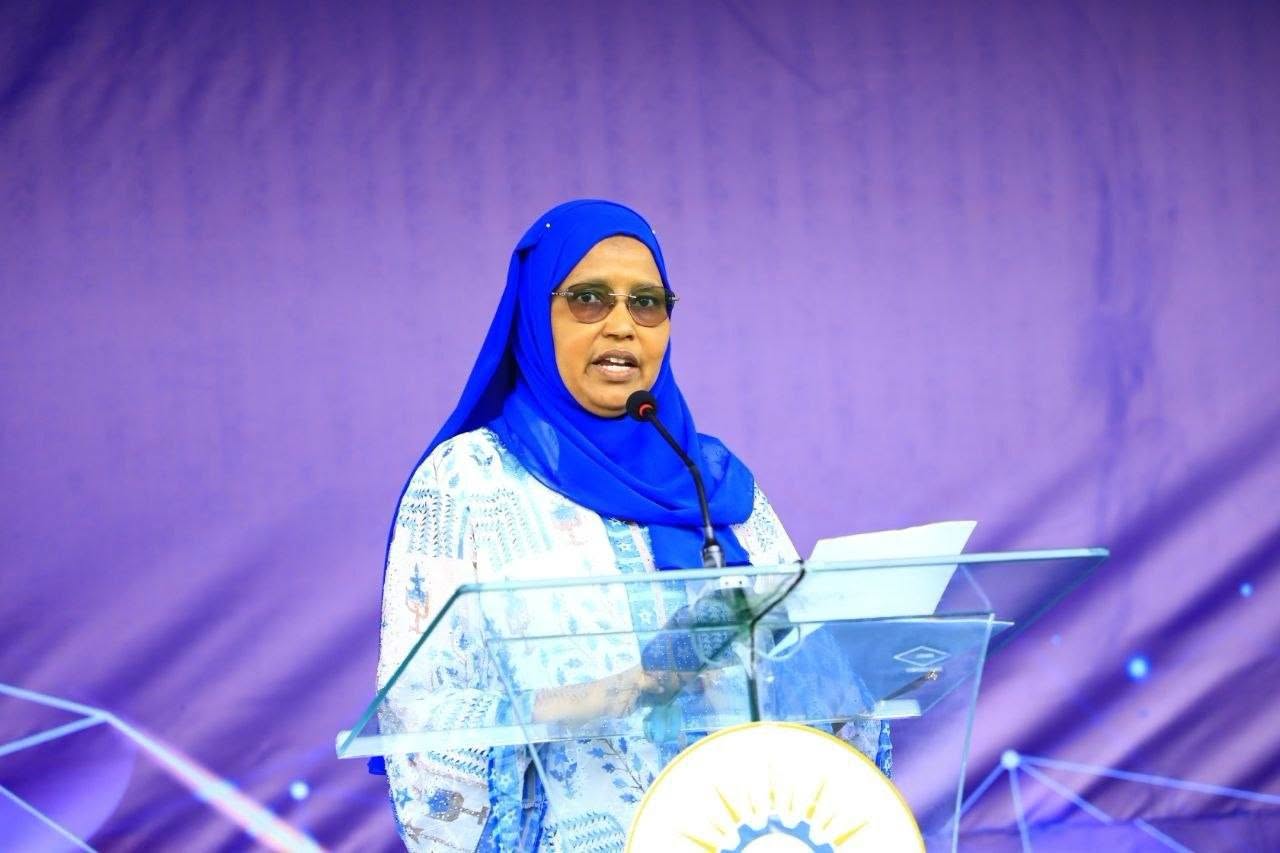
The newly inaugurated Advanced Central Laboratory at the Ethiopian Defense University will significantly bolster Ethiopia’s national defense capabilities through scientific research, technological innovation, and specialized training, Defense Minister Aisha Mohammed, said.
The Ethiopian Defense University officially opened the state-of-the-art facility today.
Speaking at the inauguration ceremony, Minister Aisha described the laboratory as a major milestone in enhancing education, specialized training, innovation, and scientific research within Ethiopia's defense sector.
She emphasized that the facility will strengthen national defense capabilities through advanced technology and specialized expertise, while simultaneously expanding the nation's broader educational and institutional capacity.
"The Advanced Central Laboratory represents the beginning of a monumental chapter that will turn knowledge into professional competence, research into innovation, and innovation into practical solutions that serve the nation," the minister said.
According to Aisha, the laboratory will support expert-led research aligned with Ethiopia's long-term strategic interests.
"The laboratory is a practical research initiative designed to transform knowledge into operational strength and nation-building outcomes," she said, noting that the facility will elevate the university's research capacity and provide a modern scientific foundation for national security.
The minister also highlighted that the project reflects the enduring friendship, mutual trust, and strategic partnership between Ethiopia and the United Arab Emirates.
"The cooperation between Ethiopia and the United Arab Emirates (UAE) has entered a new stage focused on national security, technological transformation, and institutional modernization," Aisha said, expressing confidence that the facility will serve as a symbol of bilateral cooperation while contributing to regional peace and defense capabilities.
Ethiopian Defense University President Brigadier General Kebede Regassa echoed these sentiments, calling the Advanced Central Laboratory a national strategic asset that will enhance Ethiopia's capacity to respond to rapidly evolving security challenges.
More than just a physical facility, he described the laboratory as a symbol of the enduring partnership between Ethiopia and the United Arab Emirates.
He highlighted that the center integrates world-class capabilities across multiple disciplines, including artificial intelligence, cybersecurity, communication engineering, automation and control systems, power engineering, adaptive prototyping and nursing simulation.
"The success of the center will be measured not only by its equipment, but by the professionals it trains, the research it produces, the innovations it generates, the technologies it transfers, and the impact it delivers to Ethiopia's defense sector, industry, and society," the president said.
According to him, the center will foster cross-sector collaboration among academia, industry, government, and international partners, promoting locally developed technologies that drive industrial growth, reduce foreign dependence, and build sustainable national value.
UAE Defense Attaché Mohammed Al Mimi also praised the initiative, describing the project as an iconic milestone in bilateral relations that marks the beginning of deeper collaboration in technology and innovation.
Al Mimi also reaffirmed the United Arab Emirates' commitment to its long-standing partnership with Ethiopia, noting that the laboratory will accelerate technology implementation and bolster the country's scientific and technological capacity.
Solar panels installed across multiple sections of the facility generate clean energy and operate in integration with conventional power sources to help ensure stable and uninterrupted operations. Solar inverters and battery-storage systems enable energy to be stored and used when required, helping minimize disruptions to research, training and laboratory activities.
The facility also includes a solar water-heating system, further strengthening its energy efficiency and sustainability.
The integrated solar infrastructure is expected to reduce energy costs, limit pollution through the use of clean energy and help mitigate the impact of power interruptions on laboratory operations.
Beyond education and research, the Ethiopian Defence University plans to utilize the laboratory to provide specialized consultancy services in areas including cybersecurity, power infrastructure and logistics engineering.
The facility will also support advanced vocational training, technical mentorship and professional workshops, while creating platforms for knowledge exchange and stronger collaboration among academia, industry and the wider community.
The inauguration marks a significant step in Ethiopia’s efforts to strengthen its scientific and technological capabilities and develop a highly skilled workforce equipped to respond to the increasingly complex security, industrial and technological challenges of the 21st century.