How the GERD Challenged Decades of Hydro-Hegemony - ENA English
How the GERD Challenged Decades of Hydro-Hegemony
By Yordanos D.
For generations, Ethiopia watched its rivers flow northward while millions of its own citizens remained without reliable electricity, modern irrigation, or adequate access to clean water.
From the Ethiopian highlands, the Abay, known downstream as the Blue Nile; together with the Tekeze and Baro-Akobo river systems, carries the overwhelming majority of the Abay’s waters. Yet the country from which these rivers originate remained one of Africa’s least electrified nations for decades.
To many Ethiopians, this was more than an economic paradox. It was a historical injustice.
The question was simple but profound: How could a country that contributes the largest share of the Abay (Nile)’s waters remain unable to use its own natural resources to light homes, power industries, irrigate farmland, and lift millions out of poverty?
For Ethiopia, the answer lies in a combination of colonial-era arrangements, geopolitical pressure, financial constraints, domestic instability, and what successive Ethiopian governments, scholars, and policymakers have described as a longstanding system of hydro-hegemony in the Nile Basin.
At the center of that struggle stood Egypt, the principal downstream opponent of Ethiopia’s efforts to develop the Abbay River.
For decades, Ethiopia has argued that Egypt sought to preserve a historical order in which downstream interests dominated decisions over the Abay, while upstream countries, particularly Ethiopia were expected to accept restrictions on their own development.
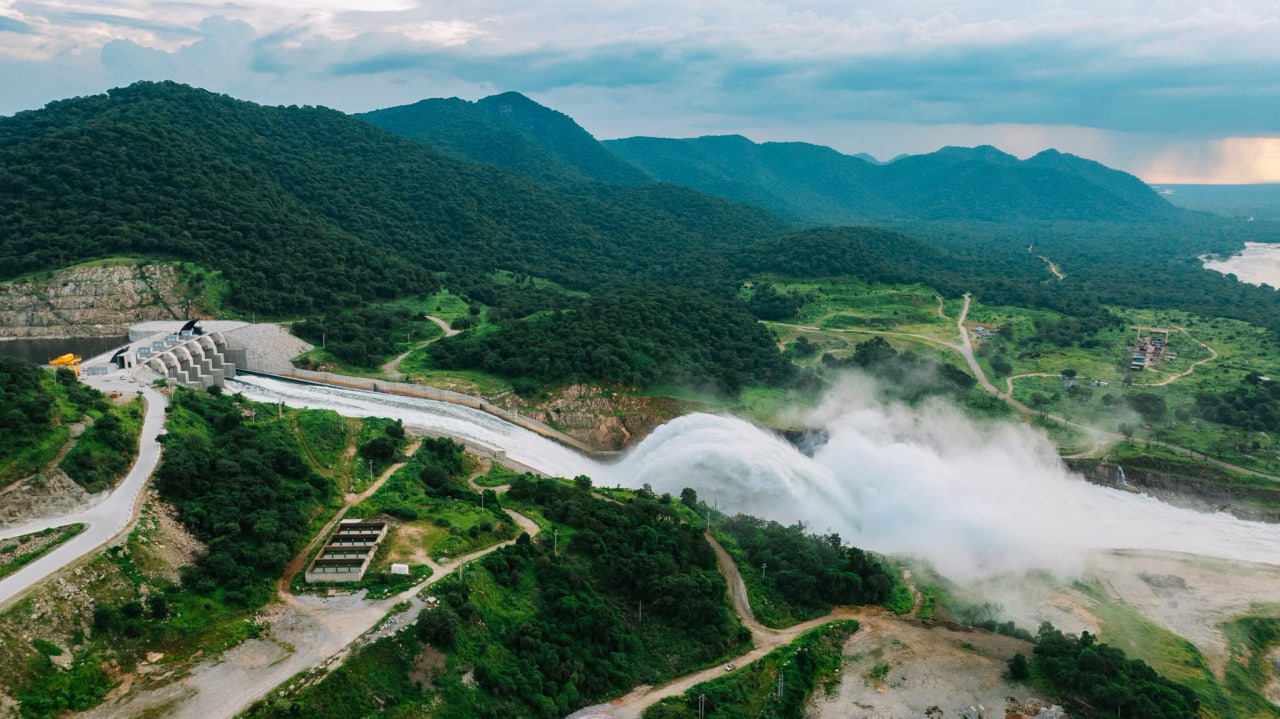
The construction and completion of the Grand Ethiopian Renaissance Dam (GERD), however, changed that equation.
The dam did more than generate electricity. It challenged an old political and diplomatic order, forced a reconsideration of power relations in the Nile Basin, and demonstrated that a major African infrastructure project could be built through national determination and domestic resource mobilization despite intense geopolitical opposition.
The Historical Roots of a Disputed Order
The roots of the Abay dispute reach deep into the colonial era.
Among the agreements most frequently cited in Ethiopia’s objections is the 1929 Anglo-Egyptian Nile Waters Agreement. Negotiated by Great Britain on behalf of its East African colonies and Egypt, the agreement did not include Ethiopia—even though the Ethiopian highlands are the source of the majority of the waters flowing into the Nile system.
The arrangement granted Egypt significant influence over upstream water development and reinforced a system that Ethiopian scholars and policymakers argue was created without the participation or consent of the principal upstream country.
Three decades later, Egypt and Sudan signed the 1959 Nile Waters Agreement. The treaty allocated 55.5 billion cubic meters of the Nile’s annual flow to Egypt and 18.5 billion cubic meters to Sudan.
No upstream Nile country was party to the agreement.
For Ethiopia, this was a fundamental problem. A river system whose waters originate overwhelmingly in the territories of upstream states had effectively been divided through an agreement negotiated by two downstream countries.
Ethiopia has consistently rejected the notion that such agreements can determine the rights of countries that were not parties to them. Ethiopian legal experts and policymakers argue that modern international water law is based on principles of equitable and reasonable utilization, cooperation, and the obligation to avoid significant harm—not on the permanent preservation of historical privilege.
This disagreement lies at the heart of the Abay (Nile) dispute.
For Ethiopia and other upstream countries, the question is not whether downstream states have legitimate water-security concerns. Rather, it is whether those concerns can be used to deny upstream countries the right to develop their own resources.
When Development Became a Geopolitical Question
Throughout the second half of the twentieth century, Ethiopia explored a number of hydropower and water-development projects on the Abbay River.
Many failed to materialize.
Some were undermined by domestic political instability. Others faced financial and technical limitations. Ethiopia also lacked the infrastructure and institutional capacity required to implement projects of enormous scale.
But the country’s development challenges were compounded, Ethiopian policymakers and analysts argue, by sustained diplomatic opposition to major upstream water projects.
Whenever Ethiopia proposed large-scale development initiatives on the Abbay, the issue frequently became entangled in regional and international politics.
Egypt consistently opposed projects that it believed could affect its downstream water interests. Ethiopian officials and scholars have argued that Cairo also sought to discourage international financial institutions, bilateral donors, and potential investors from supporting major Ethiopian projects on the river.
Whether through direct diplomatic lobbying or the broader political sensitivity surrounding Nile infrastructure, the result was a development environment in which financing major projects became extraordinarily difficult.
For Ethiopia, water development was therefore never merely a technical or economic matter. It became a question of sovereignty.
Could a country be expected to remain poor because the rivers flowing through its territory eventually cross international borders?
Could the historical use of a shared river by downstream states permanently prevent upstream countries from meeting the basic needs of their own populations?
These questions increasingly shaped Ethiopia’s approach to the Abay River.
The GERD: A New Chapter in the Abay Basin
The launch of the Grand Ethiopian Renaissance Dam in 2011 marked a dramatic turning point.
Instead of waiting for international financing or external approval, Ethiopia decided to build the project largely through its own resources.
The decision was extraordinary.
The government launched a nationwide fundraising campaign that mobilized citizens from all walks of life. Civil servants contributed portions of their salaries. Businesses purchased bonds. Farmers, students, religious institutions, and members of the Ethiopian diaspora contributed to the project.
The dam became a national cause.
For millions of Ethiopians, the GERD was no longer simply an infrastructure project. It became a symbol of self-reliance and national dignity—a declaration that Ethiopia would no longer allow financial constraints or external political pressure to determine whether its people could access electricity and development.
The project also demonstrated the power of domestic resource mobilization in a country with limited access to conventional international financing for major infrastructure projects.
The GERD was built through public contributions, bond sales, government resources, and the collective financial commitment of Ethiopians at home and abroad.
The scale of the national campaign was unprecedented in modern Ethiopian history.
As construction progressed, the dam increasingly came to represent a broader national aspiration: the right of a country to use its natural resources to fight poverty, expand electricity access, industrialize its economy, and create opportunities for its people.
Prime Minister Abiy Ahmed has repeatedly described the project as a symbol of Ethiopia’s determination to shape its own future.
“No force can stop Ethiopia from building a dam on the Abay,” he once said.
On another occasion, he emphasized the wider significance of the project, declaring that the GERD had brought Ethiopia a wealth greater than its GDP and that “the era of begging for a handout has ended.”
For Ethiopia, the message was clear: development could no longer be postponed indefinitely in the name of preserving an old regional order.
A Dam at the Center of Egypt’s Unfounded Propaganda
The GERD quickly became one of Africa’s most closely watched infrastructure projects.
Egypt brought the dispute to regional and international forums, including the Arab League and the United Nations Security Council, arguing that the dam posed risks to its vital water security.
Ethiopia, meanwhile, maintained that the GERD was fundamentally a non-consumptive hydropower project. It repeatedly says the dam does not permanently divert water from the Nile system.
Water passes through turbines to generate electricity before continuing downstream.
Ethiopian officials and water experts have also emphasized the dam’s potential regional benefits.
The GERD is expected to regulate the seasonal flow of the Abay, reduce the severity of flooding downstream, trap sediment that can damage infrastructure, and generate large quantities of clean, renewable electricity.
Ethiopia has also affirmed that regulated water releases could improve predictability in the downstream flow of the river.
Ambassador Ibrahim Idris has underscored this position, explaining that water used to generate electricity flows back into the river system rather than being consumed.
Water-resources expert Yilma Seleshi, PhD, has likewise pointed to the potential benefits of storing water in the cooler Ethiopian highlands, where evaporation losses may be lower than in hotter downstream environments.
From Ethiopia’s perspective, the central issue is therefore not whether downstream countries have legitimate concerns, but how those concerns can be addressed without denying upstream countries their own right to development.
The debate has revealed a deeper disagreement.
Egypt has historically emphasized the protection of existing water uses and downstream security.
Ethiopia has emphasized sovereign development rights, equitable and reasonable utilization, and the need for a more inclusive basin-wide framework.
The dispute is therefore about more than the operation of a single dam.
It is about who has the authority to shape the future of an entire river basin.
Breaking the Financing Barrier
Perhaps the most significant achievement of the GERD was not only its engineering scale but the manner in which Ethiopia financed it.
For decades, the country struggled to secure external financing for major projects on the Abbay River amid political opposition and regional sensitivities.
The GERD changed the model.
Ethiopia turned inward—not in isolation, but in search of national capacity.
The project became one of the largest examples of domestic resource mobilization for strategic infrastructure in modern African history.
The campaign crossed social and economic boundaries.
A civil servant’s contribution, a farmer’s donation, a student’s support, a business investment, and a diaspora contribution all became part of the same national effort.
The dam’s financing campaign transformed a complex infrastructure project into a shared national undertaking.
That collective participation also gave the GERD a political significance that extended far beyond its power-generation capacity.
It became a symbol of what Ethiopia could achieve when a strategic national project was backed by broad public participation.
The dam represented a rejection of the idea that Africa’s major development projects must always depend on external financing, external approval, or external political acceptance.
From Energy Deficit to Regional Powerhouse
With an installed generation capacity of more than 5,000 megawatts, the GERD is set to become Africa’s largest hydroelectric power facility.
Its significance for Ethiopia is immense.
For decades, insufficient electricity constrained industrial growth, limited economic opportunities, and left millions of Ethiopians without reliable access to power.
The GERD offers the potential to transform that reality.
More electricity can support manufacturing, digital services, education, health care, agriculture, and the expansion of small and medium-sized businesses.
It can also strengthen Ethiopia’s position as a regional energy supplier.
Cross-border electricity trade has the potential to deepen economic integration across East Africa, connecting national economies through shared energy infrastructure.
In this sense, the GERD is not only an Ethiopian project.
Its long-term impact could extend across the region.
A more interconnected East African electricity market could reduce energy shortages, improve reliability, support industrial development, and create new opportunities for regional cooperation.
The End of an Old Hydro-Political Order?
The completion of the GERD has fundamentally altered the political landscape of the Abay (Nile) Basin.
For decades, upstream countries faced enormous political and financial obstacles when attempting to develop the river’s resources.
Ethiopia’s success demonstrated that the old order could be challenged.
The country did not abandon diplomacy. It did not reject cooperation. But it refused to accept the idea that development could be permanently suspended because of historical arrangements that it never signed.
The GERD therefore represents a profound shift in the Nile Basin.
It has strengthened Ethiopia’s confidence in its ability to pursue large-scale development projects through national capacity.
It has also encouraged a broader debate among upstream countries about the relationship between sovereignty, development, and transboundary water cooperation.
The future of the Nile Basin will inevitably require compromise.
Egypt’s water-security concerns cannot simply be dismissed. Nor can the development aspirations of Ethiopia and other upstream states be indefinitely subordinated to historical claims.
The challenge is to build a framework in which both realities can coexist.
That means cooperation based on contemporary international water law, transparent data sharing, coordinated dam operations, confidence-building measures, and a recognition that the Nile is not a zero-sum resource.
The prosperity of one country does not necessarily require the poverty of another.
A New Chapter for Ethiopia and Abay River
For Ethiopia, the GERD represents the culminate
on of a struggle that lasted generations.
It is the product of engineering, political commitment, national sacrifice, and unprecedented public mobilization.
But its meaning extends beyond the dam itself.
The project has challenged the idea that historical water arrangements can permanently determine the development prospects of countries that were excluded from their creation.
It has demonstrated that a major African country can mobilize its own citizens to finance a transformative national project.
It has expanded Ethiopia’s energy potential and created new possibilities for regional electricity trade.
And, perhaps most importantly, it has changed the psychology of the Nile Basin.
The GERD has shown that the upstream countries are no longer prepared to remain passive observers of decisions concerning the rivers that originate in their territories.
For Ethiopia, the completion of the dam marks the end of one era and the beginning of another.
The country that once watched its rivers flow downstream while millions remained in darkness is now using those waters to generate electricity, power industry, and support national development.
Abay is still a shared river.
Its future will depend on cooperation.
But the political geography of the basin has changed.
The era in which Ethiopia’s development could be constrained indefinitely by inherited arrangements, external pressure, or the absence of international financing is increasingly becoming a matter of history.
The GERD stands as a monument to that transformation.
For Ethiopia, it is a dam.
For the Nile Basin, it is a geopolitical turning point.
And for Africa, it is a powerful reminder that development, when backed by national determination and collective sacrifice, can eventually overcome even the most deeply entrenched barriers.