WHO Commends Ethiopian Public Health Institute’s Contribution to Continental Public Health - ENA English
WHO Commends Ethiopian Public Health Institute’s Contribution to Continental Public Health
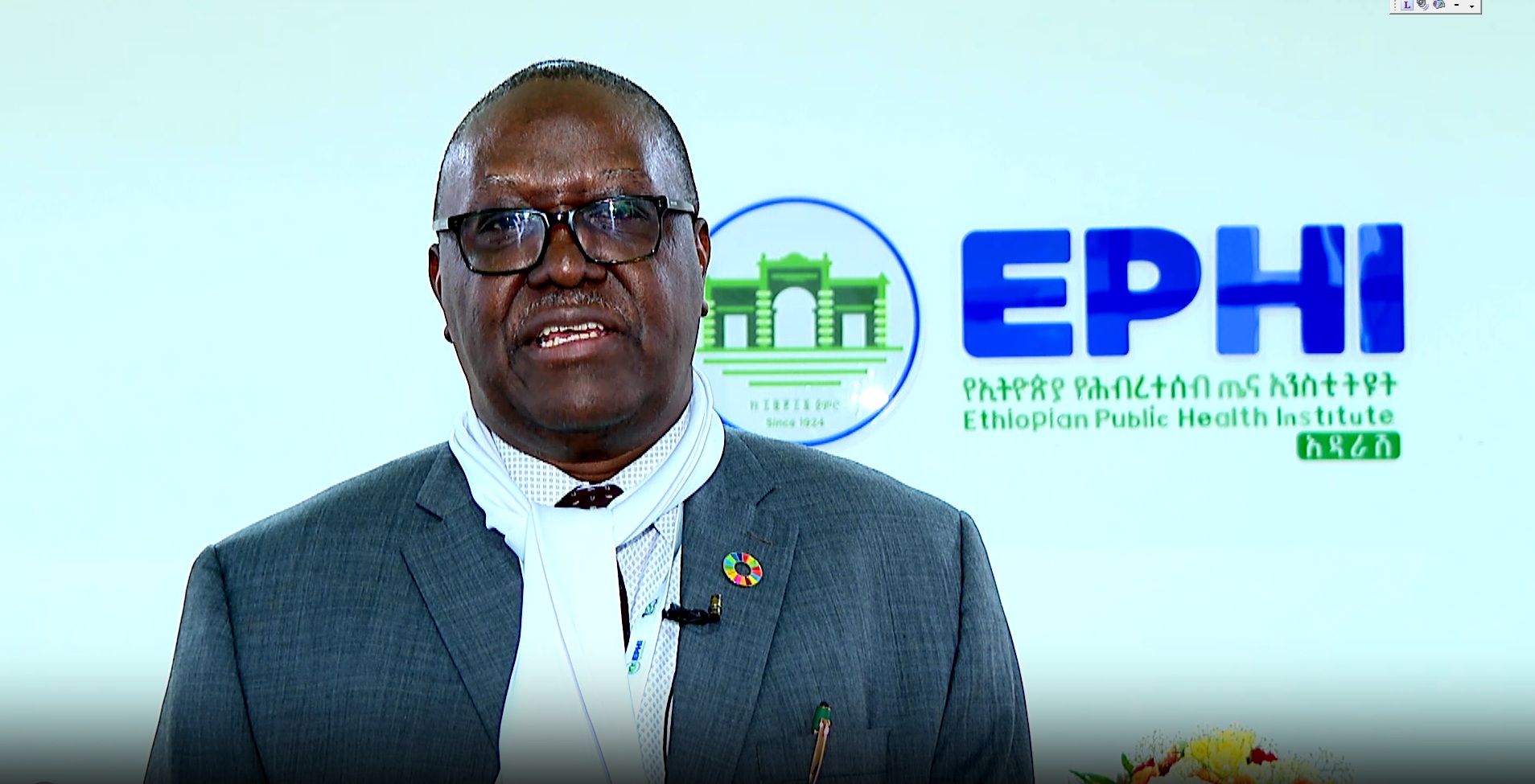
Addis Ababa, July 24, 2026 (ENA) — The World Health Organization (WHO) has commended the Ethiopian Public Health Institute (EPHI) for its outstanding performance at home and contribution to strengthening public health systems across Africa.
Speaking to ENA during EPHI's centennial celebrations held from July 16 to 18, 2026, WHO Representative to Ethiopia, the African Union, and UNECA, Francis Kasolo, emphasized that the institute as one of the continent's leading centers for disease surveillance, emergency preparedness, laboratory excellence, and health innovation.
The institute has evolved into a continental benchmark for primary healthcare, public health research, and emergency response, reflecting a century of sustained progress in protecting the health of Ethiopians and supporting regional health security, he added.
"It's really a great achievement in the sense that over the past 100 years, the institute has evolved into being one of the strongest public health institutes on the continent of Africa," Kasolo said.
He noted that WHO and EPHI have maintained a partnership spanning more than seven decades, with cooperation expanding from disease prevention and control to advanced disease surveillance, laboratory networking, research, workforce development, and emergency preparedness.
"We have seen, as an organization, that the institute has partnered with us for over 70 years," he said.
"It has capacity in surveillance, including electronic surveillance, laboratory networking, capacity building for its staff, and has developed substantial capabilities to respond effectively to public health emergencies and disease outbreaks."
According to Kasolo, EPHI's performance during recent disease outbreaks demonstrates the growing strength and resilience of Ethiopia's public health system.
He cited the country's response to the recent Marburg virus outbreak as a notable example of effective coordination and rapid action.
"A typical example is that the institute, together with the Ministry of Health and the government, led the response to the recent Marburg virus outbreak, which was controlled within 60 days. This clearly shows that Ethiopia, through the institute, has enormous capacities that many African countries would admire and aspire to have," he said.
Kasolo also revealed that WHO is working toward designating EPHI as a WHO Collaborating Centre in recognition of its expanding technical expertise, scientific leadership, and growing contribution to regional and global public health.
"It has developed a lot of capacities, and that's why the World Health Organization is working on recognizing it as a WHO Collaborating Centre," he said.
Beyond emergency preparedness, Kasolo praised Ethiopia's Health Extension Program as one of the country's most transformative public health innovations, noting that it has significantly expanded access to essential healthcare services, particularly in rural communities, while contributing to improvements in maternal and child health, disease prevention, and community health awareness.
He said Ethiopia's experience in building strong public health institutions and expanding primary healthcare offers valuable lessons for other African countries seeking to strengthen health systems, improve emergency preparedness, and achieve universal health coverage.