Africa, Gulf Partnership Key to Inclusive Growth, Shared Prosperity: Foreign Ministry - ENA English


Africa, Gulf Partnership Key to Inclusive Growth, Shared Prosperity: Foreign Ministry
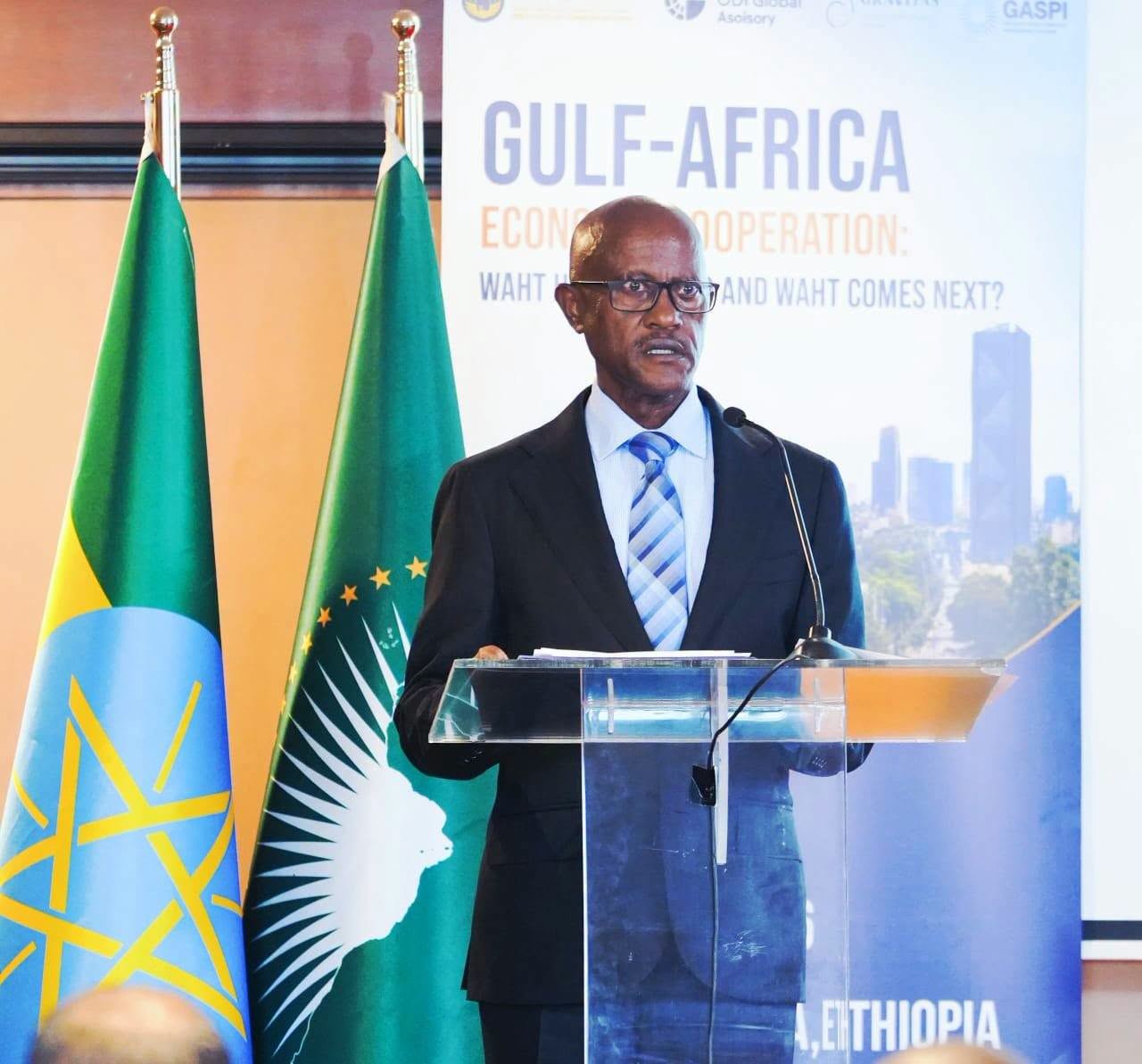
Addis Ababa, July 22, 2026 (ENA) — The Ministry of Foreign Affairs has reaffirmed that stronger cooperation between African and Gulf countries is essential for advancing inclusive growth, economic resilience, and shared prosperity.
Speaking at a high-level dialogue held in Addis Ababa under the Gulf–Africa Strategic Partnership Initiative (GASP), State Minister of Foreign Affairs Ambassador Hadera Abera said the partnership has evolved into a strategic relationship capable of driving sustainable development across both regions.
The dialogue sought to strengthen Gulf–Africa cooperation by translating investment commitments into concrete development projects.
Ambassador Hadera said Africa and the Gulf are entering a new era of partnership as both regions pursue ambitious economic transformation agendas.
He noted that the African Continental Free Trade Area (AfCFTA), which has created the world's largest free trade area by membership, is opening new opportunities for trade, industrialization, and investment, while Gulf countries are implementing far-reaching economic diversification strategies.
"Africa is no longer seen simply as an investment destination. It is increasingly viewed as a strategic partner," he stressed.
The state minister said cooperation has expanded beyond traditional trade to include infrastructure, logistics, renewable energy, manufacturing, agriculture, finance, technology, and food security.
According to him, achieving tangible results will require stronger institutions, improved project preparation, innovative financing mechanisms, and effective implementation.
Reaffirming Ethiopia's commitment to regional integration and economic diplomacy, Ambassador Hadera underscored that the success of the initiative will ultimately depend on measurable outcomes and practical implementation.
Director General for Europe and American Affairs at the Institute of Foreign Affairs, Shimelis Hailu, said the dialogue comes at a critical time as shifting global economic and geopolitical dynamics present both opportunities and responsibilities for emerging economies.
He said Ethiopia's homegrown economic reforms are aimed at expanding investment, deepening regional integration, boosting industrial productivity, and positioning the country as a competitive gateway to African markets.
"The future Gulf–Africa relationship should not be measured simply by the volume of announced investments, but by the quality, by created jobs, transferred knowledge, built institutions, and strengthened economic resilience," Shimelis said.
He added that the dialogue provides an opportunity to examine how Gulf investment models can better support Africa's structural transformation through stronger institutional, financial, and policy frameworks that convert commitments into successful projects.
Founder and Chief Executive Officer of Gravitas Sovereign and Strategic Advisory, Anousmane Camara, said Africa's rapidly growing population, expanding investment opportunities, and abundant strategic mineral resources provide a compelling foundation for deeper Gulf–Africa cooperation.
He noted that Africa's population is projected to reach 2.5 billion by 2050, underscoring the importance of strengthening domestic resource mobilization while attracting greater private sector investment.
Camara said GASP is designed to institutionalize strategic dialogue, align investment priorities, and foster long-term diplomatic engagement between Africa and Gulf countries.
"Diplomacy creates trust, and trust can unlock capital at scale, and that capital can be allocated to Africa's economic transformation," he said.
ODI Global Advisory Director Sasha Kapadia said enhanced Gulf–Africa cooperation should complement, rather than replace, existing international partnerships.
"What makes the potential for stronger Gulf–Africa cooperation so compelling is not replacement or substitution. Rather, it's about complementarity," she said.
Kapadia stressed the importance of identifying barriers that delay investment, implementing key institutional reforms, and deploying risk-sharing mechanisms to accelerate project delivery.
She added that the Addis Ababa dialogue, together with regional consultations in Rabat, Johannesburg, and Accra, will help shape the agenda for the inaugural GASP Summit scheduled to be held in Abidjan.
The high-level dialogue was jointly organized by Ethiopia's Institute of Foreign Affairs, Gravitas Sovereign and Strategic Advisory, and ODI Global Advisory. It brought together policymakers, diplomats, investors, researchers, and development practitioners to identify practical approaches for strengthening economic cooperation between Africa and Gulf countries.


