Cairo’s Failing Playbook: Propaganda Cannot Stop Ethiopia’s Rise - ENA English
Cairo’s Failing Playbook: Propaganda Cannot Stop Ethiopia’s Rise
By Jibril Lammo
For generations, Egypt’s political establishment operated on a dangerous and increasingly obsolete assumption: that downstream water security could be preserved only by keeping upstream nations weak, poor, and underdeveloped.
That colonial-era logic is now collapsing.
Yet as Ethiopia advances toward greater economic self-reliance, energy sovereignty, democratic consolidation, and regional connectivity, sections of Egypt’s state-backed media and official communication apparatus continue to recycle the same familiar playbook—fear, disinformation, diplomatic pressure, and political interference.
The targets are clear. The Grand Ethiopian Renaissance Dam (GERD) is portrayed as an existential threat. Ethiopia’s National Dialogue is dismissed or delegitimized. The country’s legitimate quest for regional connectivity and secure access to the Red Sea is framed as a destabilizing ambition. At the same time, Cairo continues to mobilize diplomatic and media networks to constrain Ethiopia’s strategic options.
The message behind these campaigns is increasingly transparent: Ethiopia’s rise must be contained.
But Ethiopia is no longer the country that external powers could isolate, intimidate, or define on its behalf.
The relentless focus on Ethiopia’s internal affairs increasingly appears less like a genuine concern for regional stability and more like a calculated effort to divert attention from Egypt’s own deepening socioeconomic pressures. Instead of confronting the structural challenges facing its own society, Cairo’s political establishment and its authorities continue to find political utility in presenting Ethiopia as a convenient external threat.
That strategy may generate headlines. It cannot stop history.
The GERD and the Politics of Fear
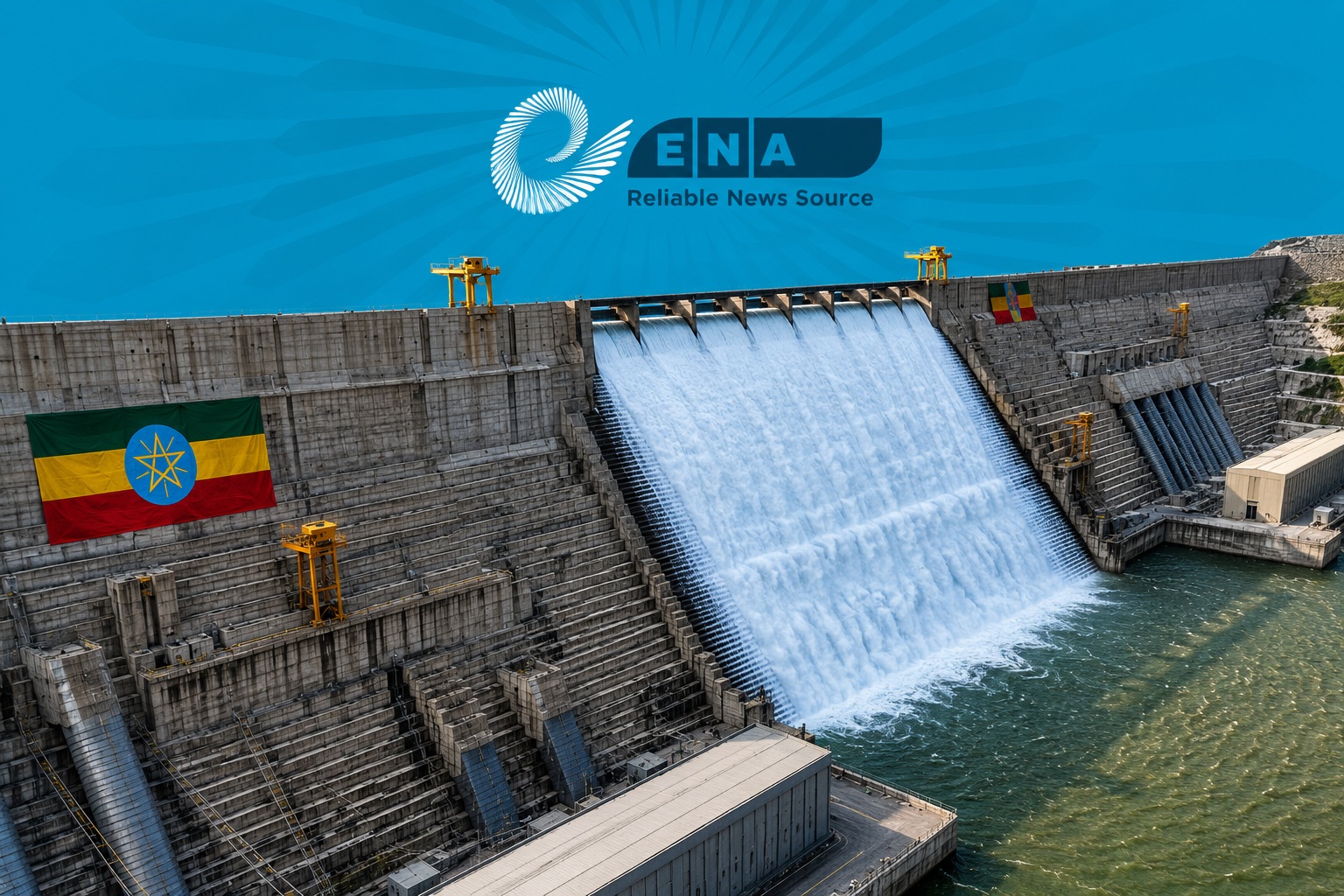
At the center of Egypt’s campaign is the Grand Ethiopian Renaissance Dam, which Egyptian political and media narratives have repeatedly portrayed as a unilateral act of aggression.
Such claims deliberately reduce a complex transboundary water issue to a politics of fear.
The Abay (Nile) Basin is not a political possession belonging to one state. It is a shared geographic system whose future must be shaped by cooperation, science, and the equitable utilization of shared resources.
Ethiopia’s position has consistently been that development and water security are not mutually exclusive. The central question is not whether one nation should control the Abay, but whether the countries of the basin can move beyond outdated notions of exclusive entitlement and build a framework that serves all riparian states.
The GERD represents Ethiopia’s determination to overcome energy poverty and unlock its economic potential. For a country of more than 130 million people, with vast development needs and enormous hydropower potential, the pursuit of electricity is not an act of aggression. It is a national necessity.
The broader hydrological debate also demands a more sophisticated conversation than the one offered by political propaganda. Water management across the Nile Basin involves rainfall, evaporation, watershed protection, reservoir management, agricultural use, and long-term environmental sustainability. Treating the river as a zero-sum instrument of geopolitical control serves neither science nor the people of the basin.
Indeed, Ethiopia’s highland watersheds play a critical role in the broader Abay system. The protection and restoration of these ecosystems are not merely Ethiopian concerns; they are essential to the long-term health of the entire basin.
Ethiopia Is Investing in the Basin’s Future
While political narratives continue to portray Ethiopia as a threat, Ethiopia is investing in the ecological foundations of its future.
Through the Green Legacy Initiative, the country has undertaken one of Africa’s most ambitious environmental restoration campaigns. The initiative has focused on reforestation, watershed rehabilitation, soil conservation, and the restoration of degraded landscapes across the country.
These efforts are directly connected to the long-term health of Ethiopia’s rivers and watersheds. Healthy ecosystems improve soil retention, support groundwater recharge, reduce erosion, and strengthen the resilience of landscapes that sustain millions of people.
This is the reality that geopolitical propaganda often ignores.
The countries of the Nile Basin, particularly the downstream nations face a choice. They can continue to pour resources into military posturing, diplomatic confrontation, and hostile media campaigns—or they can invest in cooperation, ecological restoration, scientific water management, and shared development.
The first path deepens insecurity. The second creates the possibility of lasting prosperity.
A Sovereign Ethiopia Can No Longer Be Isolated
Ethiopia’s transformation is not limited to the Abay.
The country is a major African power with a population exceeding 130 million, a strategic geographic position, substantial economic potential, and an increasingly clear determination to shape its own future.
For decades, Ethiopia’s geographical circumstances were treated as a permanent strategic constraint. Its lack of direct maritime access contributed to economic vulnerability and reinforced a broader pattern of regional isolation.
That historical reality is changing.
Ethiopia’s pursuit of secure and reliable access to the Red Sea is not an act of aggression against its neighbors. It is a strategic imperative arising from geography, economic necessity, and national development.
A country of Ethiopia’s size and significance cannot be expected to remain permanently dependent on external arrangements for its international trade and strategic connectivity.
The era in which Ethiopia could be expected to accept isolation as a permanent condition is over.
Ethiopia has patiently pursued dialogue and negotiated solutions. But dialogue cannot mean the permanent preservation of historical inequality, nor can negotiations be reduced to demands that Ethiopia surrender its sovereign interests.
The region must ultimately recognize a simple reality: a prosperous and connected Ethiopia is not a threat to the Horn of Africa. It can become one of the region’s greatest engines of growth.
Ethiopia’s National Dialogue Will Be Shaped by Ethiopians
The same principle applies to Ethiopia’s internal political affairs.
Attempts by foreign commentators and regional actors to dismiss Ethiopia’s National Dialogue as political theater reveal a fundamental misunderstanding of the country’s political journey.
Ethiopia’s challenges are real. Its political differences are complex. Its history is contested. But the responsibility for addressing these issues belongs first and foremost to Ethiopians.
The National Dialogue represents an effort to create an institutional platform through which diverse political, social, and historical grievances can be discussed and addressed.
It is not a project that requires external approval.
Ethiopia’s political future will not be designed in Cairo, Washington, or any other foreign capital. Nor will it be determined by media campaigns, proxy pressure, or external attempts to exploit internal divisions.
The country’s democratic institutions may still be evolving, as they are in many nations. But Ethiopia’s political future must ultimately be negotiated by Ethiopians and shaped by the interests of the Ethiopian people.
The Abay (Nile) Basin Cannot Remain Hostage to Historical Rivalry
The countries of the Nile Basin are bound together by geography. Their destinies are therefore interconnected.
They can either cooperate to build a future of shared prosperity, or remain trapped in a cycle of suspicion, confrontation, and geopolitical rivalry.
Ethiopia has repeatedly affirmed its commitment to equitable and reasonable utilization of shared water resources. But equitable utilization cannot mean preserving the privileges of the past. Cooperation cannot mean that one country retains a veto over the development aspirations of another.
The Nile is not the private property of any single nation.
The future of the basin must be built on cooperation, mutual respect, scientific evidence, and the recognition of the legitimate development rights of all riparian states.
Ethiopia will not accept a regional order in which its development is permanently subordinated to the political anxieties of another country.
Nor will it accept the idea that its people must remain poor so that others can feel secure.
The Old Playbook Is Failing
Cairo’s familiar strategy—politicize Ethiopia’s development, internationalize its internal challenges, mobilize fear around the GERD, and obstruct Ethiopia’s regional ambitions—may have been effective in another era.
It is increasingly failing today.
Ethiopia is changing. Its economy is expanding. Its infrastructure is growing. Its environmental ambitions are increasing. Its diplomatic relationships are broadening. Its people are demanding greater prosperity, stronger institutions, and a more influential role in regional and global affairs.
No media campaign can permanently reverse that trajectory.
The choice before Egypt is therefore not whether Ethiopia will develop. Ethiopia will develop.
The real choice is whether Egypt will continue to treat Ethiopia’s rise as a threat—or recognize that a stable, prosperous, energy-secure, and economically connected Ethiopia can become a partner in building a stronger Nile Basin and a more prosperous Horn of Africa.
The era of containment is ending.
The era of Ethiopian sovereignty is advancing.
And no amount of propaganda can stop a nation determined to shape its own future.