Strategic Miscalculations in the Abbay (Nile) Basin: Why Egypt’s Isolation Strategy Against Ethiopia Is Bound to Fail - ENA English
Strategic Miscalculations in the Abbay (Nile) Basin: Why Egypt’s Isolation Strategy Against Ethiopia Is Bound to Fail
Jul 22, 2026
By Ayele Yimer, for POA
For well over a century, hydro-diplomacy across the Abbay (Nile) River Basin operated under an asymmetric status quo rooted in colonial-era agreements. The agreements of 1929 and 1959—crafted without the participation or consent of Ethiopia, the source of over 85 percent of the Abbay’s (Nile) total volume—allocated the river’s entire flow to downstream nations. Crucially, these historical pacts granted Egypt an outright veto power over upstream water development projects.
When Ethiopia officially launched the construction of the Grand Ethiopian Renaissance Dam (GERD) in 2011, decision-makers in Cairo initially dismissed the initiative as mere political posturing. The prevailing calculation in Egypt was straightforward: constrained by severe economic limitations, internal security challenges, and limited technological infrastructure, Ethiopia would be utterly unable to carry out a 5 billion USD megaproject of this magnitude on its own.
Cairo’s early confidence relied heavily on the assumption that its diplomatic reach could permanently cut off Ethiopia's access to international capital markets. Indeed, through persistent lobbying at multilateral financial institutions, international development banks, and Western capital markets, foreign credit and bilateral loans were systematically denied to Addis Ababa for the dam’s construction.
However, this diplomatic veto produced an outcome Cairo had not anticipated: it galvanized an unyielding domestic mobilization. Recognizing that no external financial assistance would be forthcoming, the Ethiopian state and its citizens embraced complete self-reliance. From rural farmers purchasing micro-bonds to urban workers contributing fractions of their monthly salaries, alongside extensive campaigns across the global Ethiopian diaspora, the $5 billion project was funded entirely through domestic sacrifice.
Consequently, the GERD rapidly evolved beyond a mere hydroelectric facility. It transformed into a defining symbol of national sovereignty, unity, and modern self-determination—frequently characterized in national discourse as a "Second Adwa," evoking Ethiopia’s historic victory over foreign encroachment.
FROM COERCION TO ENCIRCLEMENT: THE THREE PHASES OF OPPOSITION
As the dam progressed through pure domestic self-reliance, Egyptian policy evolved through three distinct phases aimed at halting or neutralizing the project:
Direct Coercion & Financial Blockade (2011–2015): The initial phase was defined by public posture, covert maneuvers, and coercive threats. In 2013, a famous televised meeting led by senior Egyptian political figures was broadcasted live where participants openly discussed military sabotage, covert intelligence operations, and funding anti-government proxy insurgencies within Ethiopia. This aggressive posture was underpinned by the belief that locking Ethiopia out of capital markets would inevitably force Addis Ababa to abandon construction.
Negotiation Obstruction & Legal Demands (2015–2021)፡ As physical construction surged forward, Cairo shifted toward negotiation obstruction. Utilizing the prolonged trilateral negotiation process with Ethiopia and Sudan, Cairo insisted on binding historical water quotas that reflected colonial-era allocations. Under the guise of a "legally binding operational framework," Egypt sought to retain a perpetual veto over upstream development while forcing Ethiopia to absorb the full burden of natural droughts.
Regional Containment & Diplomatic Isolation (2021–Present)፡ With the physical completion of the dam establishing an irreversible reality, Egypt pivoted toward surrounding East African and Horn of Africa nations. Realizing that direct intervention and legal vetoes had failed, Cairo began forging bilateral alliances, defense agreements, and economic corridors to encircle Ethiopia diplomatically.
Concurrently, Cairo launched an aggressive narrative war, framing standard, non-consumptive hydroelectric operations as "unilateral" violations of international law. Public statements by officials routinely accused Ethiopia of triggering downstream water fluctuations. To diminish the domestic milestone, third-party narratives circulated suggesting the dam relied on external geopolitical financing—claims decisively refuted by Ethiopian leadership and WeBuild CEO Pietro Salini, who confirmed the project was 100% domestically funded by the Ethiopian people.
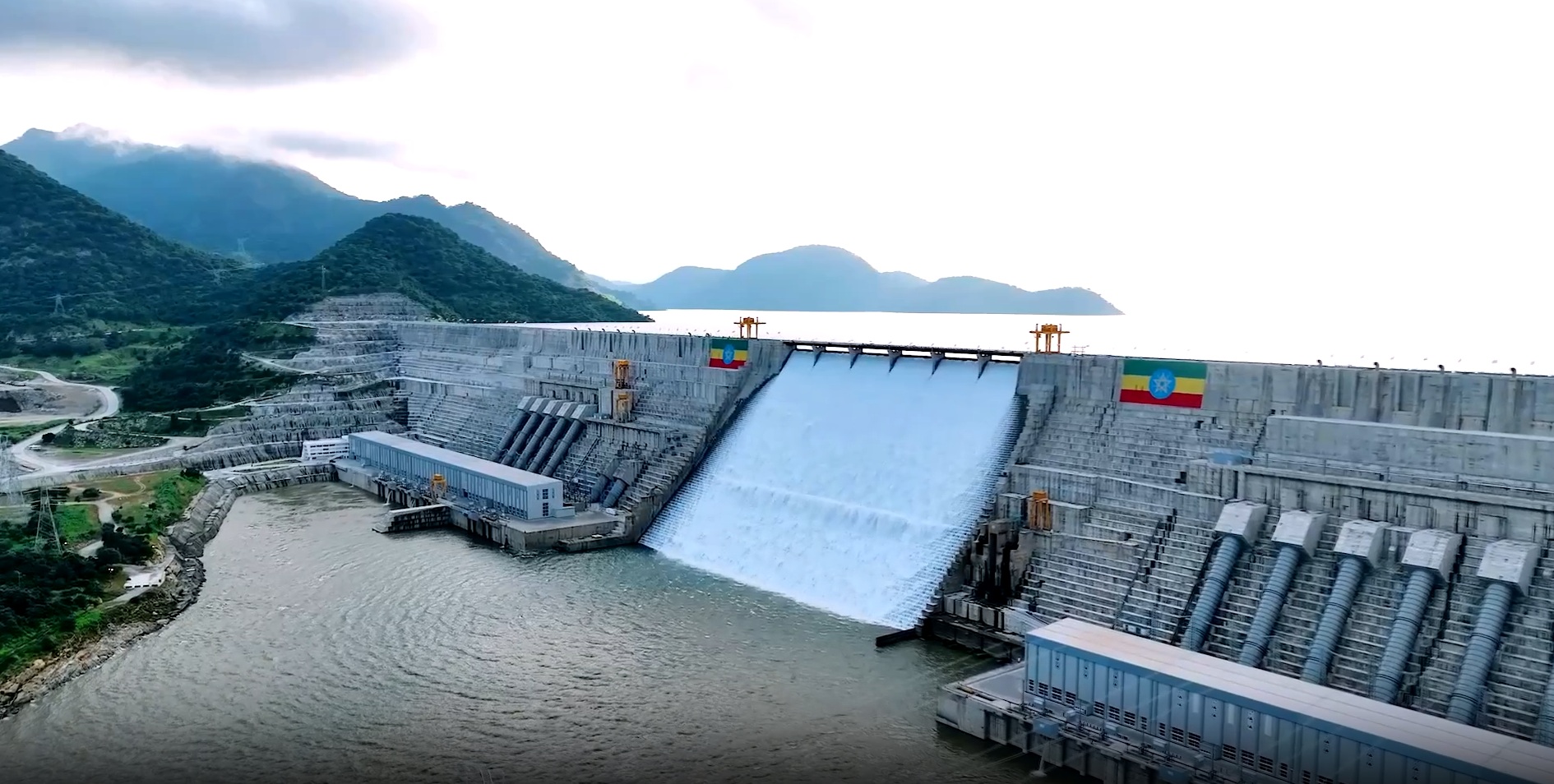
Despite armed incursions near the project perimeter, legal challenges, and intense diplomatic pressure, Ethiopia maintained continuous construction. Today, the GERD stands fully constructed as Africa’s largest hydroelectric installation—boasting an installed capacity of more than 5,150 megawatts—engineered exclusively for non-consumptive clean power generation.
THE STRUCTURAL FLAWS IN CAIRO’S STRATEGY
Egypt’s strategy of diplomatic encirclement is built on fundamental geopolitical, economic, and hydrological miscalculations that render it unsustainable over the long term:
The Inflexible Hydrological Reality: No amount of diplomatic maneuvering or alliance-building can alter the physical geography of the basin. Ethiopia generates over 85% of the river's annual flow through the Nile, Baro-Akobo, and Tekeze systems. Attempting to isolate the sovereign nation that controls the ultimate hydrological source of the main river is a strategic paradox. Real downstream stability requires functional, direct relations with Addis Ababa, not containment.
Economic Imperatives vs. Diplomatic Alignments: While Nile Basin nations welcome infrastructure investments, their long-term economic developmental goals favor regional energy integration centered around Ethiopia. Neighboring states—including Kenya, Sudan, Djibouti, and South Sudan—are actively importing or negotiating to purchase affordable, clean hydroelectricity generated by the GERD. The urgent need for electrification and industrial growth means East African nations will not sacrifice their access to green energy simply to accommodate Cairo's zero-sum diplomatic campaigns.
The Moral and Legal Imperative: Demanding that a landlocked nation of over 130 million people remain in energy poverty—where tens of millions lack basic electricity—to preserve historic colonial water allocations is ethically indefensible and politically unworkable. This reality is underscored by the widespread regional adoption of the Cooperative Framework Agreement (CFA), which fundamentally shifts Nile governance toward equitable and reasonable utilization, effectively neutralizing Cairo's historic legal veto.
BEYOND THE GERD: THE "TWO WATERS" GRAND STRATEGY
The completion and commissioning of the GERD is not the terminus of Ethiopia’s national vision; rather, it serves as the foundational anchor for a broader geopolitical transformation across the Horn of Africa. Ethiopia's strategic outlook is increasingly defined by the doctrine of the "Two Waters"—a policy framework connecting the hydro-politics of the Abbay (Nile) Basin to maritime access along the Red Sea and the Bab-el-Mandeb Strait.
The "Two Waters" doctrine recognizes that the Nile Basin and the Red Sea are geographically and geopolitically indivisible. Security pressures engineered by downstream rivals in the maritime domain—such as Cairo's pursuit of military footprints and intelligence outposts in neighboring states like Eritrea—are direct extensions of Nile hydro-politics.
As the most populous landlocked nation in the world, Ethiopia cannot sustain its growing industrial economy while trapped in total logistical dependency on foreign ports. By seeking secure, sustainable maritime access alongside maritime defense capabilities, Ethiopia is establishing a comprehensive regional balance of power. Fusing its hydroelectric capacity with maritime connectivity ensures long-term economic independence and positions Addis Ababa as the primary stabilizing power across both aquatic domains.
THE IMPERATIVE OF SHARED PROSPERITY
Cairo’s long-standing strategy toward the Grand Ethiopian Renaissance Dam—moving from early dismissal and covert coercion to present-day diplomatic encirclement—has consistently failed to halt Ethiopia’s progress. The completion of the dam stands as proof that national determination, domestic resource mobilization, and strategic clarity can successfully overcome external containment efforts.
Attempting to diplomatically isolate Ethiopia is structurally unworkable and counterproductive to downstream interests. The path toward lasting stability and water security in East Africa lies not in zero-sum division, but in accepting Ethiopia’s rightful position as a major energy provider and regional stabilizer. By abandoning obsolete colonial-era paradigms and embracing the shared reality of the "Two Waters," lower riparian states can transition from fruitlessly opposing Ethiopia's development to benefiting from a joint future of shared electricity, regional economic integration, and collaborative basin management.