When the Desert Speaks - ENA English
When the Desert Speaks
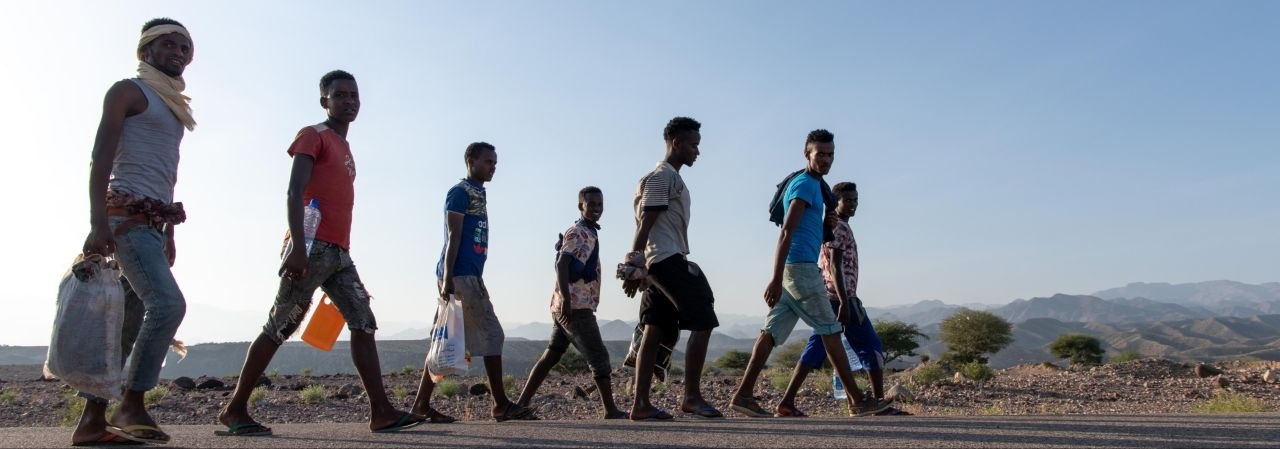
The Bitter Truth Behind Broken Dreams Along the Ethiopia–Djibouti Migration Corridor
By Kumlegn Ayalew
July 20, 2026 (ENA)
There are places where silence tells stories words never can.
The desert stretching between Ethiopia and Djibouti is one of them.
From a distance, it appears beautiful—an endless sea of golden sand beneath a cloudless sky. Yet beneath its breathtaking stillness lie broken dreams, interrupted journeys, and families waiting for loved ones who may never return. Here, the wind carries more than dust. It carries untold stories of hope, deception, and unimaginable loss.
Every year, thousands of young people from across the Horn of Africa set out in search of better opportunities. Many dream of reaching the Gulf States, believing that employment abroad will lift their families out of poverty. But for too many, the journey ends not with prosperity, but with hunger, exploitation, trafficking, detention, or death beneath the unforgiving desert sun.
Irregular migration has become one of the Horn of Africa's greatest humanitarian challenges. Yet it is also one of its greatest opportunities for cooperation.
No single country can confront transnational trafficking networks alone. The routes cross borders. So do the criminal networks that profit from human desperation. Protecting migrants, therefore, demands a regional response built on trust, coordination, and shared responsibility.
For more than two decades, the Intergovernmental Authority on Development (IGAD) has been helping to build that response.
Working alongside its Member States and partners such as the International Organization for Migration (IOM), IGAD has strengthened regional cooperation to combat human trafficking and migrant smuggling, improve migration governance, expand legal labour migration pathways, and enhance the protection of refugees, displaced people, and vulnerable migrants across the Horn of Africa. Through its Regional Consultative Process on Migration, cross-border initiatives, and the implementation of the IGAD Free Movement Protocol, the organization is helping countries transform migration from a source of crisis into a driver of regional integration and sustainable development.
But policies and agreements tell only part of the story.
To understand why IGAD's work matters, one must first walk the road travelled by those who risk everything in search of a better life.
That road begins in Dire Dawa.
A Road Built on Hope
Before dawn, our convoy left Dire Dawa, Ethiopia's historic gateway to the east.
The journey was organized by the International Organization for Migration (IOM), bringing together journalists, communication professionals and government officials to witness firsthand one of the Horn of Africa's busiest migration corridors.
As the first rays of sunlight spread across the landscape, green fields slowly gave way to endless stretches of dry earth. Inside our vehicles, conversation faded.
Perhaps everyone was asking the same question. Why would anyone willingly walk into such a place?
The answer, we would soon discover, was hope.
As we travelled deeper into the Somali Region, security checkpoints became more frequent. Officers monitored one of Ethiopia's busiest migration routes, intercepting traffickers and assisting vulnerable migrants whenever possible. Their efforts form part of a much wider regional strategy in which neighbouring countries increasingly coordinate intelligence, strengthen border management, and share information to dismantle criminal trafficking networks.
These collaborative efforts reflect a growing recognition championed by IGAD that migration is a shared regional challenge requiring shared regional solutions.
Beyond the checkpoints, traditional Somali pastoral communities continued their daily lives beneath the relentless sun. Villages such as Arawa, Milo, Adigala, and Malik quietly marked the long road toward Aisha, where thousands of migrants pause before taking one of the most dangerous decisions of their lives.
Aisha: Where Hope Meets Reality
At first glance, Aisha appears like a welcome refuge in the desert.
Trees offer shade. Water brings life. Markets bustle quietly.
Yet beneath its calm lies one of Ethiopia's most important migration transit points.
Local officials told us that thousands of young Ethiopians from Amhara, Oromia, Tigray, Sidama, and other regions pass through the town each year, hoping to reach the Gulf through irregular routes. Many know little about the countries they seek to enter. Their understanding is often shaped by rumours, social media, and promises made by traffickers.
"They told me jobs were waiting."
"They promised I would reach Saudi Arabia in a few days."
Such promises rarely survive the desert.
Many migrants begin the journey carrying little more than a bottle of water and unwavering hope. Few understand what lies ahead. There is little water, no medical care, and no protection from the relentless heat. Many collapse from dehydration. Others fall prey to traffickers or armed criminals. Some simply disappear, leaving families trapped between hope and heartbreak.
Officials acknowledged that preventing every irregular crossing remains an immense challenge. Traffickers constantly change routes and methods, exploiting remote areas beyond regular surveillance.
This is why regional cooperation has become indispensable. Through IGAD's migration programmes, Member States are strengthening information sharing, improving cross-border coordination, and promoting public awareness campaigns aimed at discouraging irregular migration while expanding safer and legal alternatives.
Among the many stories shared in Aisha, one revealed the cruelty of traffickers more vividly than any statistic.
Under the cover of darkness, smugglers sometimes abandon migrants deep inside Ethiopia's own desert. Pointing toward distant lights, they declare, "Congratulations—you've reached Djibouti."
Only after sunrise do the migrants discover they have never left Ethiopia.
By then, the traffickers—and their money—are gone.
The desert begins demanding its price.
Where Hope Meets the Border
Leaving Aisha behind, we continued toward Dewale, Ethiopia's principal gateway to Djibouti. The road grew quieter, but the reality before us became even more striking.
Along the highway, small groups of migrants walked steadily toward the border. Some carried tiny backpacks. Others held nothing more than plastic bags containing all they owned. Their faces reflected determination, but also uncertainty. Watching them disappear into the shimmering horizon, one question lingered in my mind:
How powerful must hope become before it convinces someone to gamble against the desert?
At Dewale, another picture unfolded.
Long queues of cargo trucks carrying goods between Ethiopia and Djibouti waited patiently for customs clearance. Border officials from both countries worked side by side, facilitating trade while safeguarding security. The scene reflected a different kind of movement—one built on cooperation, legality, and mutual benefit.
That same principle underpins IGAD's vision for the region.
For years, the regional bloc has worked with its Member States to promote safe, orderly, and regular migration, recognizing that human mobility has always been part of the Horn of Africa's history. Through the implementation of the IGAD Free Movement Protocol, regional labour migration initiatives, and cross-border cooperation mechanisms, the organization seeks to ensure that people move safely through legal channels rather than falling prey to traffickers and smugglers.
Yet only a short distance from the busy border crossing stood another reminder of why that work matters.
A modest reception center where journeys return—not in triumph, but in survival.
Where Dreams Return Empty
The reception center is simple, but its purpose is profound.
Here, Ethiopian migrants intercepted by Djiboutian authorities before continuing toward the Gulf receive emergency assistance before returning home. Water. Food. Medical treatment. Psychological support. Family tracing. Transportation. For many, it is the first moment of safety after days of unimaginable hardship.
The center also reflects the power of partnership.
Its work is supported through the cooperation of the governments of Ethiopia and Djibouti, the International Organization for Migration (IOM), and other humanitarian partners working to protect migrants along one of Africa's busiest migration corridors.
Regional coordination has become equally important. Through its migration programmes, IGAD has helped strengthen cooperation among Member States in combating human trafficking, improving migration governance, supporting return and reintegration efforts, enhancing border coordination, and promoting policies that protect migrants while expanding legal pathways for labour mobility.
Inside the shelter, however, policy gives way to people.
Young men sat quietly against the walls.
Mothers held sleeping children.
Some stared into the distance, as though still trying to understand how hope had turned into heartbreak.
Only days earlier, many believed they were walking toward a better future.
Now they had returned with almost nothing.
Mariam's Story
Among them was Mariam Dawud, a 20-year-old student from Habru District in Ethiopia's North Wollo Zone.
She left home believing that working abroad would help lift her family out of poverty.
Instead, she found herself trapped in a nightmare.
Days passed without enough food or drinking water. The scorching heat became unbearable. Then came abuse, detention, and humiliation after crossing into Djibouti.
As she recalled the journey, tears quietly rolled down her face.
"I thought I was travelling toward a better life," she said softly.
"Instead, I found suffering."
Nearby sat Lema Ayana, an 18-year-old from Jimma.
After completing Grade Ten, he struggled to find employment. Like many young people, he believed migration offered the quickest path toward supporting his family.
Now he sat with nothing but the clothes he was wearing.
"How do I face my parents after everything they sacrificed for me?" he asked.
His question echoed far beyond the reception center.
Across Ethiopia and much of the Horn of Africa, migration is rarely an individual decision. Families sell livestock, borrow money, and pool their savings so that one young person can seek opportunities abroad. When that journey fails, the emotional and financial consequences ripple through entire communities.
The Voices That Stayed With Me
Perhaps the most painful voices inside the shelter belonged to children.
One quietly asked for water.
Another cried from hunger.
In that moment, every promise made by traffickers collapsed beneath a single truth.
No promise of prosperity is worth risking the life of a child.
Many of us instinctively lowered our cameras.
Some stories deserve compassion before documentation.
As we left the shelter, I understood something I had not fully grasped before this journey.
Irregular migration is not simply about crossing borders.
It is about families searching for hope.
It is about traffickers turning that hope into profit.
And it is about governments, communities, and regional institutions working together to ensure that hope no longer leads to tragedy.