Ethiopia’s Path to Peace: Navigating the Promise and Perils of African National Dialogues - ENA English
Ethiopia’s Path to Peace: Navigating the Promise and Perils of African National Dialogues
Analysis Published by POA
July 20, 2026 (ENA)
National Dialogues across Africa have emerged as a critical mechanism for addressing complex conflicts, fostering political reform, and guiding transitions toward peace and democracy. These dialogues, often seen as a last resort or a historic opportunity, aim to rewrite national contracts by bringing diverse stakeholders—government officials, opposition groups, civil society, and sometimes armed factions—together in the pursuit of inclusive solutions. Since the 1990s, more than twenty African nations have attempted various forms of sovereign national conferences or dialogues, with results ranging from remarkable success to superficial agreements that lack sustainability.
South Africa’s 1991 National Dialogue exemplifies a triumph, as it was pivotal in dismantling the apartheid regime and establishing a democratic, inclusive government. The process successfully united diverse political factions, civil society, and international observers to craft an interim constitution that set a global standard for peaceful political transition.
Similarly, Rwanda’s post-genocide reconciliation efforts relied heavily on grassroots consensus-building and traditional justice systems like Gacaca, which helped foster national healing and rebuild social cohesion after one of the most brutal genocides of the 20th century. These successes demonstrate the transformative potential of genuine, inclusive dialogues when political will and broad participation are present.In contrast, Sudan’s experience underscores the vulnerabilities inherent in such processes.
The country’s peace talks, aimed at resolving conflicts in Darfur, Blue Nile, and South Kordofan, were often manipulated by the ruling elite, with opposition groups and armed factions either boycotting or being marginalized. While some agreements were signed, they largely failed to address underlying grievances or prevent subsequent violence, reflecting how superficial or manipulated negotiations can entrench existing divides. Likewise, in the Democratic Republic of the Congo, repeated attempts at national dialogue to stabilize the fragile state, disarm rebel groups, and promote democratic elections have been hampered by ongoing armed violence and deep-seated mistrust among political factions.
At the heart of these varied outcomes lies a fundamental driver: an imperative to break out of destructive political cycles, systemic exclusion, and constitutional gridlock. When successful, national dialogues can transform exclusionary, zero-sum politics into participatory, democratic systems that include marginalized voices. They create a space for crafting a shared social contract that reflects the diverse interests of a nation, fostering stability and laying groundwork for sustainable peace. Conversely, when these processes are undermined or hijacked, they risk prolonging crises and even degenerating into further violence.
Ethiopia, with its complex history of ethnic tensions, political upheaval, and longstanding conflicts, vividly illustrates the stakes involved. Veteran politician Dr. Aregawi Berhe, a founder of the Tigray People’s Liberation Front (TPLF), emphasizes the urgency of national dialogue, describing it as the most reliable pathway out of Ethiopia’s multifaceted crises. For decades, Ethiopia’s political elites relied on zero-sum politics, often leading to violence, repression, and systemic exclusion. A genuine national dialogue offers a chance to forge a new social contract rooted in inclusivity and mutual understanding, but its success depends heavily on the willingness of all stakeholders to participate sincerely and in good faith.
However, the road to peace through dialogue is fraught with dangers, primarily from armed factions and disgruntled political elites who feel marginalized or threatened by reform efforts. These spoilers employ various sabotage strategies to undermine the process. Participation-washing accusations—where factions claim the dialogue is “not inclusive” or “biased”—are used to justify boycotts and delegitimize negotiations. Armed groups often escalate localized violence or incite conflict to destabilize the peace process, seeking to prove that dialogue cannot resolve underlying issues and that military solutions are preferable. Additionally, spoilers tend to hijack agendas, narrowing the scope of discussions to serve their own interests and paralyzing broader efforts for national reconciliation.
Despite these challenges, national dialogues remain a vital tool for Africa’s path toward peace and stability. Their success depends on broad-based participation, genuine political will, and the ability to resist sabotage. Ethiopia’s ongoing efforts highlight both the promise and perils of this approach—offering hope that, with sincere engagement, the nation can forge a new social contract rooted in inclusivity, justice, and peace. As history shows, while dialogues are fragile, they are often the only viable mechanism to break free from cycles of conflict.
The Ethiopian Context: A Generational Opportunity Confronting Cynicism
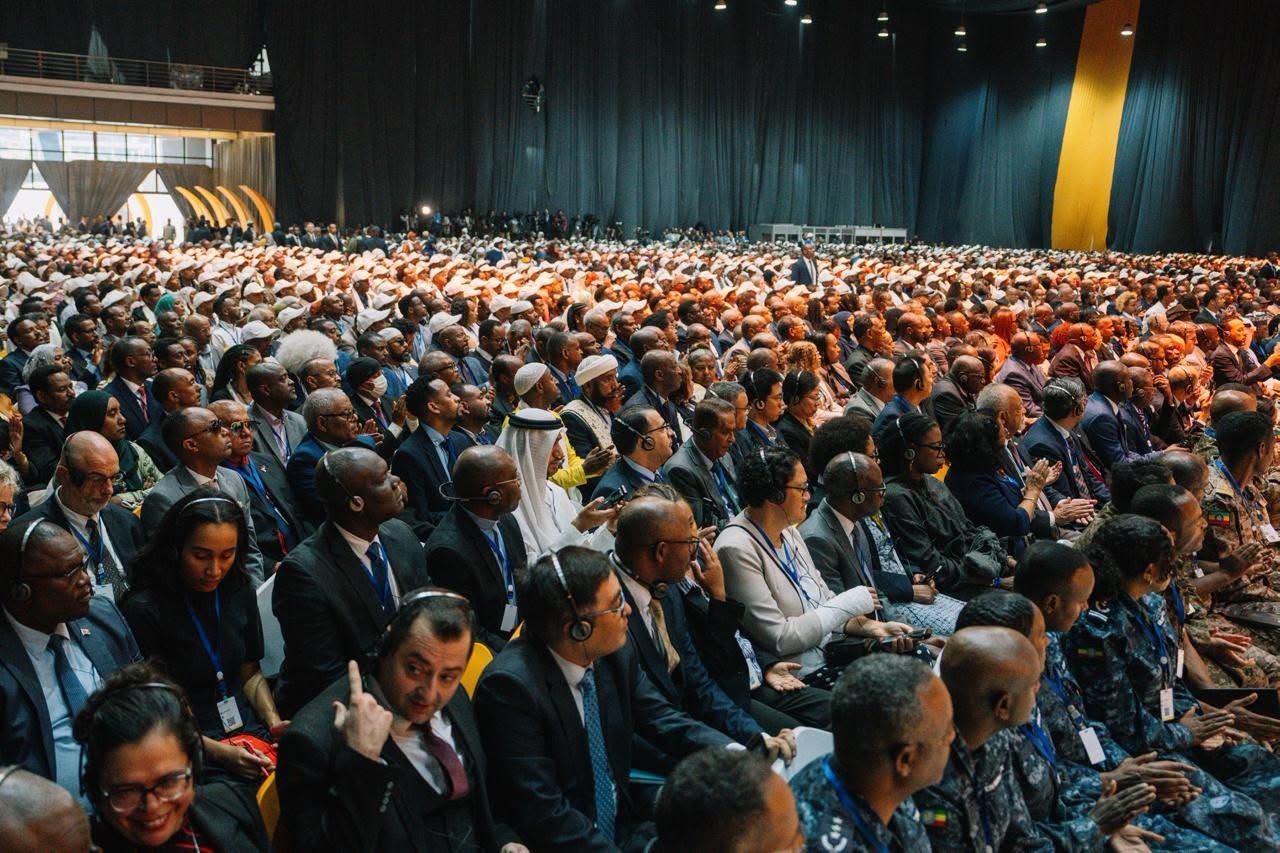
Ethiopia is currently navigating an institutional attempt at nationwide reconciliation through the legally established and independent Ethiopian National Dialogue Commission (ENDC). For generations, Ethiopia's political transitions were dictated by the barrel of a gun; this commission represents a paradigm shift toward a bottom-up, grassroots approach involving hundreds of thousands of ordinary citizens.Highlighting the deep cultural foundation that underpins this institutional shift, Prime Minister Abiy Ahmed observes:"Dialogue and consultation are ancient, embedded values of the Ethiopian people. The secret of our historical resilience lies in our deep cultural wealth of mediation, discussion, forgiveness, and compensation—treasures that simple political science cannot easily measure. The National Dialogue is a historic opportunity to address our deeply rooted political fault lines."
The Paradox of TPLF's Resistance
A glaring example of dialogue disruption can be seen in the mixed signals and destructive stances of factions within the Tigray People’s Liberation Front (TPLF). While publicly critiquing the ENDC for lacking inclusivity and claiming it does not represent them, radical elements within the group have actively turned away or blocked dialogue commissioners who traveled to Mekelle to engage them.
Rejecting a genuine call for peaceful consultation while claiming to represent the interests of a population exhausted by war is an unsustainable political contradiction. It is impossible to deliver peace and development to a community by actively barricading the doors against conversation, pushing the youth back into armed mobilization, and colluding with external anti-peace elements to destabilize the federal structure.
Yet, even amidst deep internal divergence, the pragmatic necessity of choosing peace remains clear. Getachew Reda, a former senior leader of the TPLF and President of the Tigray Interim Regional Administration, who now serves as the Prime Minister's Advisor Minister for East African Affairs makes a strong case saying, "Standing for the peace of the nation is an absolute necessity. Differences within political leadership must not make peace agreements homeless, because peace is a matter of basic survival for our people."
True peace cannot be held hostage by the whims of a few armed actors or disgruntled elites. Because this dialogue belongs to the millions of citizens who yearn for stability after devastating conflicts and displacements, the public must actively push back against cynical political actors. Society has a civic responsibility to isolate and politically sideline those who reject dialogue in favor of continued polarization. Pushing away a genuine offer to converse can never bring about a positive outcome for the masses.
Emphasizing the sheer weight of public ownership over elite stubbornness, politician and analyst Girma Seifu argues: "This dialogue belongs to the vast majority of the public who are desperate for peace and institutional stability. You cannot demand a perfect process while sitting on the sidelines or shutting out commissioners. The process is too large and too critical to be allowed to fail because of the stubbornness of a few."
This unwavering commitment to the grassroots is echoed firmly by the ENDC Commissioners themselves, who state: "Our mandate comes from the law and the Ethiopian people, designed to build a new chapter for the country. We have consistently pushed to ensure every voice from the grassroots level up is included, because a genuinely inclusive future leaves no one behind, regardless of initial resistance."
A Regional and Continental Imperative
Ethiopia’s National Dialogue is more than just a domestic political exercise; it is a vital bellwether for the Horn of Africa and the broader continent. If Ethiopia succeeds in resolving its deep-seated historical grievances and structural political contradictions through institutional discussion rather than violence, it will provide a powerful, positive blueprint for a troubled region that includes Sudan, Somalia, and South Sudan.
The lesson from continental history is clear: dialogues do not fail because they are inherently flawed; they fail when the vocal minority of war merchants and spoilers is allowed to shout down the silent, peaceful majority. This historic opportunity, which Ethiopia has craved for centuries, must be guarded by its people. It is a collective destiny that cannot, and must not, be derailed by the short-sighted calculations of a few armed and disgruntled actors.