Ethiopia’s Pivotal Week: National Dialogue and Diplomatic Momentum - ENA English


Ethiopia’s Pivotal Week: National Dialogue and Diplomatic Momentum
By Staff Writer
July 19, 2026 (ENA)
Ethiopia witnessed a week of significant political, diplomatic and developmental developments as the country opened a potentially historic chapter in its efforts to address longstanding political differences through dialogue and consensus.
The launch of the long-awaited National Dialogue Conference dominated the national agenda, bringing together thousands of representatives from across Ethiopian society in an effort to confront the country’s most complex political and social challenges through peaceful consultation.
At the same time, developments in northern part of the country, particularly in Tigray region underscored the continuing challenges to Ethiopia’s peace process, while major infrastructure projects, expanding aviation links, growing economic activity around the Grand Ethiopian Renaissance Dam (GERD) and an active diplomatic agenda highlighted the country’s broader efforts to advance peace, reform and economic transformation.
Taken together, the week’s developments reflected a country navigating a complex transition—seeking to consolidate peace and political dialogue at home while expanding its economic and diplomatic engagement abroad.
Historic National Dialogue Opens
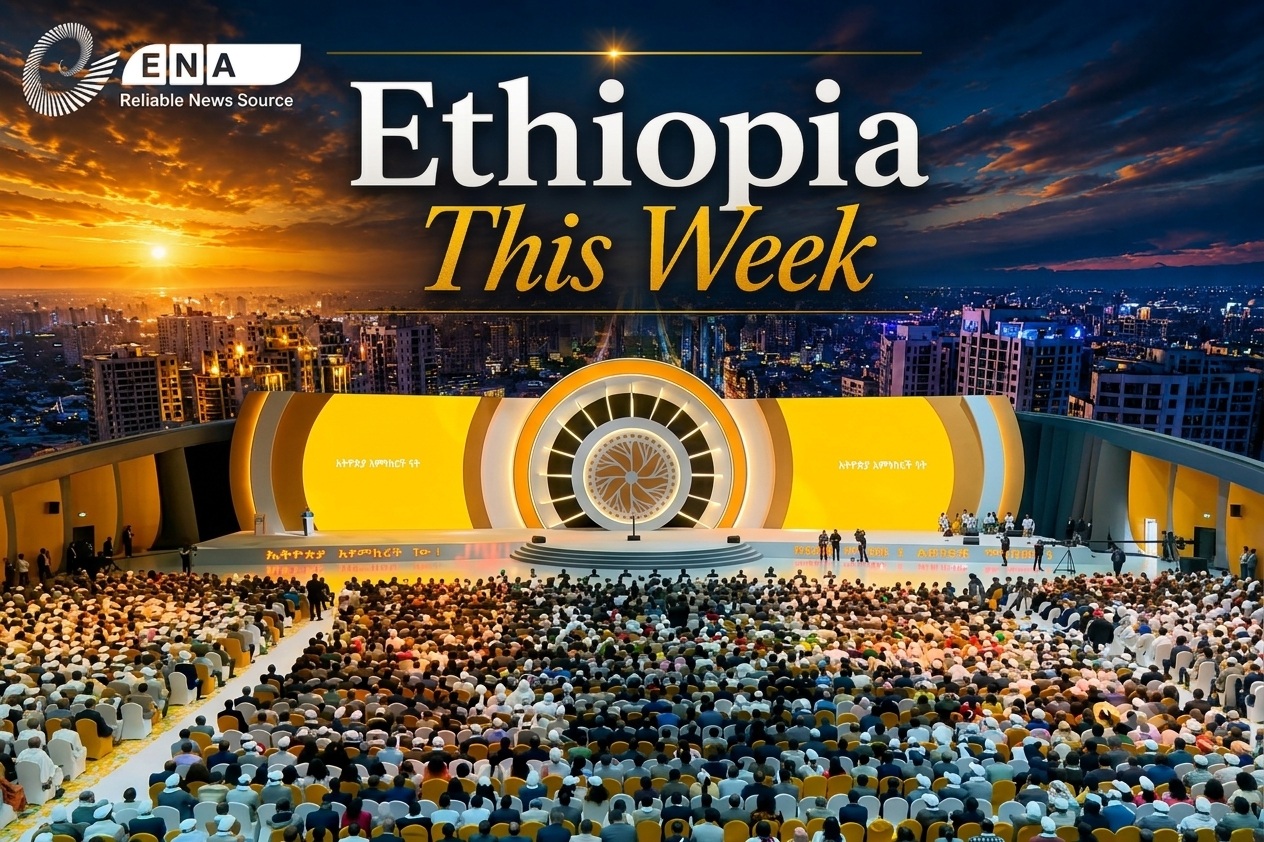
The defining event of the week was the official opening of Ethiopia’s National Dialogue Conference on July 15 in Addis Ababa.
The three-week conference has brought together more than 4,000 representatives from regional states, political parties, civil society organizations, religious institutions, professional associations, traditional leadership, youth and women’s groups, as well as members of the Ethiopian diaspora.
Organized by the Ethiopian National Dialogue Commission (ENDC), the conference represents the country’s most extensive nationwide consultation process since the establishment of the current federal system.
Presiding over the conference, Prime Minister Abiy Ahmed called on Ethiopians to replace political confrontation with dialogue and compromise. He said disagreements should no longer escalate from “strong words” to “strong action” through violence, but should instead be addressed through peaceful consultation, mutual understanding and collective responsibility.
The Prime Minister described the process as a historic opportunity to lay the foundations for lasting peace, national reconciliation and a shared national future.
Established under Proclamation No. 1265/2021, the ENDC says the dialogue is intended to identify Ethiopia’s major national challenges, build broad-based consensus and formulate recommendations capable of strengthening political stability and national unity.
Delegates are deliberating on a broad range of issues, including state-building and national identity, the structure and form of government, the administration of federal cities such as Addis Ababa and Dire Dawa, religious affairs, institutional reform, the rule of law and human rights.
The agenda also covers socio-economic challenges affecting farmers, pastoralists and vulnerable communities, anti-corruption and good governance, as well as peacebuilding and conflict prevention.
The dialogue has also emerged as an important international event, attracting representatives of foreign governments, international organizations and development partners who have expressed support for an Ethiopian-led process of resolving political differences through dialogue.
Rally Signals Mounting Public Pressure Over TPLF’s Continued Belligerence
While the National Dialogue opened a nationwide platform for political consultation, developments in Tigray region highlighted the continuing challenges facing Ethiopia’s broader peace process.
On July 18, thousands of Tigrayan demonstrators gathered at Meskel Square in Addis Ababa under the slogan, “Stop the Abductions; Let Peace Prevail.”
Organized by the Tigray Peace and Change Council, the rally called for the full implementation of the November 2022 Pretoria Cessation of Hostilities Agreement, an end to alleged forced recruitment in Tigray and the return of internally displaced persons.
Participants accused the defunct Tigray People’s Liberation Front (TPLF) of contributing to continued instability in the region and called on the federal government and the international community to support lasting peace and stability.
One of the rally’s most closely watched moments was the participation of Getachew Reda, President of the Simret Party and former President of the Tigray Interim Regional Administration.
Addressing the demonstrators, Getachew accused the TPLF of obstructing development efforts and alleged that it was forcibly recruiting young people.
His appearance reflected the evolving political landscape in Tigray following the Pretoria Agreement and underscored continuing disagreements over governance, security arrangements and the implementation of the peace accord.
The rally served as a reminder that while the National Dialogue represents a major national effort to address political differences, regional grievances, political mistrust and unresolved questions surrounding peace agreements remain significant challenges.
Infrastructure and Connectivity Drive Forward
Economic development and infrastructure expansion also remained central to Ethiopia’s agenda during the week.
Prime Minister Abiy Ahmed inaugurated the renovated King Tekle Haymanot Airport in Debre Markos, Amhara Region, restoring operations at a facility that had remained inactive for nearly three decades.
The rehabilitation is expected to improve regional connectivity, facilitate trade, promote tourism and strengthen economic integration.
Ethiopian Airlines, meanwhile, expanded its international network with the launch of direct passenger flights between Addis Ababa and Port Louis, Mauritius.
The new route further strengthens Ethiopia’s position as one of Africa’s leading aviation hubs while creating new opportunities for trade, tourism, investment and business connections between Eastern and Southern Africa and global markets.
The GERD also continued to generate economic benefits beyond electricity production.
The Benishangul-Gumuz Regional Agriculture Bureau reported that more than 10,700 tons of fish were harvested from Lake Nigat during the concluded Ethiopian fiscal year.
The reservoir is increasingly supporting fisheries, tourism, inland transportation and employment through organized fishing cooperatives, demonstrating the broader economic impact of major infrastructure projects.
Diplomacy Takes Center Stage
Ethiopia pursued an active diplomatic agenda throughout the week, strengthening relations with international partners while advancing its strategic priorities in the Horn of Africa and beyond.
The visit of European Union High Representative for Foreign Affairs and Security Policy and Vice-President of the European Commission Kaja Kallas was among the week’s most significant diplomatic events.
During meetings with Prime Minister Abiy Ahmed and Foreign Minister Gedion Timothewos, discussions focused on strengthening Ethiopia-EU relations, expanding economic cooperation, promoting regional peace and security and supporting Ethiopia’s reform agenda.
Kallas reaffirmed the European Union’s commitment to expanding cooperation in investment, renewable energy, digital governance and critical raw materials, while encouraging a more predictable and business-friendly investment environment.
She also attended the National Dialogue Conference, describing it as an inclusive, grassroots initiative with the potential to contribute to lasting peace, reconciliation and national unity.
Prime Minister Abiy also held talks with the newly elected President of the African Export-Import Bank, Dr. George Elombi, and members of the bank’s Board of Directors.
The discussions focused on strengthening African-led financial cooperation, expanding investment opportunities and supporting the continent’s long-term economic transformation.
Ethiopia further expanded its international engagement by assuming the presidency of the Organization of African, Caribbean and Pacific States.
State Minister of Finance Semereta Sewasew said Ethiopia’s chairmanship would focus on expanding economic opportunities, mobilizing sustainable financing and strengthening partnerships among the organization’s 79 member states.
Relations with Gulf countries also featured prominently on Ethiopia’s diplomatic agenda.
Prime Minister Abiy traveled to Qatar to convey Ethiopia’s condolences and pay tribute following the passing of Qatar’s former Amir and Father Amir, His Highness Sheikh Hamad bin Khalifa Al Thani, reaffirming the longstanding friendship between the two countries.
Meanwhile, Ethiopia continued its engagement with Saudi Arabia over the situation of Ethiopian nationals facing legal proceedings in the Kingdom.
The Ministry of Foreign Affairs said nearly 2,000 Ethiopians had benefited from royal amnesties granted by Saudi authorities and reaffirmed the government’s commitment to protecting the rights and welfare of Ethiopian citizens abroad.
Prime Minister Abiy also held talks with Benin’s President Romuald Wadagni in Addis Ababa. The two leaders reaffirmed their commitment to expanding bilateral cooperation and strengthening the longstanding partnership between Ethiopia and Benin.
Sea Access and GERD Remain Strategic Priorities
Ethiopia’s longstanding pursuit of reliable access to the sea also remained a prominent subject of national and international discussion.
Scholars and policy experts described maritime access as a strategic national necessity rather than merely a political aspiration, arguing that a country of more than 130 million people and a rapidly expanding economy requires dependable access to international trade routes.
Former Tigray Regional State Chief Administrator Gebru Asrat called for a carefully planned, legally grounded and diplomatically driven national strategy, including the establishment of a specialized institution to coordinate the technical, legal and historical dimensions of Ethiopia’s maritime interests.
The GERD, meanwhile, continued to generate unfounded propaganda from Egyptian officials as part their information warfare against Ethiopia.
American political analyst Andrew Korybko argued that Ethiopia has the sovereign right to utilize the Abay River within its internationally recognized territory. He said lasting peace in the Nile Basin depends on dialogue, mutual respect and African-led solutions rather than confrontation.
Meanwhile, Egyptian accusations against Ethiopia over the Grand Ethiopian Renaissance Dam (GERD) continue to disregard historical facts and the principles of equitable and reasonable utilization and cooperation enshrined in international law, Member of Parliament Mohammed Al-Arousi told ENA.
He further argued that Egypt's claims overlook the legitimate development rights of upstream Nile Basin countries and their sovereign right to utilize shared water resources in accordance with international law.
Ethiopia also continued consultations with neighboring countries and regional organizations on peace, security and economic integration, reinforcing Addis Ababa’s role as a diplomatic hub for the Horn of Africa.
Climate diplomacy remained another strategic priority as preparations continued for Ethiopia’s hosting of COP32 in 2027.
The recently signed Ethiopia-United States Bilateral Structured Dialogue Framework also signaled efforts to deepen cooperation in trade, investment, defense and regional peace and security.
A Week of Domestic Reconciliation and Global Engagement
Collectively, the week’s developments underscored Ethiopia’s effort to advance domestic reconciliation while strengthening economic diplomacy, attracting investment and expanding strategic partnerships across Africa and beyond.
The launch of the National Dialogue marked a potentially transformative attempt to address decades of political disagreement through consultation and consensus rather than confrontation.
Yet the developments in Tigray region also demonstrated that significant challenges remain in fully implementing peace agreements, rebuilding trust and addressing regional grievances.
Beyond domestic politics, Ethiopia continued to assert its strategic interests on issues including the GERD and maritime access while strengthening relations with the European Union, African financial institutions and Gulf countries.
At the same time, investments in infrastructure, the expansion of aviation connectivity and the growing economic benefits generated by the GERD reflected the government’s continued emphasis on long-term development and economic transformation.
As the National Dialogue continues in the coming weeks, its ability to produce practical recommendations, strengthen public confidence and address Ethiopia’s most complex political questions will be closely watched both at home and abroad.
Its outcome, alongside Ethiopia’s continued efforts to deepen regional cooperation, expand strategic partnerships and accelerate economic transformation—could play a decisive role in shaping the country’s trajectory toward greater peace, stability and development.
For Ethiopia, the week offered a powerful reminder of the scale of the challenges ahead—but also of the country’s growing determination to address them through dialogue at home, development on the ground and diplomacy abroad.


