National Dialogue: Ethiopia’s Quest to Install a New Political Culture - ENA English


National Dialogue: Ethiopia’s Quest to Install a New Political Culture
By Gizachew Meku
July 19, 2026 (ENA)
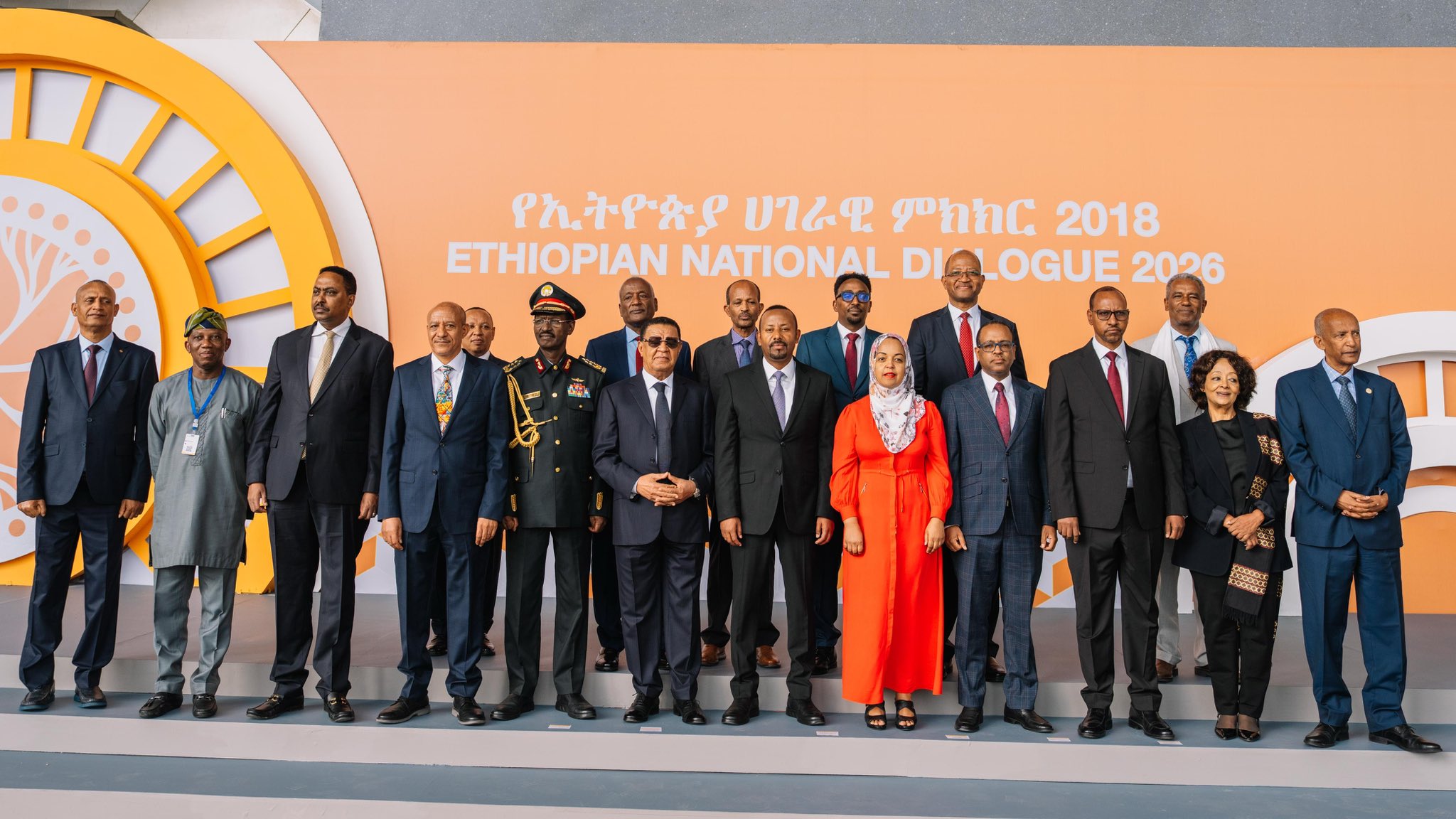
When more than 4,000 Ethiopians representing communities from across the country and the diaspora gathered in Addis Ababa last week for the National Dialogue Conference, they brought with them far more than the agenda printed on paper. They arrived carrying decades of competing historical narratives, unresolved grievances, differing political perspectives and contrasting visions for Ethiopia's future.
The conference itself is historic. Yet its greatest significance may lie beyond the event. As one of the most ambitious political undertakings in Ethiopia's modern history, the process seeks to institutionalize dialogue not merely as a response to crisis, but as a permanent mechanism for addressing national differences. That distinction is crucial.
Opening the conference, Prime Minister Abiy Ahmed described the gathering as "a rare and historic milestone," saying it offers Ethiopians an opportunity to shape a future defined less by inherited divisions and more by deliberate national consensus.
In democratic societies, governments change through elections, while armed conflicts may end through peace negotiations. However, in countries deeply divided over history, identity, governance and constitutional questions, elections alone cannot resolve long standing disputes. Such challenges require broader consultation, inclusive participation and sustained dialogue capable of building consensus across diverse communities.
It is against this backdrop that Ethiopia has embarked on an inclusive national dialogue aimed at laying the foundation for lasting peace, stronger national unity and sustainable development.
The dialogue comes after years of political tension and conflict that exposed deep disagreements over governance, constitutional arrangements, identity and historical interpretation. Established under Proclamation No. 1265/2021 as an independent institution, the Ethiopian National Dialogue Commission (ENDC) has been leading a nationally owned and inclusive process designed to identify common ground on issues fundamental to the country's future.
From Political Competition to National Consultation
Since its establishment, the ENDC has spent several years conducting consultations across the country, gathering public agenda items and preparing what it describes as Ethiopia's largest structured civic consultation in recent history.
Unlike negotiations intended to end a specific conflict, the National Dialogue seeks to address questions that have challenged Ethiopia for generations.
What should unite Ethiopians despite their differences? How should historical grievances be understood? Which constitutional and governance issues require broader national consensus?
These are questions that legislation alone cannot answer. Nor can elections by themselves resolve such deeply rooted national issues. They require a different approach, one founded on inclusive dialogue and broad public participation.
Modern democracies are often judged by the quality of their elections. Elections determine who governs, but they do not necessarily resolve why societies disagree. National dialogues serve a different purpose. Rather than producing winners and losers, they seek common ground among citizens whose experiences, identities and perspectives differ significantly. That philosophy underpins Ethiopia's current process.
Over several years, the Commission organized nationwide consultations to ensure that national priorities emerged from citizens themselves rather than being determined solely by political elites. Those consultations produced the eight major agenda pillars now guiding discussions at the conference.
The process itself reflects an important shift. Instead of beginning with predetermined solutions, it began by asking citizens to define the country's most pressing challenges.
Reflecting on Ethiopia's political history, Prime Minister Abiy observed that one of the country's enduring problems has been a tendency for politics to "begin with fiery rhetoric and conclude with physical violence," arguing that this cycle must give way to consultation, dialogue and mutual listening.
Building Institutions
Experience from diverse societies shows that sustainable peace depends not only on political agreements but also on institutions capable of managing future disagreements peacefully.
Every diverse society experiences political disputes. The question is not whether disagreements will arise, but how they are managed. Will they be addressed through violence, exclusion and confrontation, or through institutions that encourage dialogue before conflicts escalate?
This is where Ethiopia's National Dialogue could prove most consequential.
If the country succeeds in embedding dialogue as a recurring national practice, its most significant legacy may not be any single recommendation emerging from the conference. Its enduring contribution could be the normalization of consultation as a democratic political culture.
Political cultures evolve gradually. Habits of listening, negotiation and compromise require institutions that outlast individual governments and political cycles.
The Prime Minister described the conference as one of those rare historical moments that places a nation "before the pen and parchment of history," giving citizens an opportunity to write a different future through wisdom, responsibility and collective commitment.
Diversity as the Foundation
Ethiopia's remarkable diversity has always been both one of its greatest strengths and one of its greatest governance challenges. More than 80 ethnic groups, multiple languages, religions and regional identities enrich the country's social fabric while also creating complex questions regarding representation, federalism, identity and resource sharing.
These differences cannot simply be eliminated. They must instead be managed through legitimate institutions that command public trust.
The National Dialogue reflects the recognition that diversity does not inevitably lead to division if citizens possess credible mechanisms for discussing difficult issues openly and respectfully. Consensus does not require uniformity. It requires legitimacy, mutual respect and shared ownership of national decisions.
Beyond the Conference Hall
The conference marks the beginning rather than the conclusion of a broader national process. Participants are deliberating on issues identified through nationwide consultations based on the principles of inclusiveness, equality, mutual respect and consensus building.
The greater test, however, lies beyond the conference hall.
The recommendations will eventually need to inform public policy, legislative deliberations and future institutional reforms. Equally important will be maintaining public confidence that dialogue remains meaningful long after delegates return to their communities.
Successful national dialogues are measured not only by the quality of deliberations but also by whether citizens continue to believe that peaceful engagement provides a credible means of resolving differences.
During the opening session, ENDC Chief Commissioner Prof. Mesfin Araya emphasized that the dialogue should help establish a culture of consultation and roundtable discussion so that future disagreements are addressed through dialogue rather than recurring confrontation.
Transforming Political Culture
Political culture cannot be transformed overnight. It evolves through repeated practice, growing public trust and sustained institutional commitment.
If Ethiopians increasingly come to view disagreement as an issue to be discussed rather than defeated, and consultation as preferable to confrontation, such a transformation would mark a profound shift in the country's political culture.
National dialogue would no longer be regarded as an exceptional exercise convened only during times of crisis. Instead, it would become an accepted democratic instrument for addressing complex national questions. Such a culture cannot be established through legal proclamations alone. It must be strengthened through participation, credibility and sustained public commitment.
In his address, Prime Minister Abiy argued that Ethiopia's traditions of elder mediation, reconciliation and community arbitration demonstrate that dialogue has deep roots in the country's history. The challenge, he noted, is to elevate those longstanding traditions into enduring national institutions capable of resolving disagreements peacefully for generations to come.
Beyond July 2026
As delegates continue their deliberations in Addis Ababa, attention naturally remains focused on the conference itself. History, however, may judge this moment from a broader perspective. The true significance of Ethiopia's National Dialogue may ultimately depend less on the resolutions it adopts than on whether it succeeds in changing how Ethiopians approach disagreement.
If future generations inherit institutions that encourage listening before polarization, consultation before confrontation and consensus before crisis, Ethiopia's greatest achievement may not be a single conference.
Instead, July 2026 could be remembered as the moment the country began embracing disagreement not as a contest to be won, but as a shared responsibility to be managed through dialogue, strong institutions and sustained civic engagement. Should that culture take root, the National Dialogue will represent far more than a historic gathering. It will mark the beginning of a new political tradition founded on consultation, inclusion and peaceful democratic problem solving.


