Kebena Reborn: From Polluted River to Urban Oasis - ENA English


Kebena Reborn: From Polluted River to Urban Oasis
By Staff Writer
July 12, 2026 (ENA)
For decades, the Kebena River told a story that many residents of Addis Ababa wished they could forget.
Flowing through the heart of Ethiopia’s capital, the river had gradually become synonymous with pollution, illegal waste dumping, foul odors, environmental degradation, and growing public health concerns. What should have been one of the city’s greatest natural assets instead became a neglected corridor that separated communities rather than bringing them together.
Today, however, the Kebena River is telling an entirely different story.
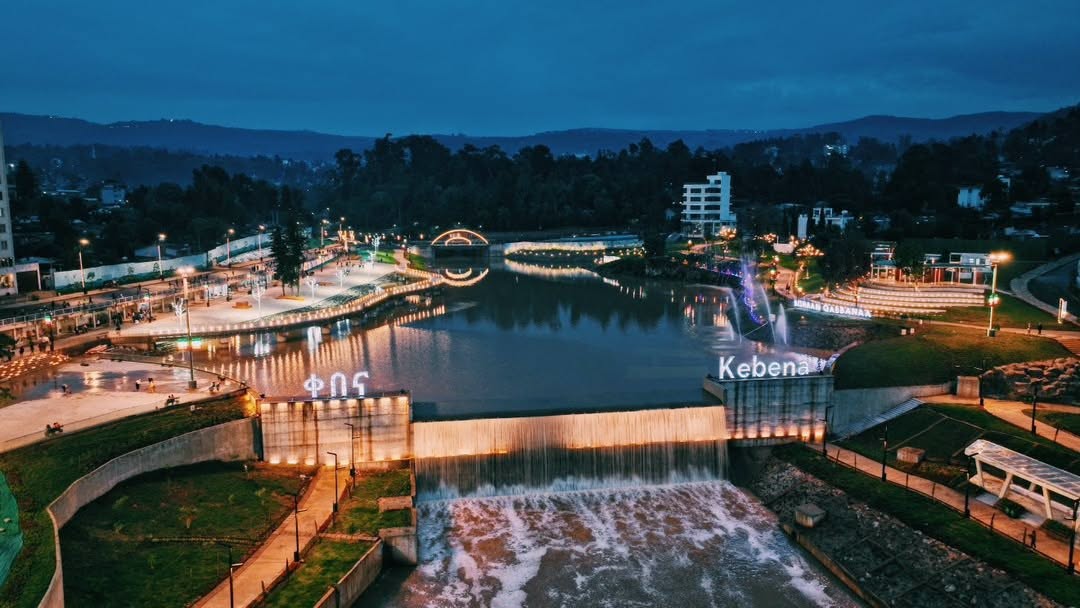
The once-forgotten waterway has been transformed into one of Addis Ababa’s most remarkable urban regeneration projects. It has become a modern riverside destination where clean water, green landscapes, pedestrian walkways, recreational spaces, and restored ecosystems now replace garbage dumps and polluted ravines.
The transformation represents more than a physical facelift. It signals a broader vision of how African cities can reclaim degraded natural resources, improve public health, strengthen climate resilience, and create vibrant public spaces for future generations.
Reclaiming Nature at the Heart of the Capital
On June 28, 2026, Prime Minister Abiy Ahmed officially inaugurated the Entoto–Kebena River and Riverside Development Project together with the Kebena Dam, opening the landmark development to the public.
Stretching across 87.6 hectares along a 10.5-kilometer river corridor, the project integrates flood-control infrastructure, modern bridges, landscaped parks, walking and cycling paths, recreational facilities, and extensive green spaces designed to reconnect residents with nature.
Describing the initiative as a milestone in Addis Ababa’s urban transformation, the Prime Minister emphasized that the project is not simply about beautifying the city.
Rather, it is part of a broader effort to build a climate-resilient, environmentally sustainable, highly livable capital that can increasingly position itself as a regional center for tourism, investment, and quality urban living.
“We remain deeply committed to advancing our journey to enhance our citizens’ quality of life and bring about transformative change,” the Prime Minister affirmed during the inauguration.
His message reflected a growing recognition that successful cities are not measured solely by roads and buildings, but also by the quality of their natural environment and public spaces.
Where Garbage Once Dominated, Life Returns
Only a short time ago, this landscape presented a strikingly different picture.
Residents vividly remember overflowing waste, contaminated water, uncontrolled dumping, and hazardous ravines that threatened both public health and neighborhood safety.
Instead of serving as a gathering place, the river became an environmental burden that many people simply avoided.
Years of pollution had stripped the river of much of its ecological and social value.
Today, visitors encounter a dramatically different scene.
Tree-lined pathways follow the restored riverbanks. Landscaped gardens soften the urban landscape. Families stroll along pedestrian routes. Children play in newly developed recreational areas. Cyclists and joggers share public spaces once occupied by refuse and stagnant water.
The transformation demonstrates how strategic urban investment can restore both nature and community life simultaneously.
Residents Witness a Transformation They Once Thought Impossible
For longtime residents, the Kebena project represents far more than new infrastructure. It has fundamentally changed their daily lives.
Gezahegn Deru, who has lived in the area for many years, recalls a place defined by unpleasant odors, accumulated garbage, and constant health concerns.
“The Kebena River and its surroundings were previously unlivable,” he said. “The steep gorge filled with waste threatened both our health and our safety. Today, that same area has become one of the most beautiful places in the neighborhood.”
For Etaferahu Mengistu, the transformation has been equally emotional.
She remembers decades of pollution but now sees a riverside that encourages walking, relaxation, and family recreation.
“Seeing such a terrible place transformed into something this beautiful fills me with happiness,” she said. “The dam and riverside development have completely changed the atmosphere.”
Other residents, including Beyene Dilnesaw and Dereje Yilma, described the previous condition as a persistent source of disease and environmental danger.
“The river was once a major health hazard,” they explained. “Today it has become an example of how determined action can completely reverse years of environmental degradation.”
Young residents have perhaps experienced the greatest change.
For Ashenafi Tariku, the development has created opportunities that simply did not exist before.
“The area has changed dramatically,” he said. “It has become not only an attractive place to live but also a wonderful recreational destination for children, young people, and families.”
More Than Beautification
The Kebena Riverside Development illustrates a growing global understanding that river restoration delivers benefits extending far beyond aesthetics.
Cleaner waterways contribute to better public health.
Expanded green spaces help lower urban temperatures, improve air quality, reduce flood risks, and strengthen biodiversity.
Walkable public areas encourage healthier lifestyles while creating new opportunities for tourism, recreation, and small businesses.
In rapidly growing cities across Africa, restoring rivers is increasingly recognized as an essential component of sustainable urban development rather than a luxury.
By reclaiming polluted natural corridors, cities simultaneously address environmental protection, climate adaptation, public well-being, and economic competitiveness.
The Kebena project embodies this integrated approach.
A Blueprint for African Urban Renewal
Across the continent, many rivers flowing through major cities face similar challenges—pollution, unmanaged waste, informal settlements, flooding, and environmental neglect.
The Kebena experience demonstrates that these challenges are not irreversible.
With long-term planning, political commitment, community participation, and sustained investment, degraded urban ecosystems can once again become engines of economic activity, environmental sustainability, and social cohesion.
Rather than hiding polluted rivers behind concrete walls, cities can restore them as valuable public assets that improve both environmental quality and quality of life.
In that sense, the Kebena project offers lessons extending well beyond Addis Ababa.
It presents a practical model of urban regeneration that many rapidly urbanizing African cities may find increasingly relevant.
A Shared Responsibility
Residents are equally clear that the project’s success should not be measured only by what has already been accomplished, but by how well it is preserved.
Many stress that maintaining the river’s cleanliness and beauty is a shared civic responsibility.
Protecting green spaces, preventing waste disposal into waterways, respecting public facilities, and fostering environmental awareness will determine whether this transformation endures for generations.
Infrastructure alone cannot sustain environmental progress.
Long-term success depends on public ownership and responsible stewardship.
A River Reborn
Cities often reveal their priorities through the way they treat their rivers.
For many years, the Kebena reflected neglect.
Today, it reflects renewal.
The restoration of the Kebena River is more than an infrastructure achievement; it is a story of environmental recovery, urban resilience, and renewed public confidence. It demonstrates that even landscapes long written off as irreparable can be reclaimed through vision, commitment, and collective action.
As families gather along its green banks, children play where garbage once accumulated, and residents rediscover a river they had nearly forgotten, the Kebena stands as a powerful reminder that sustainable urban transformation is not merely about constructing new infrastructure.
It is about restoring the relationship between people, nature, and the city they call home.
The Kebena River’s remarkable journey from a polluted dumping ground to a thriving recreational and ecological corridor—marks not only a new chapter for Addis Ababa. It is also an inspiring example of what determined urban renewal can achieve across Africa.


