Ethiopia’s Green Legacy Initiative Sets Global Example for Inclusive Climate Action: Scientist - ENA English


Ethiopia’s Green Legacy Initiative Sets Global Example for Inclusive Climate Action: Scientist
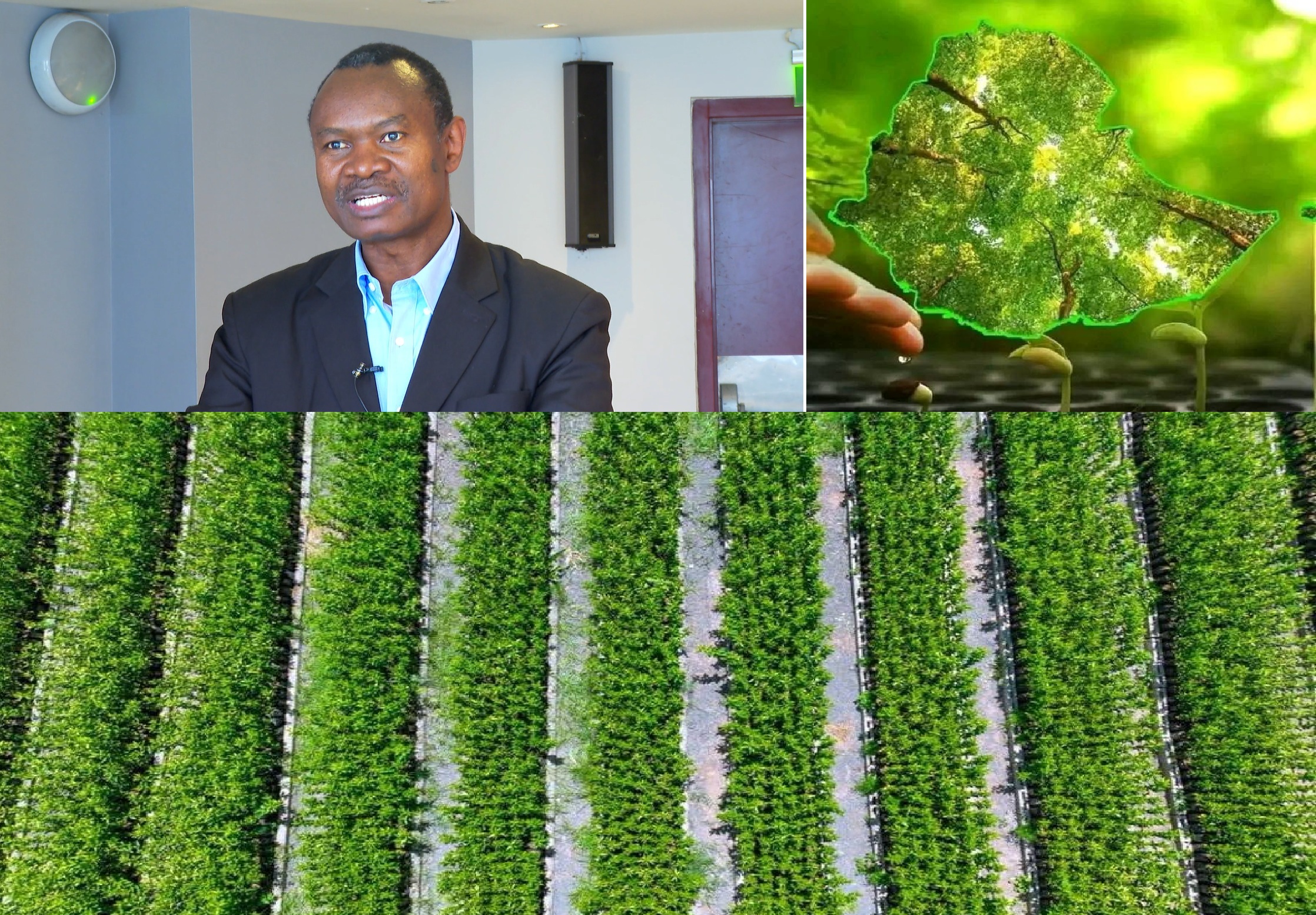
Addis Ababa, July 11, 2026 (ENA) —Ethiopia's Green Legacy Initiative has emerged as one of the world's inclusive climate resilience programs, uniting government, researchers, businesses and local communities to advance sustainable green development, a leading climate scientist said.
Approached by ENA Dr. John Recha, Climate Smart Agriculture and Policy Scientist at the International Livestock Research Institute (ILRI), said the initiative’s broad, multi-sectoral approach has become one of the key drivers of its success.
“Ethiopia’s climate resilience and green development program is unique because it brings together stakeholders from agriculture, energy, economics, research and the private sector to invest in green projects that reduce greenhouse gas emissions while delivering long-term social and economic benefits,” Recha said.
He explained that the initiative creates a collaborative platform where diverse stakeholders jointly identify, design and implement projects that strengthen climate resilience and restore degraded ecosystems.
According to Recha, bringing together experts, policymakers, investors and businesses under a common framework enables countries to mobilize financing, encourage innovation and implement climate solutions with lasting environmental and economic benefits.
He stressed that effective climate action depends on well-coordinated institutions—an approach Ethiopia has adopted to align scientific expertise, policy, planning, financing and private-sector participation toward shared national development goals.
Recha noted that several African countries have also established dedicated institutional mechanisms to coordinate climate action, citing Kenya's Climate Change Directorate and Uganda's Climate Change Department under the Ministry of Water and Environment as examples.
"These institutions bring together technical experts, planners and private-sector actors to develop climate initiatives that attract investment while advancing national climate priorities," he said.
He added that coordinated institutional frameworks make climate interventions more effective by integrating scientific knowledge, financing mechanisms and private-sector innovation.
Thus, the scientist said such coordinated frameworks accelerate green development while strengthening climate resilience.
Launched in 2019, Ethiopia's Green Legacy Initiative has grown into one of the world's largest national reforestation and ecosystem restoration programs.
The initiative seeks to restore degraded landscapes, combat climate change, enhance biodiversity and strengthen food security through large-scale tree planting and ecosystem restoration.
Since its launch, Ethiopia has planted more than 48 billion tree seedlings nationwide.
The country has also embarked on a new campaign to plant an additional 8 billion seedlings during the 2026 rainy season, reinforcing one of Africa's most ambitious environmental restoration efforts.
The initiative has already produced measurable environmental gains. Ethiopia's forest cover increased from approximately 17.2 percent in 2019 to about 23 percent by 2023, underscoring the program's contribution to landscape restoration, carbon sequestration and climate resilience.
As countries intensify efforts to address the global climate crisis, many observers say Ethiopia's Green Legacy Initiative is increasingly being viewed as a model for inclusive climate action.
They said the initiative stands as compelling evidence that coordinated partnerships among governments, scientists, businesses and local communities can turn ambitious climate commitments into measurable, large-scale outcomes.


