Bounty of Basket Initiative Powers Ethiopia’s Push for Food Self-Sufficiency: Ministry - ENA English


Bounty of Basket Initiative Powers Ethiopia’s Push for Food Self-Sufficiency: Ministry
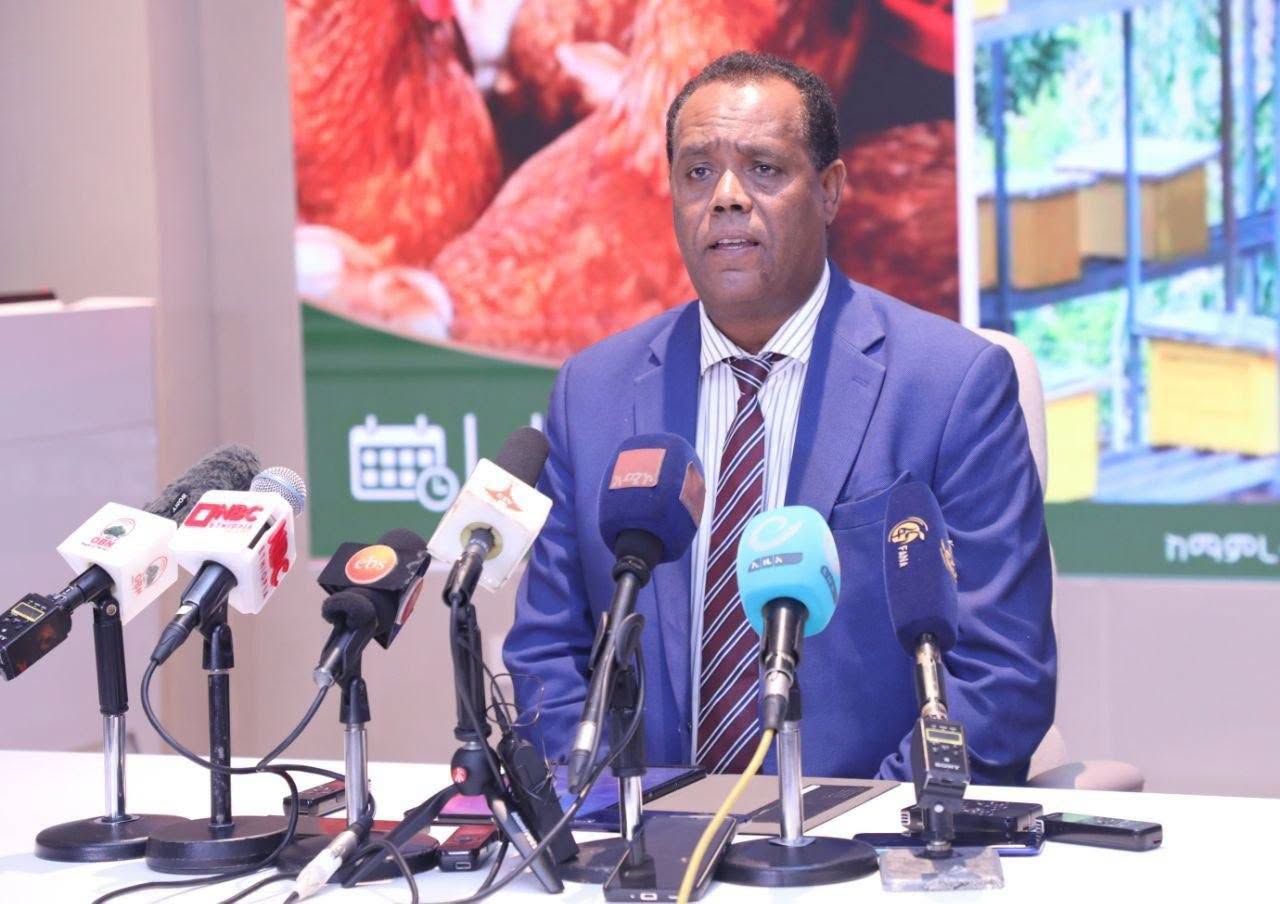
Addis Ababa, July 9, 2026 (ENA) —The "Bounty of the Basket" (Yelemat Trufat) initiative is yielding tangible achievements toward attaining food self-sufficiency and nutritional security targets, the Ministry of Agriculture announced.
Briefing the media on the execution of the initiative, State Minister of Agriculture Fikru Regassa stated that the program is enhancing national economic capacity alongside ongoing efforts to guarantee food sovereignty.
The state minister recalled that national milk production stood at 7.1 billion liters at the launch of the initiative, noting that it has remarkably surged to 15.7 billion liters this year.
Prior to the rollout of the initiative, annual distribution of day-old chicks was limited to 26 million; however, this figure has grown exponentially to 184 million this year.
He added that egg production jumped from 3.2 billion to 11.7 billion units, while poultry meat production grew significantly from 90,000 tons to 253,000 tons.
Fikru also pointed out that highly encouraging results have been recorded in apiculture and honey production, noting that the diverse interventions have generated numerous jobs across all sub-sectors.
Concurrently, aquaculture developments capitalizing on natural water bodies and artificial ponds are registering impressive outcomes.
By strengthening the operational capacity of existing hatcheries, the distribution of fish fingerlings has risen from a mere 300,000 to an impressive 16.5 million.
Consequently, overall fish production has quadrupled since the inception of the initiative.
The program plays a pivotal role in meeting the dietary and nutritional goals of farming and pastoral communities, while simultaneously satisfying the growing urban market demand for animal products.
By ensuring equitable socio-economic benefits for citizens, the initiative continues to serve as a vital instrument in stabilizing local food inflation.
Regarding livestock productivity, breed improvement programs for dairy cows, combined with modern poultry operations, have unlocked extensive employment options for youth and women.
Furthermore, advanced cattle fattening practices and enhanced veterinary vaccine distribution intended to boost foreign trade have significantly scaled up the country's meat export performance.
The ministry continues to spearhead nation-wide efforts to optimize agricultural outputs through the adoption of modern farming technologies and improved breeds, with exceptional milestones already recorded in the dairy sector.


