Public Dialogue Significantly Reduced Community Conflicts in Ethiopia, PM Abiy Tells Parliament - ENA English


Public Dialogue Significantly Reduced Community Conflicts in Ethiopia, PM Abiy Tells Parliament
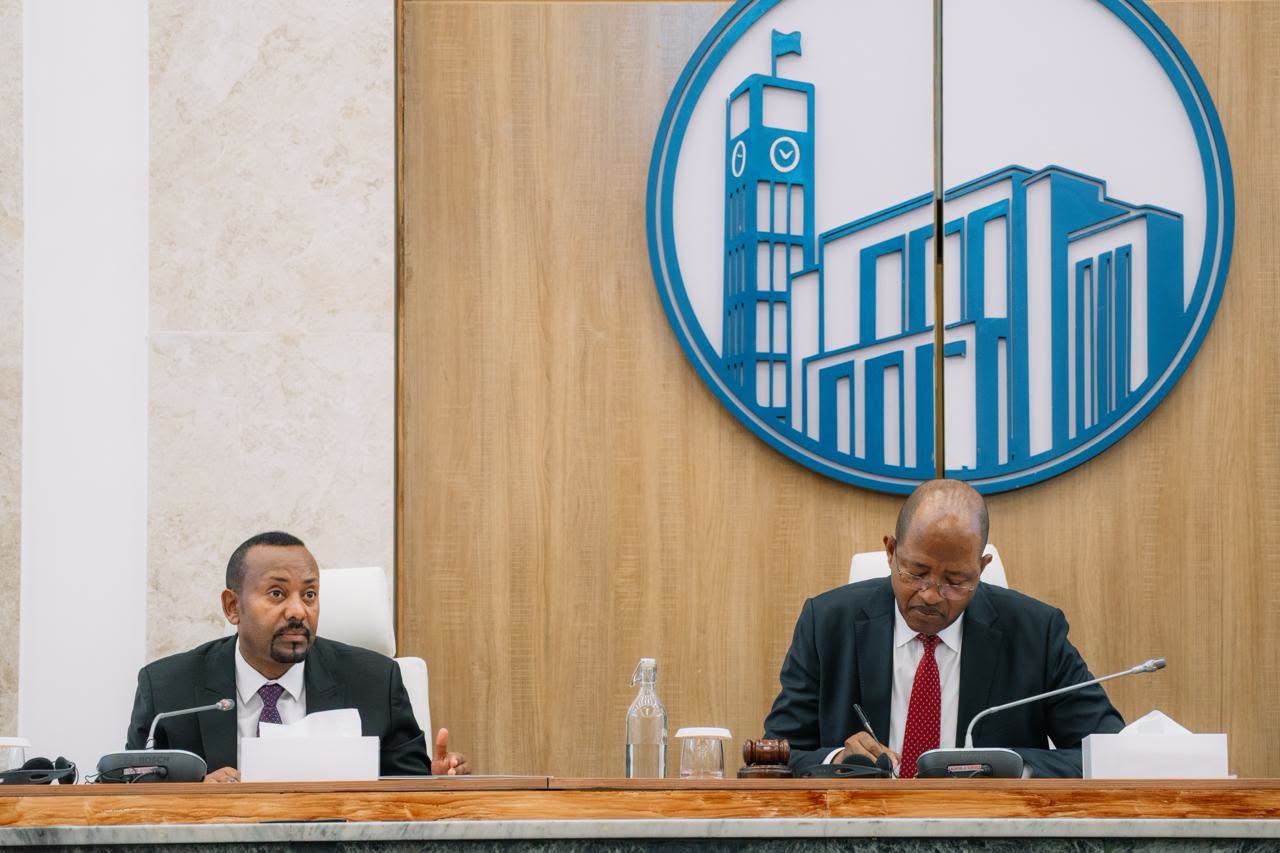
Addis Ababa, July 7, 2026 —Prime Minister Abiy Ahmed said conflicts among communities have declined significantly in recent years as the government has expanded public dialogue and citizen engagement.
The Prime Minister described inclusive consultation as one of the country's most effective tools for strengthening peace and national cohesion.
The Prime Minister made the remarks today while responding to lawmakers during the 30th Regular Session of the Fifth Year of the House of People's Representatives, where he presented the federal government's performance report for the 2018 Ethiopian Fiscal Year and answered questions on security, governance and national development.
Addressing Parliament, PM Abiy said Ethiopia has made notable progress in reducing community and interfaith tensions by creating broader platforms for dialogue, allowing citizens to peacefully voice concerns and participate in addressing national challenges.
"Conflicts that once frequently emerged among communities have become increasingly rare because people are choosing dialogue over confrontation," the Prime Minister told lawmakers.
According to Abiy, he has personally led more than 225 public dialogue forums involving diverse sections of Ethiopian society, while the ruling Prosperity Party has facilitated over 4,000 dialogue forums at national, regional and local levels.
He added that the Ethiopian National Dialogue Commission has also conducted extensive consultations involving more than 100,000 participants across Ethiopia and among members of the Ethiopian diaspora.
The Prime Minister said the growing culture of dialogue has substantially reduced conflicts between communities and religious groups, describing it as a major achievement in Ethiopia's democratic and peacebuilding efforts.
While acknowledging that security challenges remain in some parts of the country, PM Abiy argued that many of the current conflicts are driven not by genuine public grievances but by armed groups backed by actors seeking to destabilize Ethiopia.
"The conflicts we are witnessing today are not driven by clear national objectives or the public interest. They are the result of a profitable conspiracy," he said.
He further alleged that both domestic and foreign actors continue to provide financial and logistical support to armed groups in an effort to undermine Ethiopia's peace and stability.
Despite these challenges, the Prime Minister said the government's approach will continue to prioritize dialogue and reconciliation while strengthening the capacity of national security institutions.
Ethiopia's security institutions have made considerable progress in personnel development, operational capability and technological modernization, enabling them to respond more effectively to evolving security threats, he noted.
The Premier further noted, however, that many armed groups increasingly rely on unconventional tactics, making cooperation between citizens and law enforcement agencies essential to preventing violence and safeguarding communities.
Reflecting on Ethiopia's political history, Prime Minister Abiy said decades of fragmentation have left enduring challenges that require sustained national dialogue rather than military solutions alone.
"We must create spaces where people can freely raise their grievances and discuss them. This is essential to preventing recurring divisions and building a stronger democratic order," he said.
The Prime Minister further stressed that expanding democratic participation and maintaining continuous public engagement remain central to the government's long-term peace strategy.
"When we hold more discussions and deepen democracy, conflicts will continue to decline," he stated.
Prime Minister Abiy concluded by reaffirming that inclusive dialogue, strengthened institutions and active citizen participation are laying the foundation for lasting peace, national unity and democratic stability across Ethiopia.
He also emphasized that the government's commitment to consultation will remain at the center of its efforts to resolve remaining security challenges.


