Ethiopia Advances Nat’l Electrification Roadmap to Achieve Universal Energy Access by 2035 - ENA English


Ethiopia Advances Nat’l Electrification Roadmap to Achieve Universal Energy Access by 2035
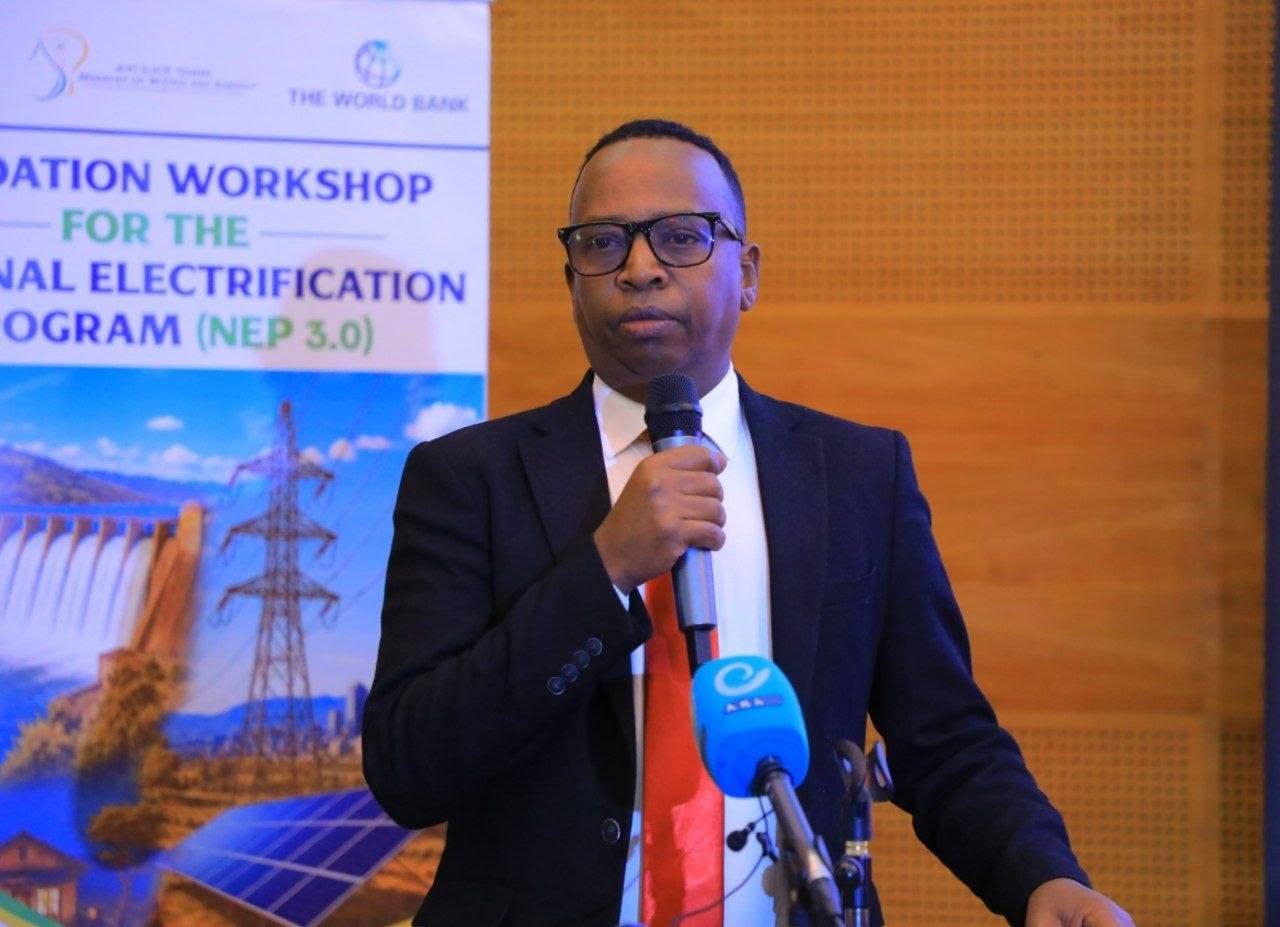
Addis Ababa, June 29, 2026 (ENA) — Ethiopia has advanced discussions on its National Electrification Program (NEP 3.0), bringing together government institutions, development partners, the private sector, and international stakeholders.
The discussions aimed at charting a roadmap toward achieving universal access to reliable, affordable, and sustainable electricity by 2035.
The consultation, organized by the Ministry of Water and Energy (MoWE) at the Hilton Hotel today, focused on the implementation strategy for NEP 3.0, the country's latest long-term electrification framework designed to expand both grid and off-grid electricity access while accelerating inclusive economic development.
Opening the forum, State Minister of Water and Energy Sultan Welle described NEP 3.0 as Ethiopia's strategic blueprint for delivering universal electricity access by 2035.
"Reliable, affordable and sustainable electricity is not merely an infrastructure objective. It is the foundation for economic transformation, improved livelihoods and inclusive social development," the State Minister said.
He noted that Ethiopia has made significant progress under the previous phases of the National Electrification Program by expanding electricity access, strengthening institutional capacity, and mobilizing investments.
He added that NEP 3.0 seeks to build on these achievements while creating greater opportunities for private-sector participation to accelerate nationwide electrification.
The discussion brought together representatives from the World Bank, Ethiopian Electric Power (EEP), Ethiopian Electric Utility (EEU), government institutions, development partners, non-governmental organizations, and other key stakeholders.
The updated electrification roadmap follows recent World Bank findings indicating that approximately 65 percent of Ethiopians had access to electricity in 2025, although access remains uneven, with rural communities continuing to lag behind urban areas.
According to the Ministry, NEP 3.0 will employ advanced geospatial least-cost planning to identify the most efficient mix of grid expansion, mini-grids, and standalone renewable energy systems.
The program also prioritizes demand forecasting, investment planning, and the identification of high-impact electrification projects to maximize economic and social benefits while ensuring efficient use of public resources.
The strategy further aims to strengthen institutional coordination, improve financial sustainability, reduce technical and commercial losses, and enhance service quality across Ethiopia's rapidly expanding electricity network.
Ethiopia has significantly expanded its electricity infrastructure over the past two decades, increasing the number of grid-connected towns and villages while investing in hydroelectric, geothermal, wind, solar, and regional power interconnections.
However, despite notable progress, an estimated 35 percent of households still lack access to electricity, underscoring the need for accelerated implementation of the country's next electrification phase.
With NEP 3.0, Ethiopia seeks to close the remaining access gap by combining public investment, private-sector participation, and international development support to deliver universal electricity access by 2035.
This objective viewed as critical to accelerating industrialization, improving public services, enhancing rural livelihoods, and driving long-term economic growth, it was learned.


