Ethiopia’s Journey Toward a New Development Era - ENA English


Ethiopia’s Journey Toward a New Development Era
By Tewodros Habenom
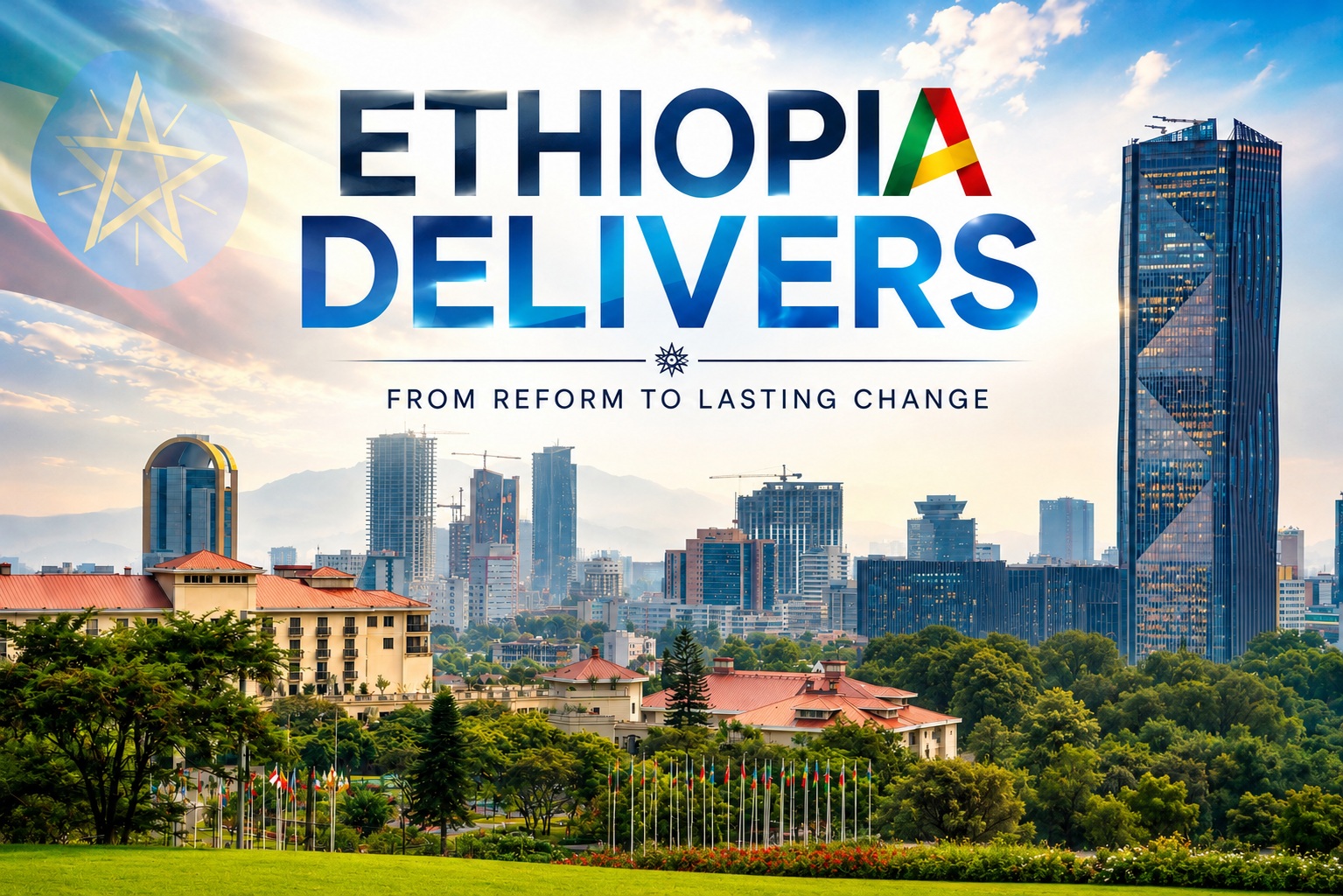
Addis Ababa, June 24, 2026 (ENA)__Prime Minister Abiy Ahmed’s address at the Ethiopia Delivers National Summit, held under the theme “From Reform to Lasting Change,” offered more than a reflection on achievements. It presented a strategic vision for Ethiopia’s future. At its core was a powerful message: reforms are not destinations, but foundations upon which enduring national transformation is built.
“Nation state-building is a continuous collective responsibility,” the Prime Minister emphasized, underscoring a philosophy that sees development as an intergenerational project rather than a series of isolated accomplishments. Guided by the principle of Medemer (synergy) through collective effort—Ethiopia’s transformation since 2018 has sought to weave economic modernization, institutional reform, infrastructure expansion, environmental stewardship, and diplomatic engagement into a single national trajectory.
As the country moves from initiating reforms to consolidating them, the central question is no longer whether change has begun, but how those gains can be sustained and translated into lasting prosperity.
Rebuilding the Economy Through Structural Reform
When the current administration assumed office in 2018, Ethiopia faced mounting debt pressures, foreign exchange shortages, and significant macroeconomic challenges. In response, the government launched one of the most ambitious economic reform agendas in the nation’s history.
Strategic sectors that had long operated under state monopolies were gradually opened to private participation. Landmark reforms in telecommunications introduced global operators into the Ethiopian market, increasing competition and attracting investment. Monetary reforms, including exchange-rate liberalization, were undertaken to address longstanding economic distortions and strengthen investor confidence.
These measures paved the way for major financing arrangements with international institutions, including the World Bank and the International Monetary Fund, helping stabilize the economy while creating conditions for long-term growth.
Medemer and the Pursuit of National Cohesion
At the heart of Ethiopia’s political transformation lies the philosophy of Medemer. More than a political slogan, it has served as the conceptual framework guiding efforts to foster national unity and collective progress.
The formation of the Prosperity Party in 2019 marked a significant restructuring of Ethiopia’s political landscape, bringing together diverse regional and political actors under a single national platform. Simultaneously, the establishment of the Ethiopian National Dialogue Commission created an institutional pathway for addressing historical grievances through dialogue and constitutional engagement.
Together, these initiatives reflect a broader effort to strengthen national cohesion as a prerequisite for sustainable development and long-term stability.
Agricultural Transformation and Food Security
Few sectors better illustrate Ethiopia’s development ambitions than agriculture. Through a large-scale irrigated wheat production program, the country has fundamentally altered its approach to food production.
By expanding irrigation infrastructure, mechanization, and modern farming techniques, Ethiopia has moved from dependence on imported wheat to achieving self-sufficiency and exporting surplus production to neighboring markets.
To deepen this transformation, Aliko Dangote, President of the Dangote Group, has increased his conglomerate's total investment commitment in Ethiopia from 2.5 billion USD to more than 4 billion USD, following a working visit to Gode in Ethiopia's Somali region where he was received by Prime Minister Abiy. The project is expected to reduce reliance on imported agricultural inputs and strengthen the foundations of long-term food security.
Unlocking Energy Potential
Energy has emerged as a cornerstone of Ethiopia’s development strategy. The inauguration of the first phase of the liquefied natural gas project in the Somali Region represents a significant step toward industrialization and export diversification.
At the same time, renewable energy remains central to Ethiopia’s vision. The Aysha II Wind Power Project, among the largest in the region, demonstrates the country’s commitment to balancing economic growth with environmental sustainability.
Together, these investments are advancing Ethiopia’s transition toward greater energy independence and industrial competitiveness.
Green Legacy: Development Through Environmental Stewardship
Among Ethiopia’s most internationally recognized initiatives is the Green Legacy program, which has integrated environmental sustainability into the country’s broader development agenda.
The campaign has mobilized millions of citizens in the planting of billions of trees, the restoration of degraded landscapes, and efforts to combat desertification and climate vulnerability. Beyond its environmental benefits, the initiative has generated economic opportunities linked to conservation and carbon-related projects.
Since its launch, Ethiopia has planted an estimated 48 billion tree seedlings nationwide, contributing to reforestation, ecosystem restoration, and climate action efforts. Building on this momentum, the country has set an ambitious target of planting an additional 8 billion seedlings in this rainy season, further reinforcing its vision of a greener, more environmentally sustainable future.
Tourism as an Engine of Growth
Ethiopia’s development agenda has also transformed the tourism sector. Landmark projects such as Entoto Natural Park and Friendship Park have redefined urban recreational spaces, while initiatives including “Dine for the Nation and Dine for Ethiopia “ have accelerated investment in world-class tourism destinations.
Projects such as Gorgora, Koisha, and Wenchi are positioning Ethiopia as an emerging destination for luxury, eco-tourism, and conference tourism, creating jobs while showcasing the country’s cultural and natural heritage.
GERD and Regional Energy Leadership
The Grand Ethiopian Renaissance Dam (GERD) remains one of the defining symbols of Ethiopia’s development ambitions. Having transitioned into electricity generation, the dam is reshaping the nation’s energy landscape while strengthening regional integration.
Through power-export agreements with neighboring countries, GERD is enhancing Ethiopia’s role as a regional energy hub and creating new opportunities for economic cooperation across East Africa.
Reimagining Urban Ethiopia
The nationwide corridor development initiative is transforming Ethiopia’s urban centers through extensive investments in roads, pedestrian infrastructure, public spaces, sanitation systems, and environmental beautification.
These projects are not merely infrastructure upgrades; they represent a broader effort to create cleaner, more efficient, and more livable cities capable of supporting future economic growth.
Embracing the Digital Future
Recognizing that future competitiveness depends on innovation, Ethiopia has accelerated investments in science and technology.
The establishment of the Ethiopian Artificial Intelligence Institute reflects a commitment to harnessing emerging technologies in agriculture, healthcare, education, and climate forecasting. Meanwhile, the Science and Technology Museum in Addis Ababa serves as a platform for inspiring innovation and nurturing the next generation of researchers and entrepreneurs.
These initiatives signal Ethiopia’s ambition to become a participant in the global knowledge economy rather than merely a consumer of technology.
Ethiopia’s Rising Diplomatic Influence
Alongside domestic transformation, Ethiopia has strengthened its international standing. As the host of the African Union and the United Nations Economic Commission for Africa, Addis Ababa continues to serve as the continent’s diplomatic capital.
The successful bid to host the 2027 United Nations Climate Summit further reflects growing international recognition of Ethiopia’s leadership on renewable energy and climate action.
At the same time, the country has expanded strategic partnerships with nations including Türkiye, India, and Malaysia, while its accession to BRICS marks a significant step toward diversifying economic and geopolitical relationships.
From Reform to Lasting Change
The story of Ethiopia since 2018 is not simply one of reform. It is the story of a nation seeking to institutionalize transformation and convert short-term achievements into enduring progress.
As Prime Minister Abiy Ahmed noted at the Ethiopia Delivers Summit, state-building is a responsibility that transcends generations. The challenge ahead is not only to preserve the gains already achieved but to ensure they become the foundation for a more prosperous, resilient, and united Ethiopia.
The journey from reform to lasting change is still unfolding. Yet the trajectory suggests that Ethiopia is increasingly focused not merely on changing the present, but on shaping the future.


